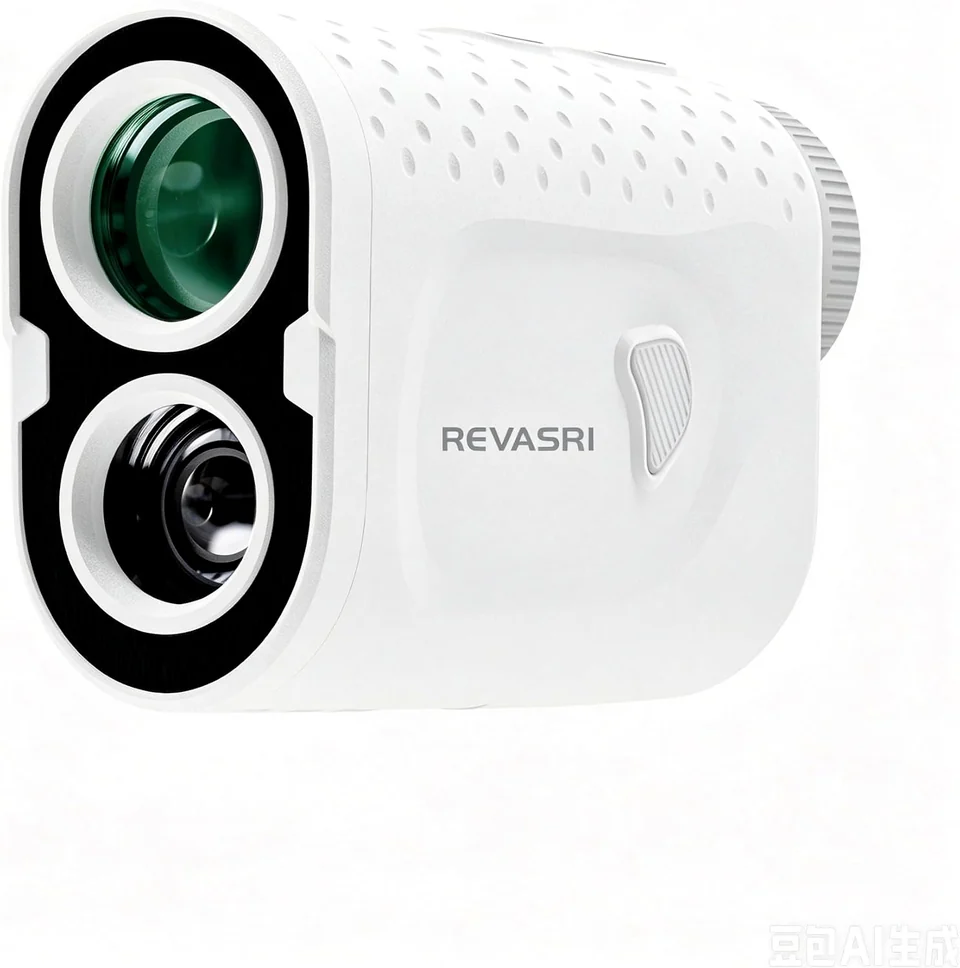
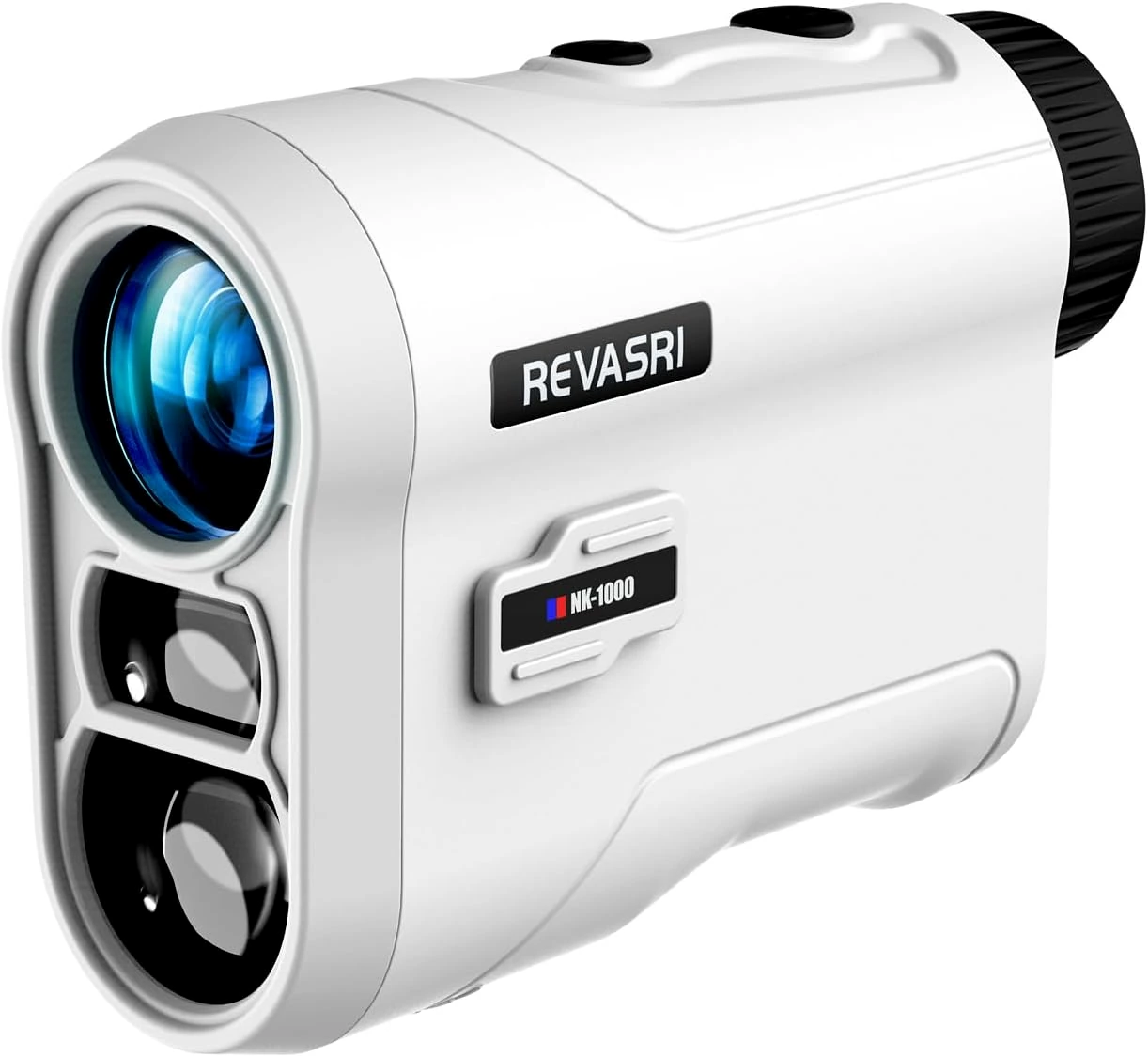
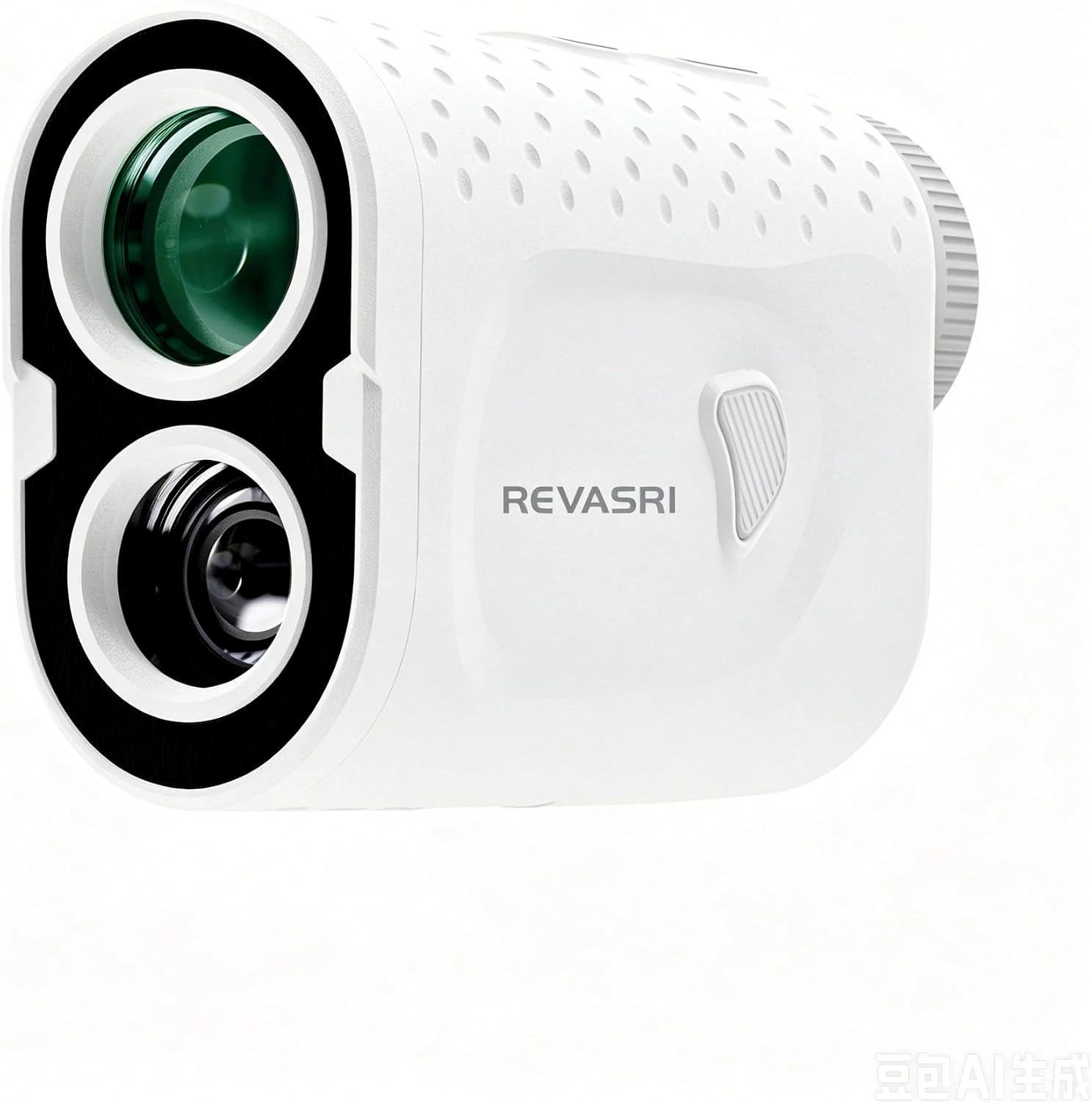
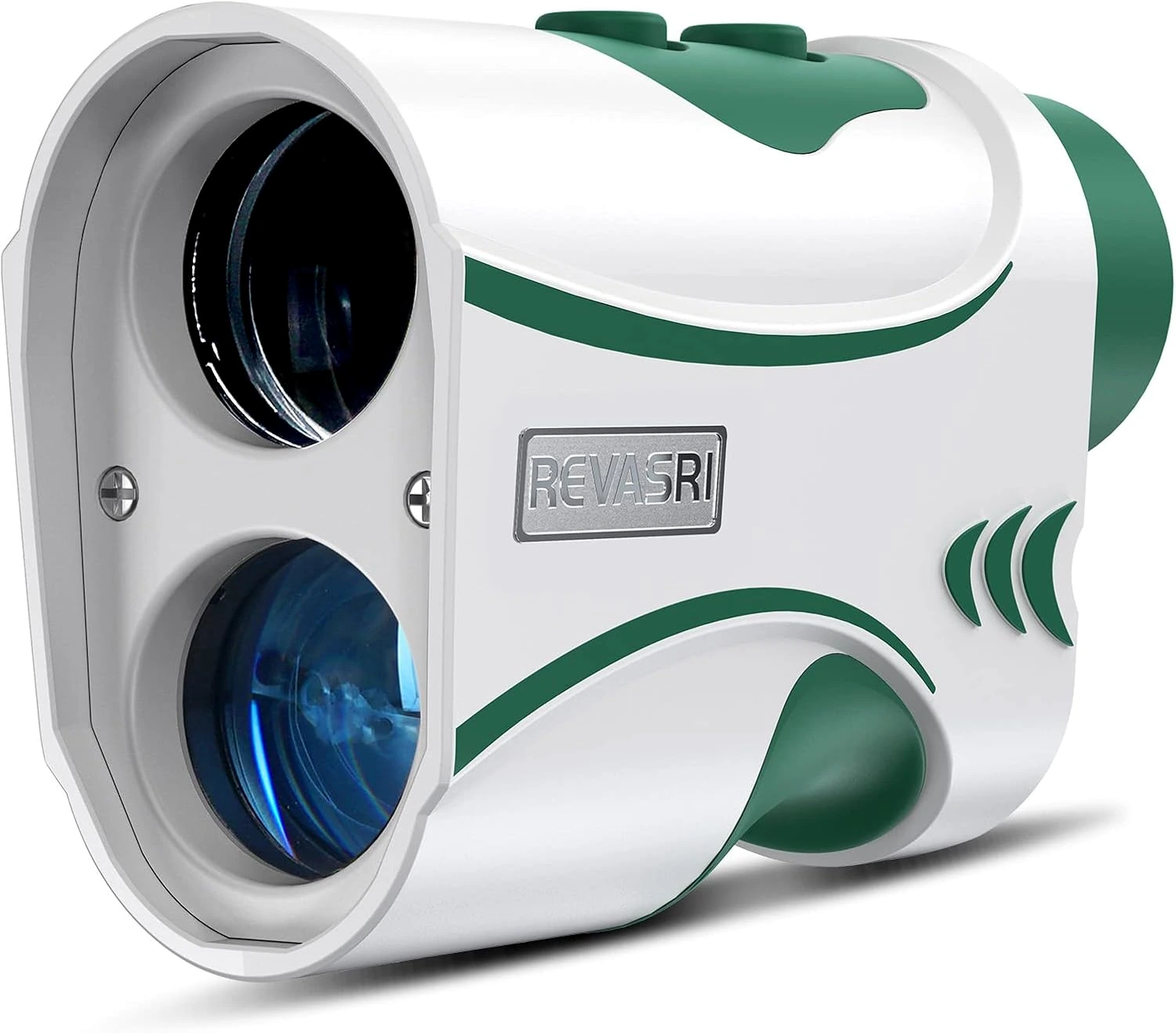
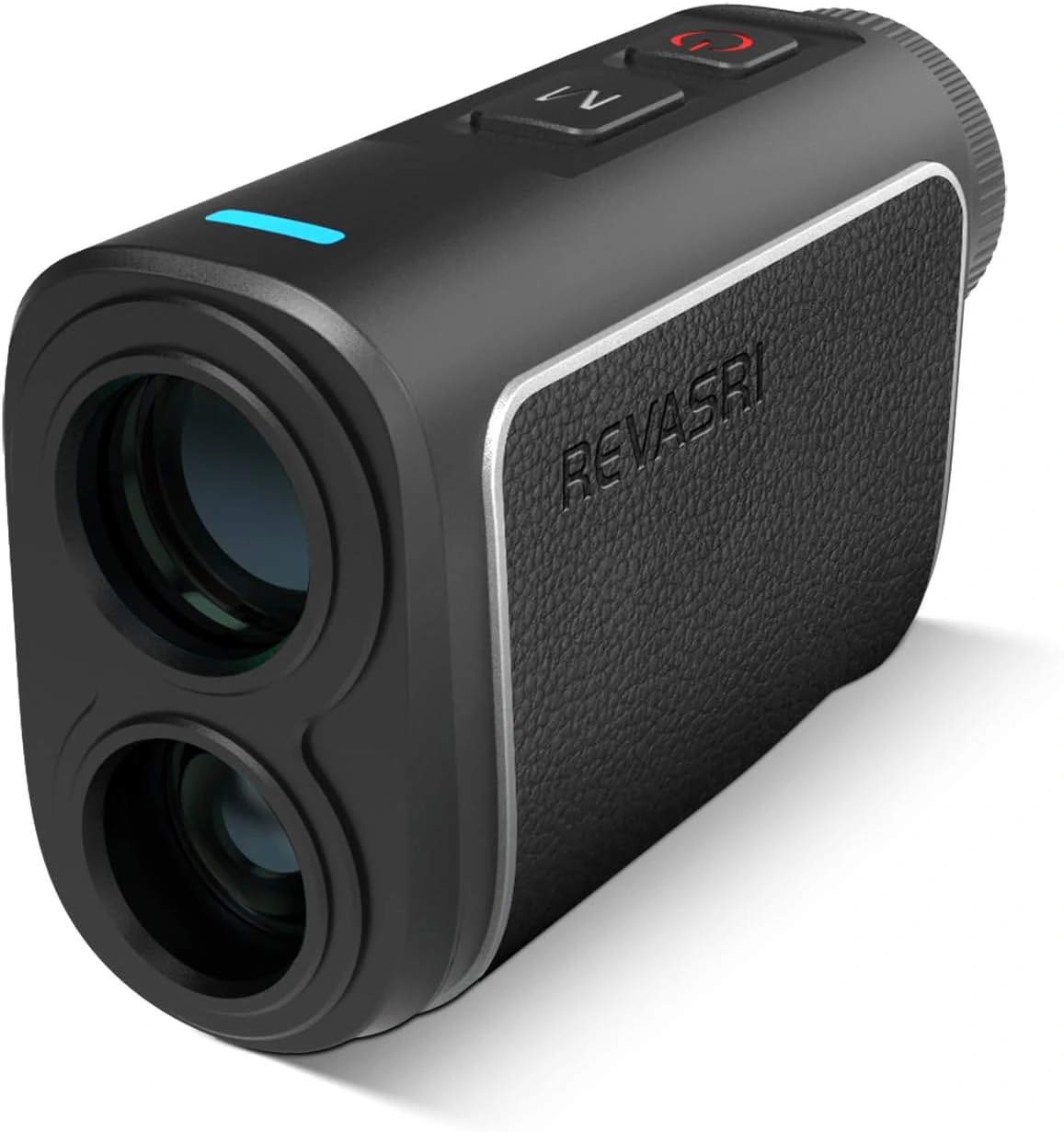
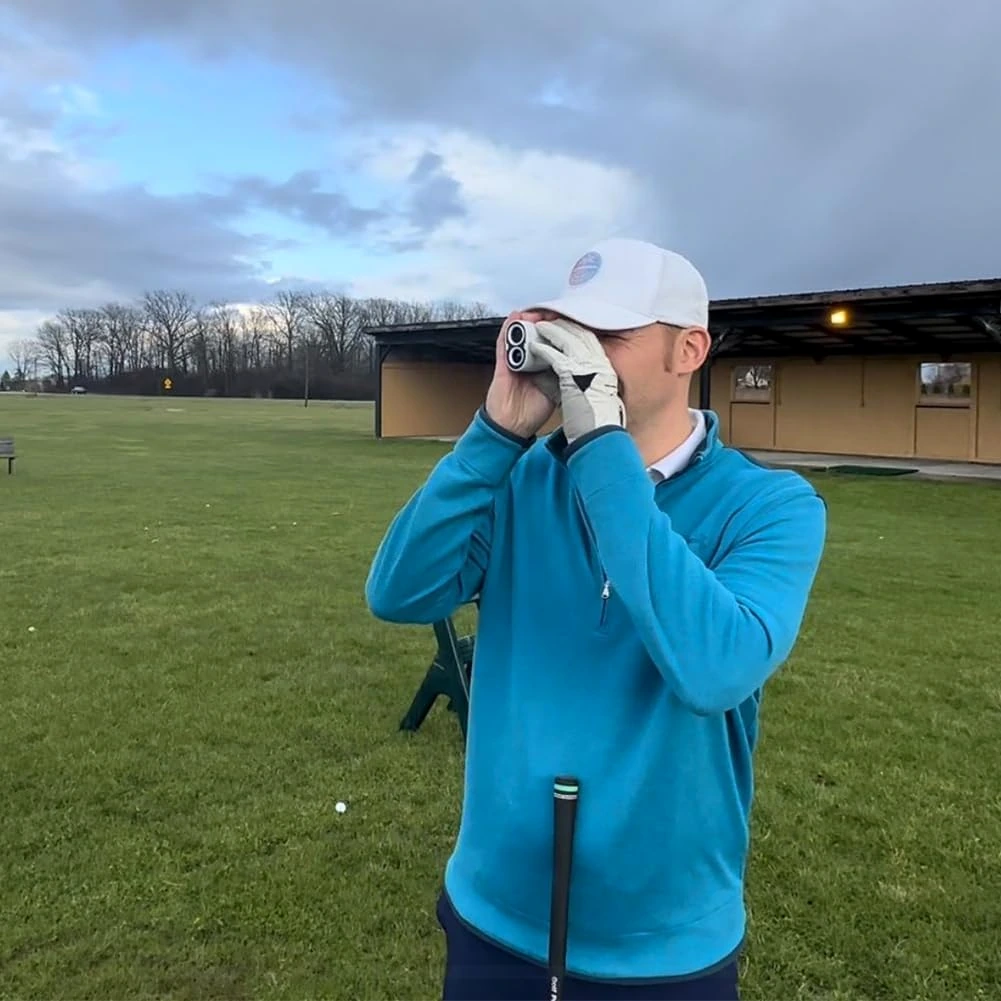
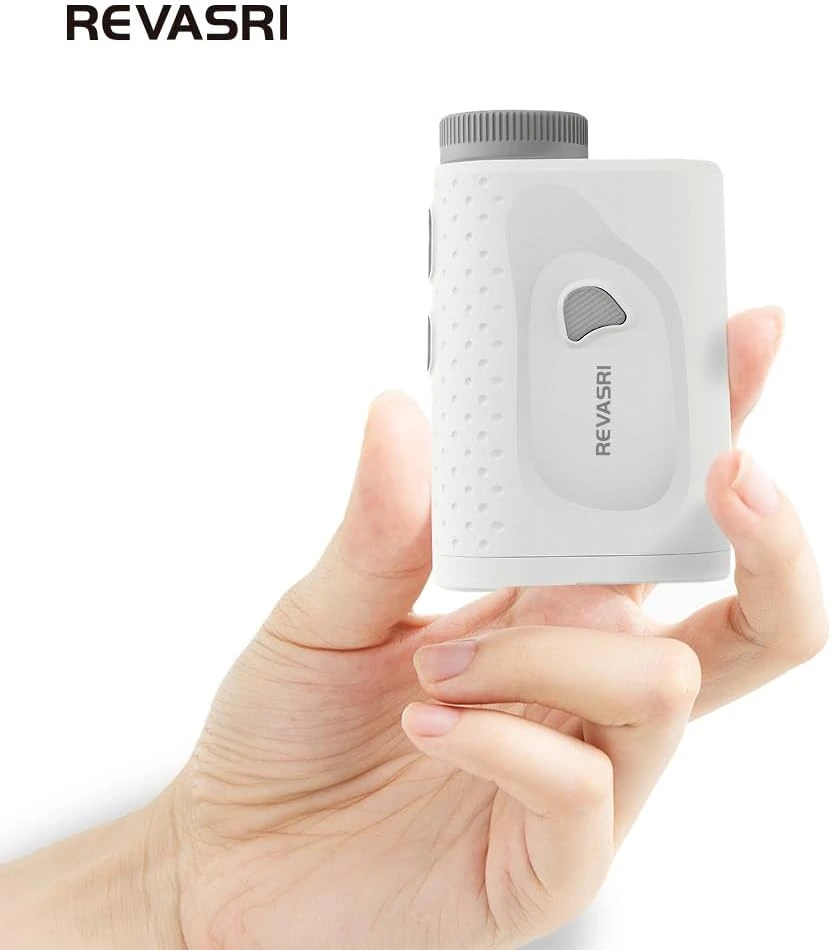
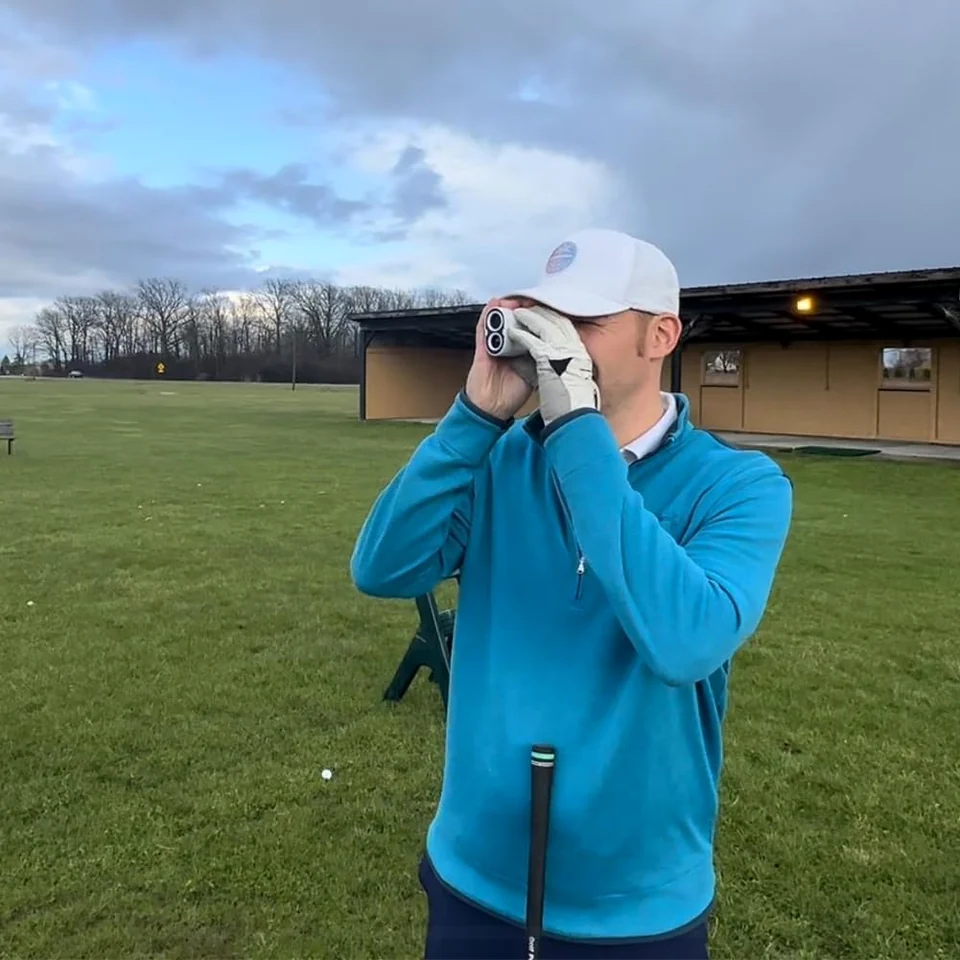
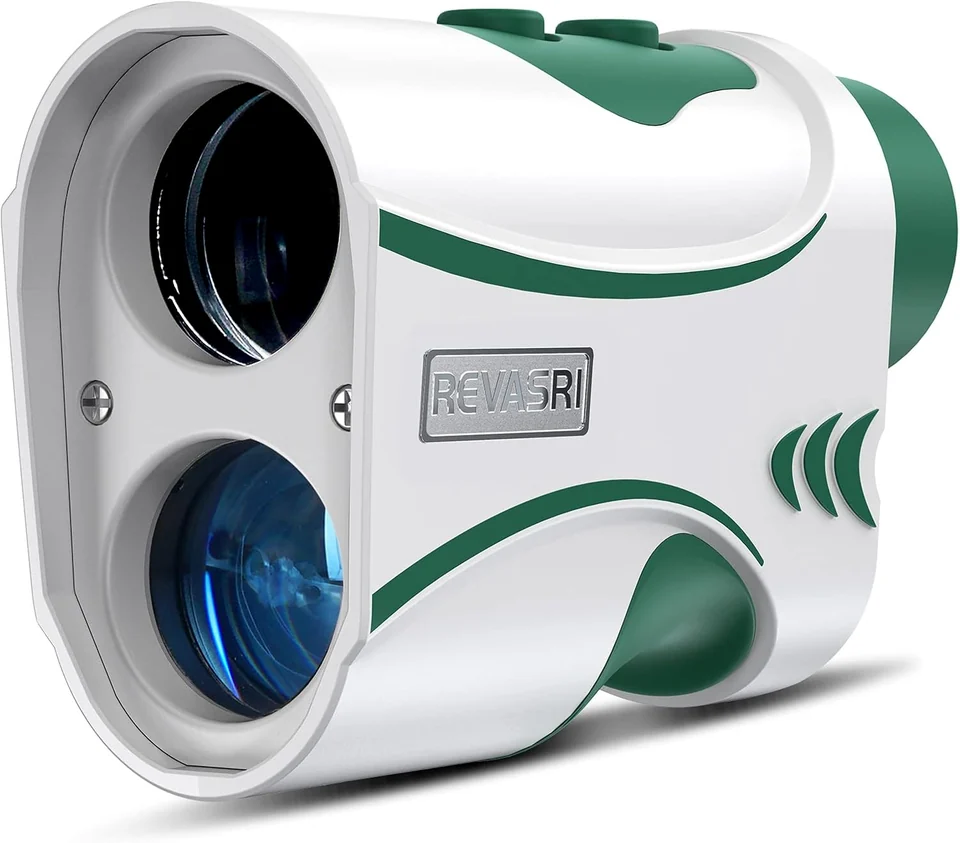
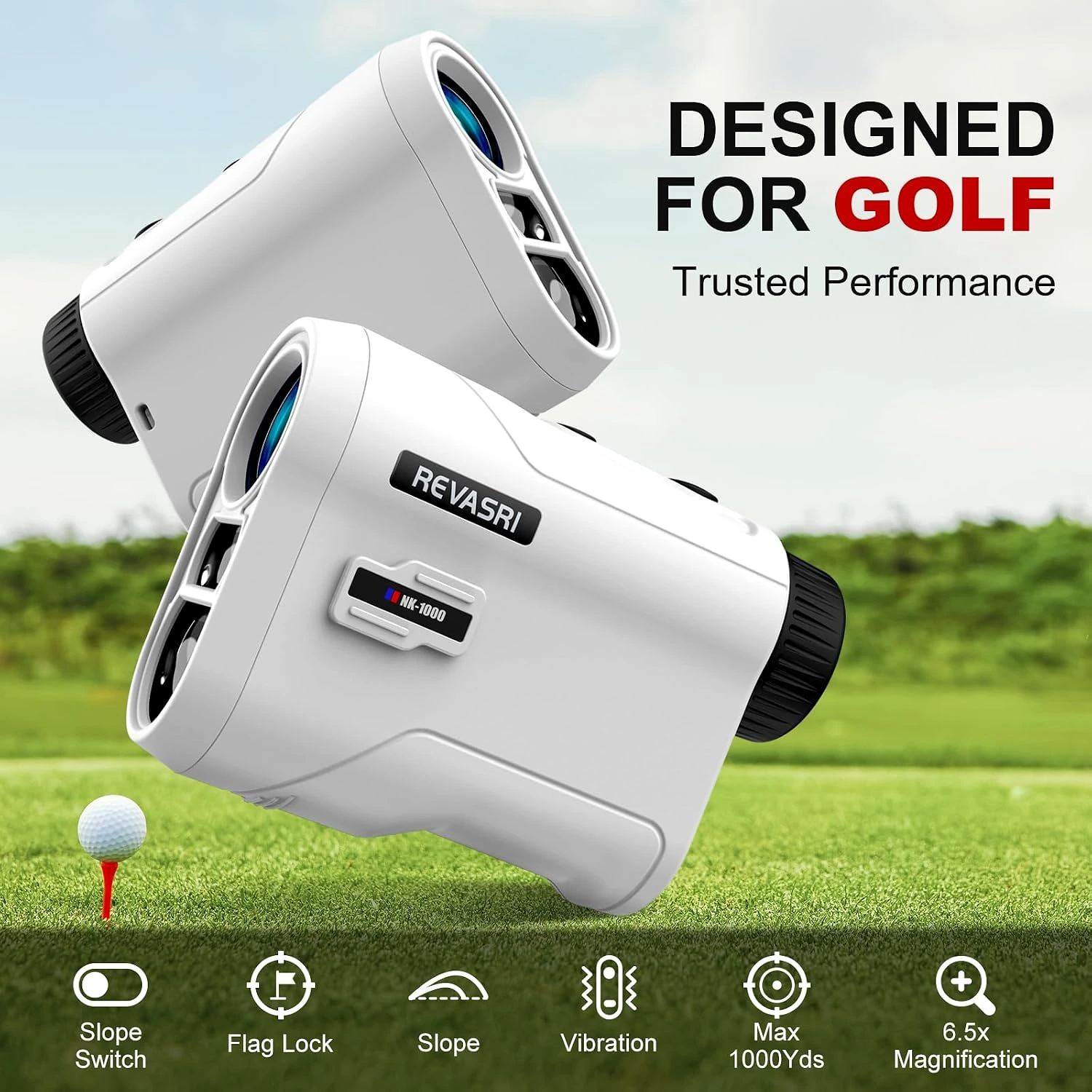
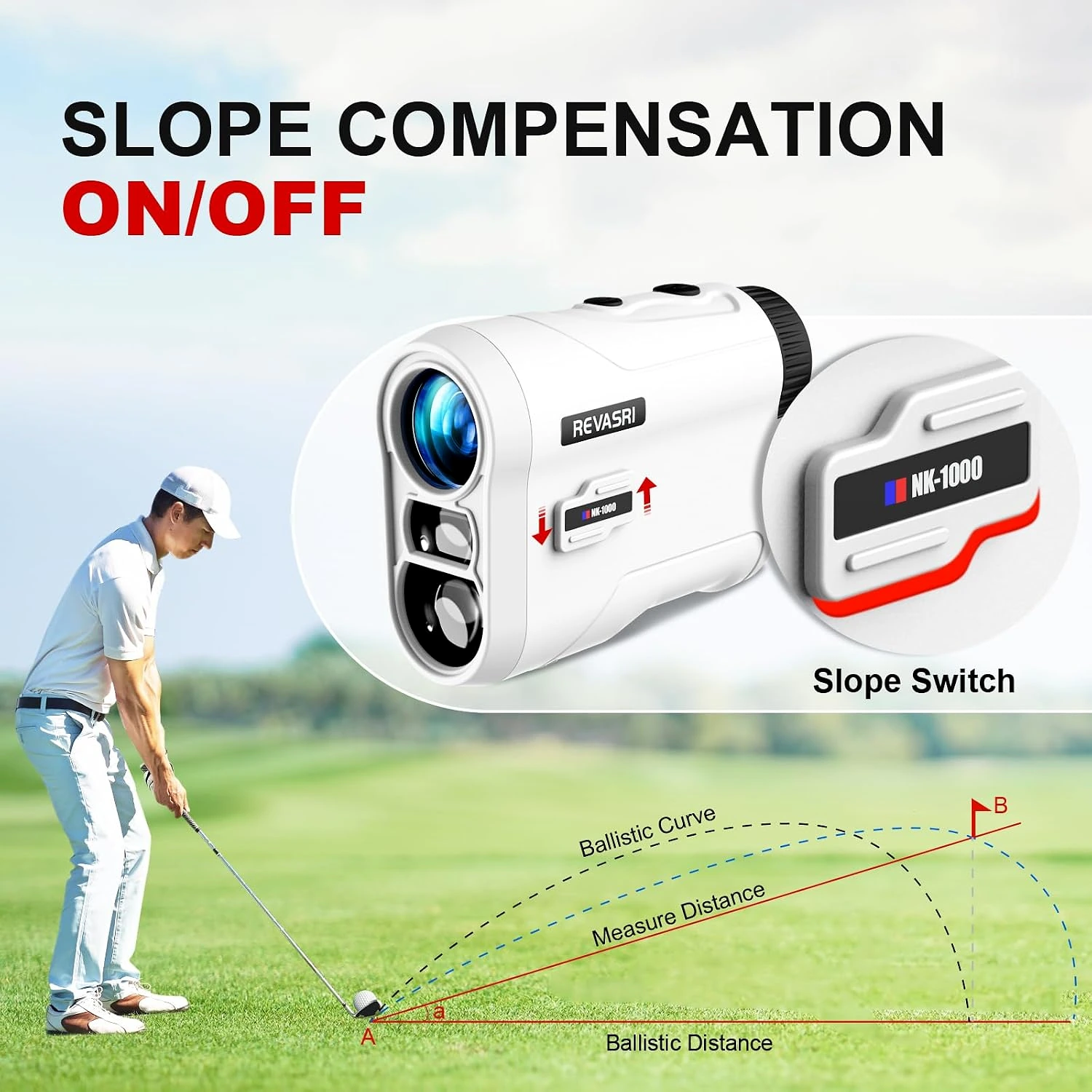
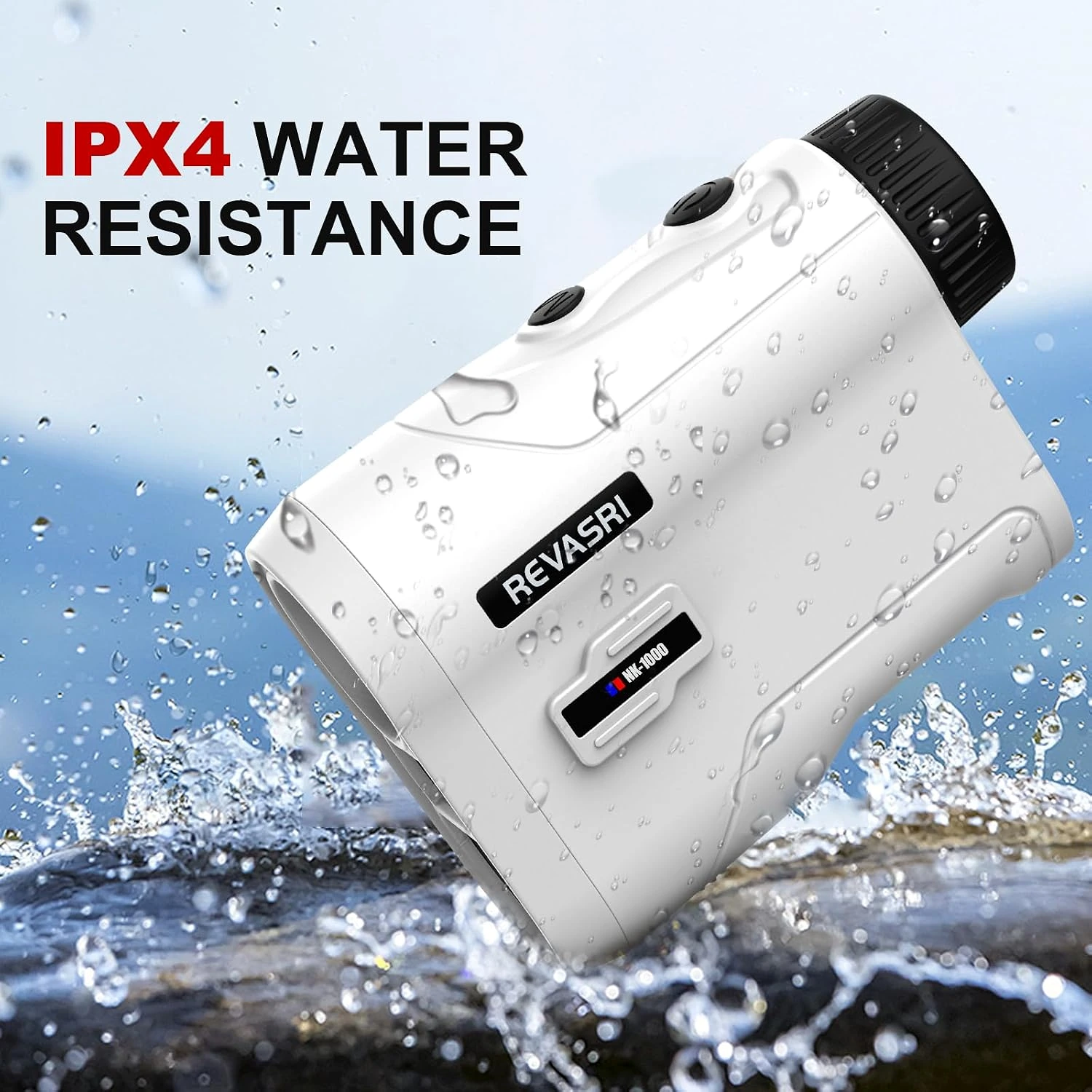
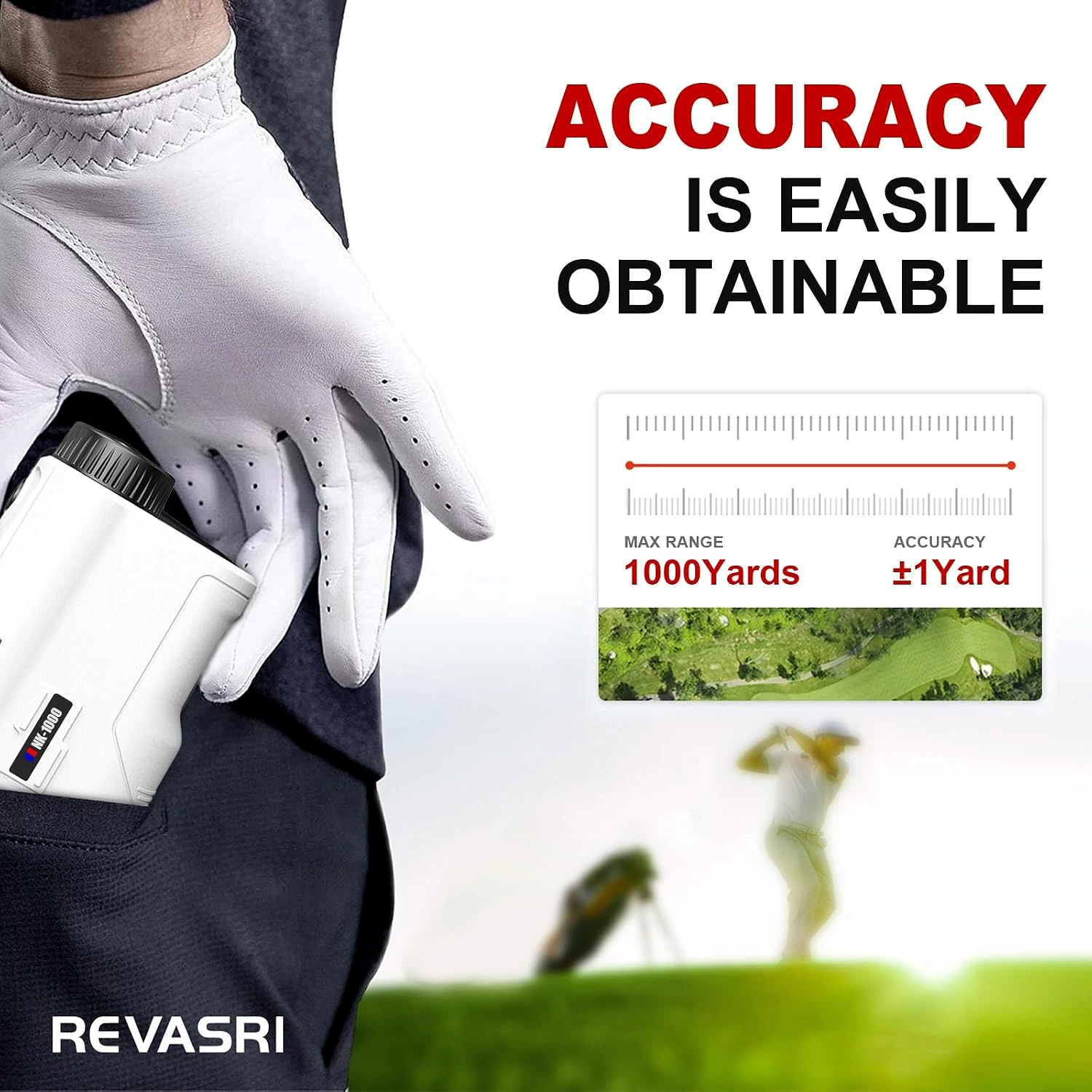
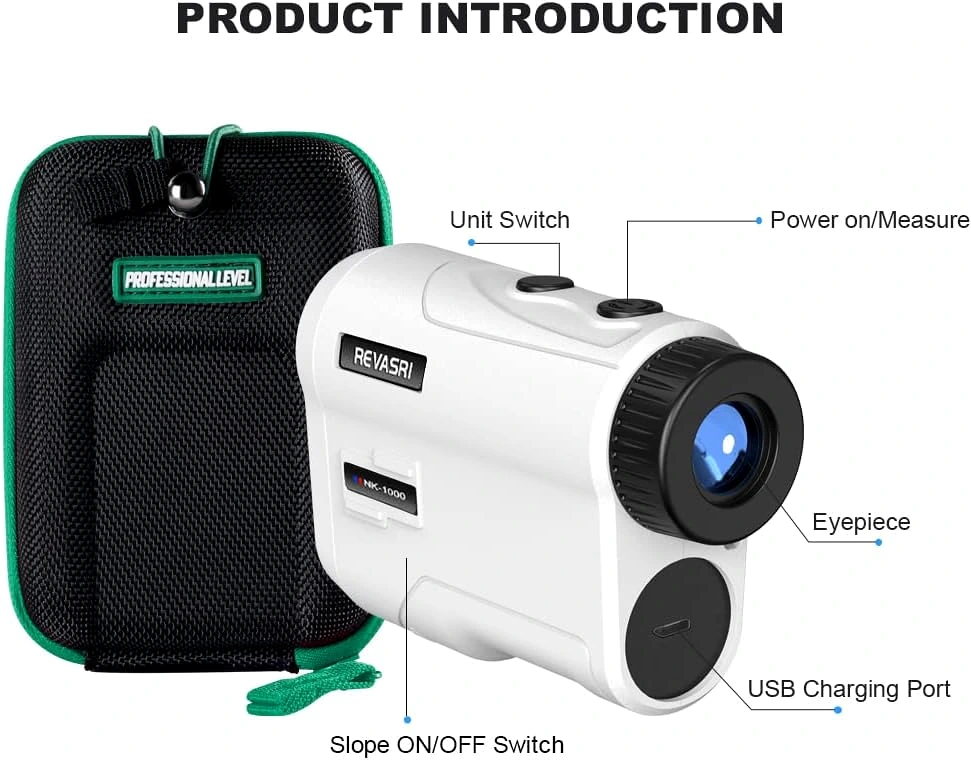
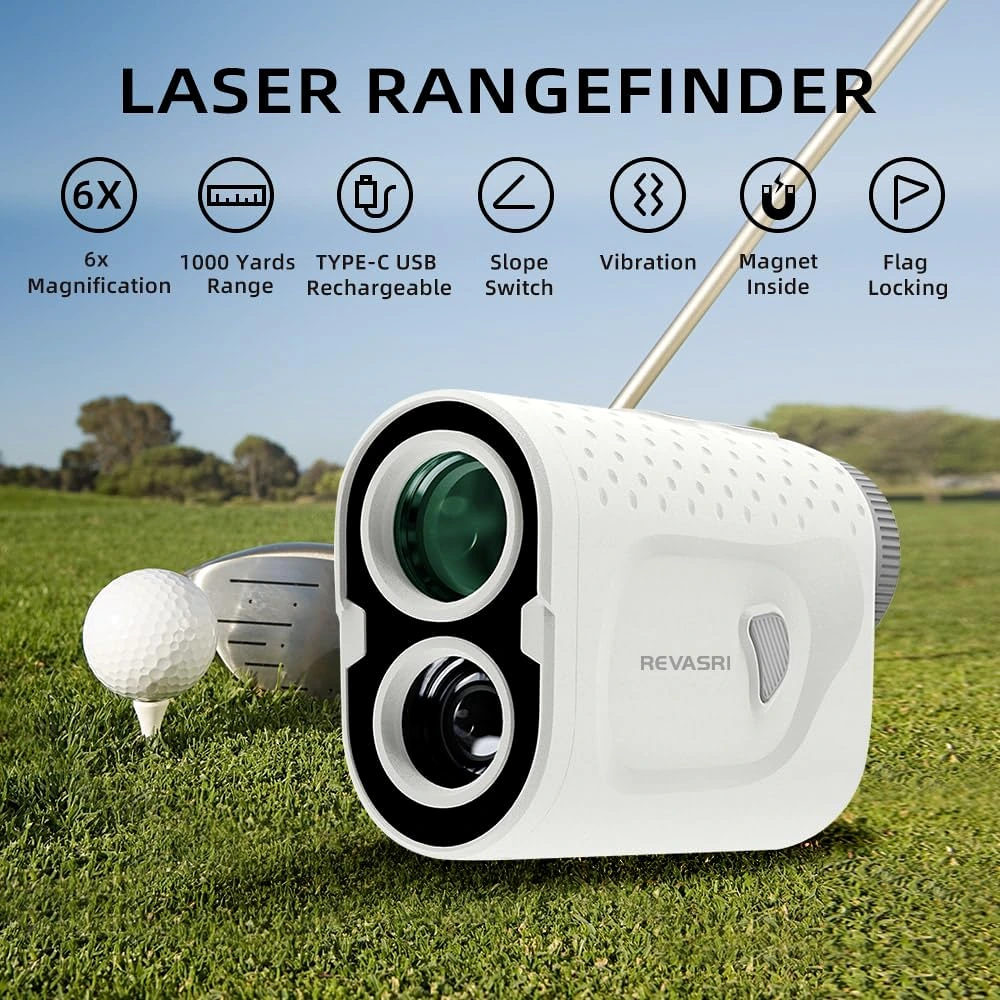
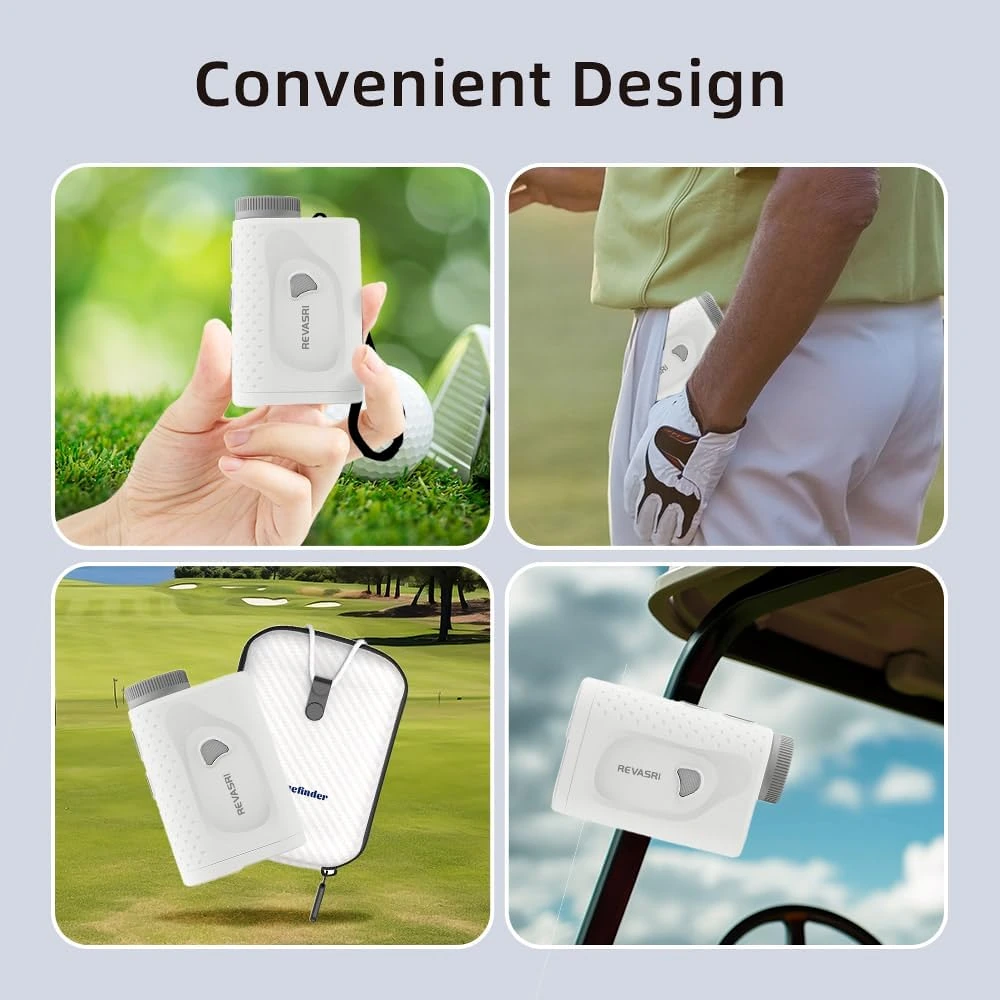
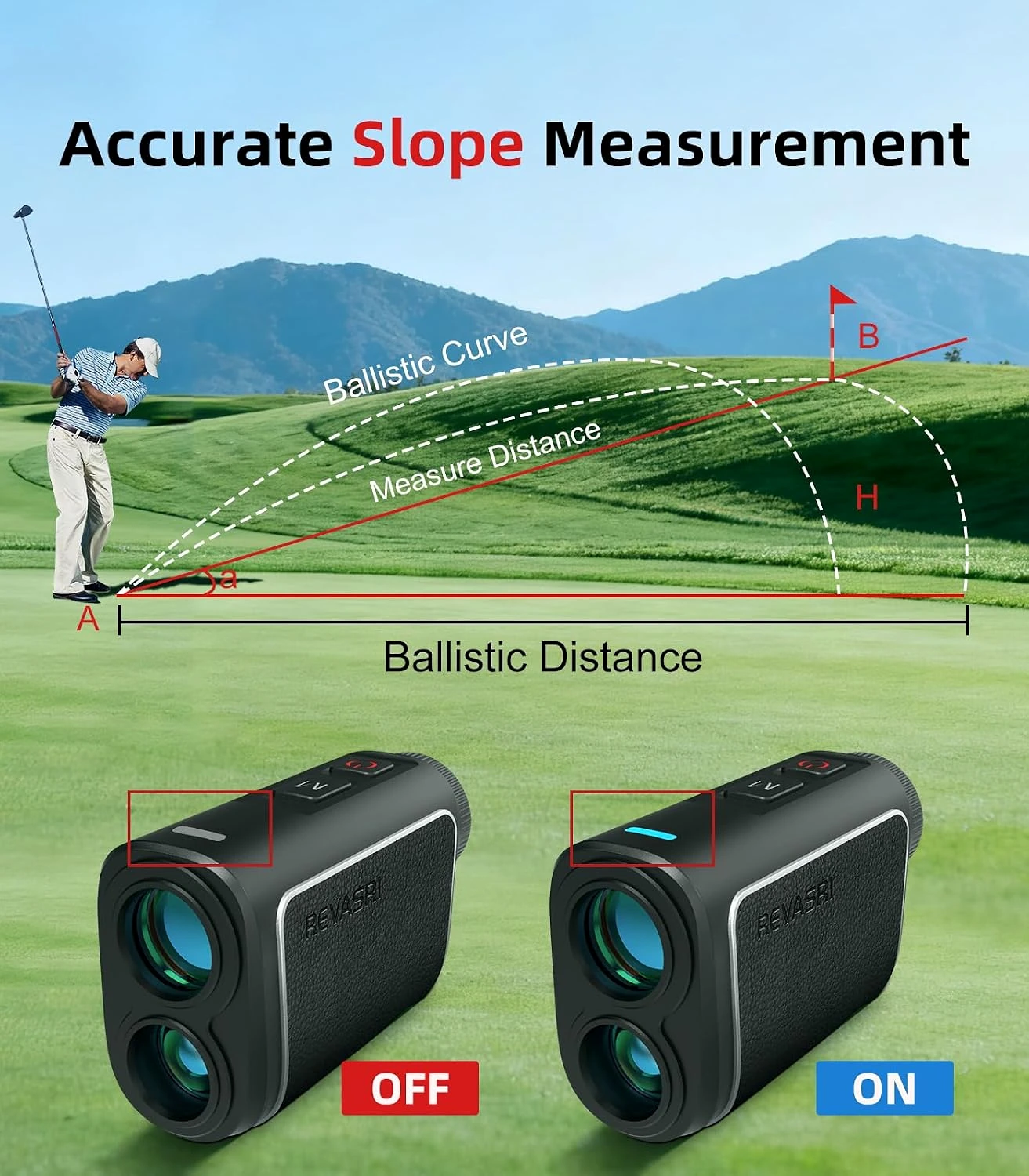
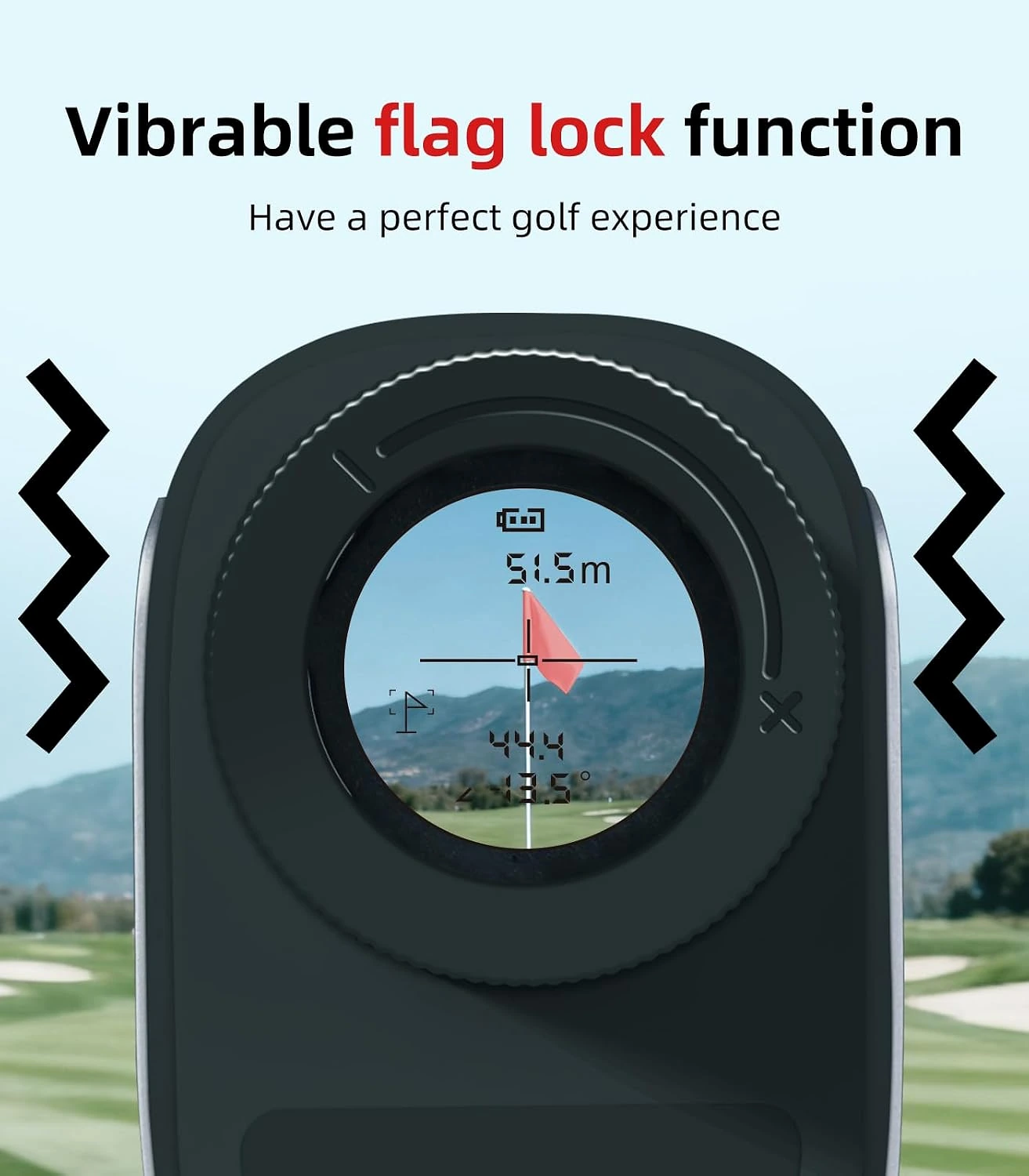
A straightforward golf rangefinder with an external slope switch and pin-lock vibration. Its compact white body keeps the controls simple while you check the flag or a course landmark.
1,000 yd maximum range
6.5× magnification
External slope switch
USB-C rechargeable
Details & fit
The selected NK1000 White version has a stated ±1-yard accuracy, 0.5-second measurement time and 4.3 oz weight. Choose yards or meters. The package includes a pouch with carabiner, charging cable, lens cloth and manual. Confirm event rules and disable slope when required.
Choose it for: Golfers who want essential distance features and a physical slope switch.
Read the course in yards, feet or meters. The N1 combines a side magnet with an external slope switch, so it fits both a golf-cart routine and a disc-golf practice session.
5–1,000 yd range
Yards / feet / meters
External slope switch
USB-C rechargeable
Details & fit
Flag-lock vibration gives a tactile signal when the target is acquired. The 4.8 oz body measures 3.74 × 2.4 × 1.38 inches; its built-in 700 mAh battery recharges through USB-C. Use direct distance when slope assistance is not permitted.
Choose it for: Golfers who want a visible slope switch, magnetic carry and feet as an extra unit.
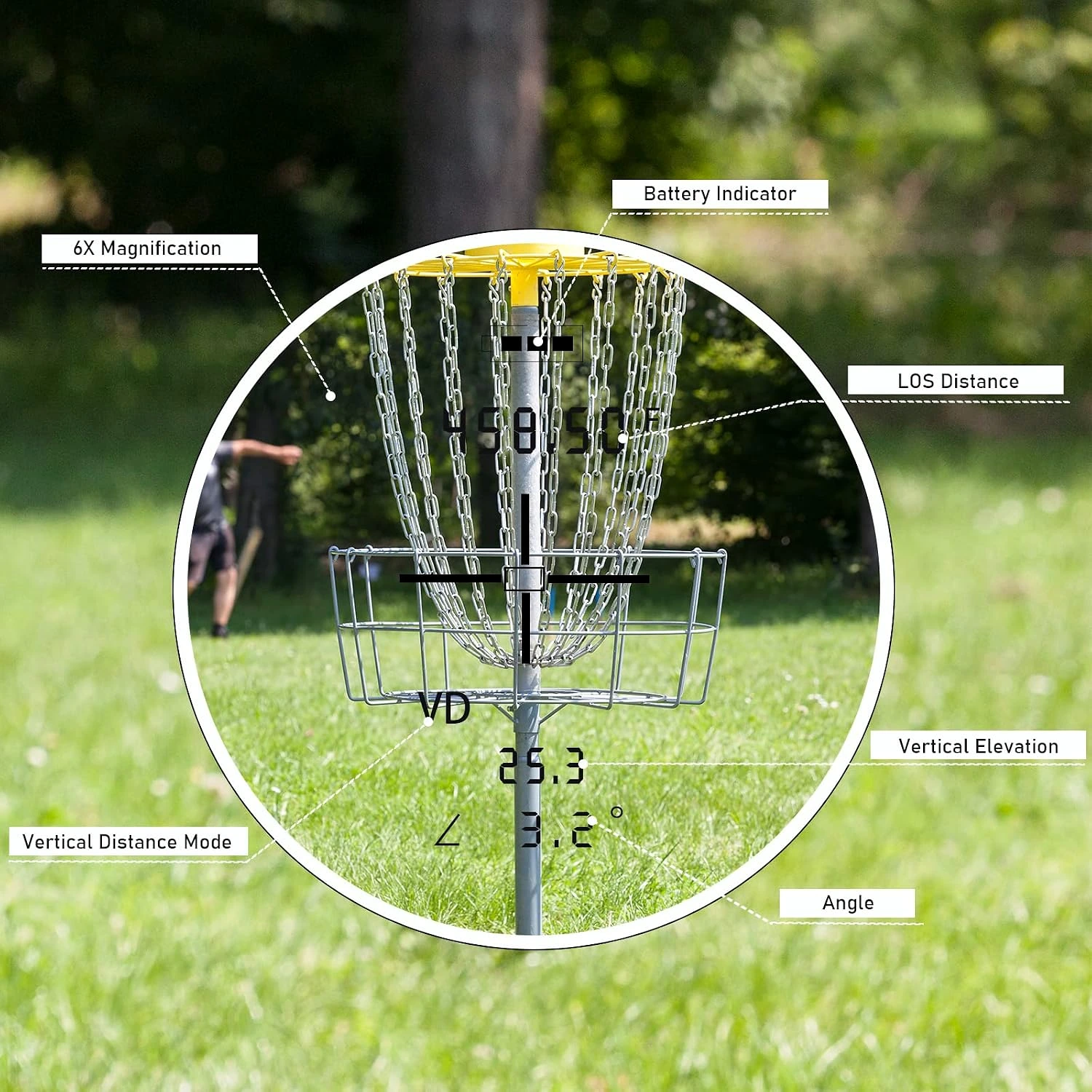
Keep your display in the same unit as your practice notes. The R2 measures in feet, yards and meters, with a separate mode for vertical elevation and direct distance.
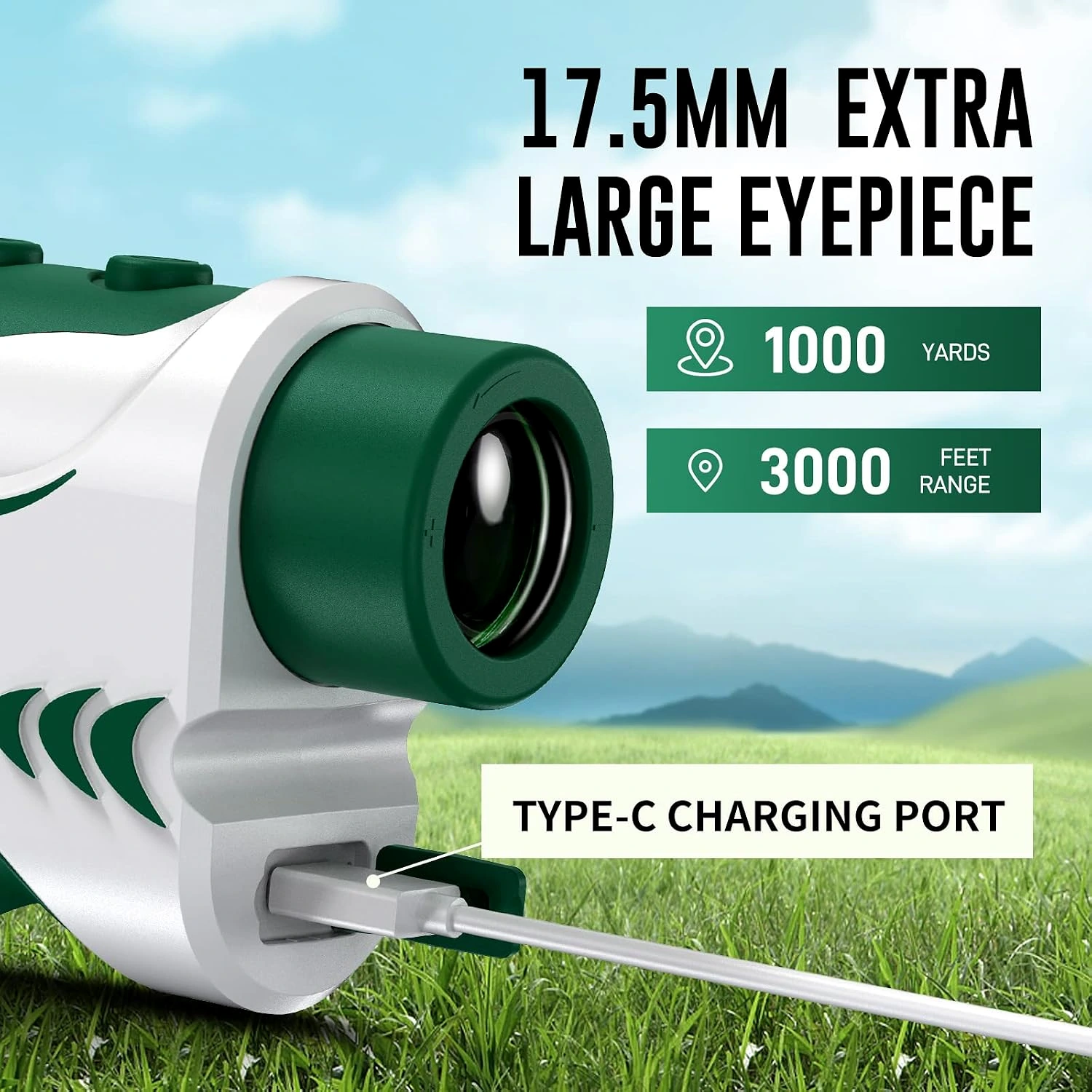
12–3,000 ft range
6× magnification
Elevation + direct distance
750 mAh rechargeable battery
Details & fit
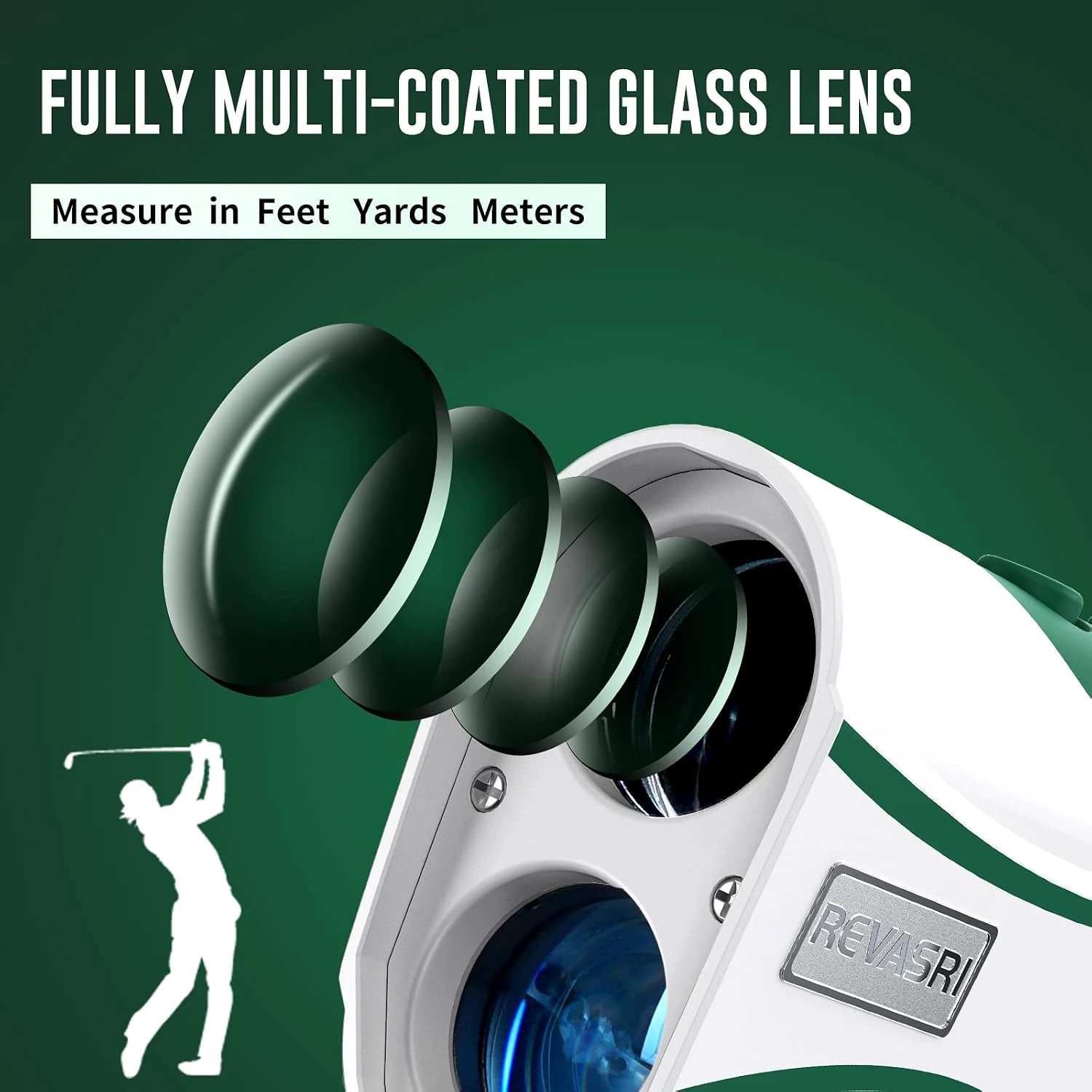
The R2 offers a 4–1,000-yard range and ±1-yard stated accuracy. A second mode provides golf slope compensation and flag-lock vibration. The large eyepiece and coated glass lenses support a clear view; its IP54 rating means limited dust and splash protection, not immersion.
Choose it for: Disc golfers who want feet on the display and elevation information kept distinct.
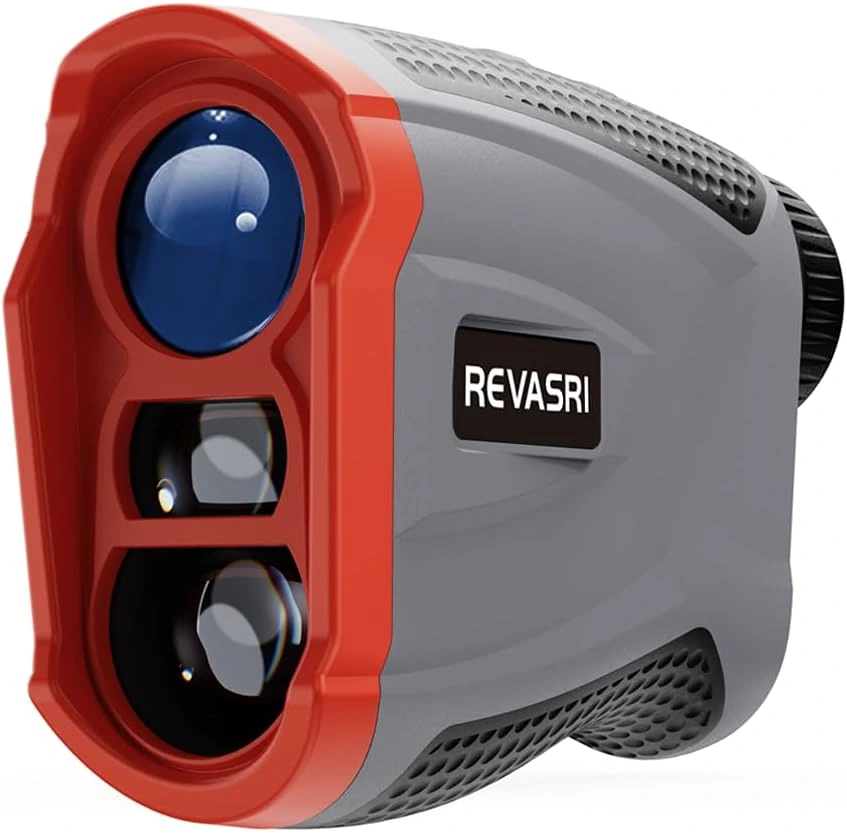
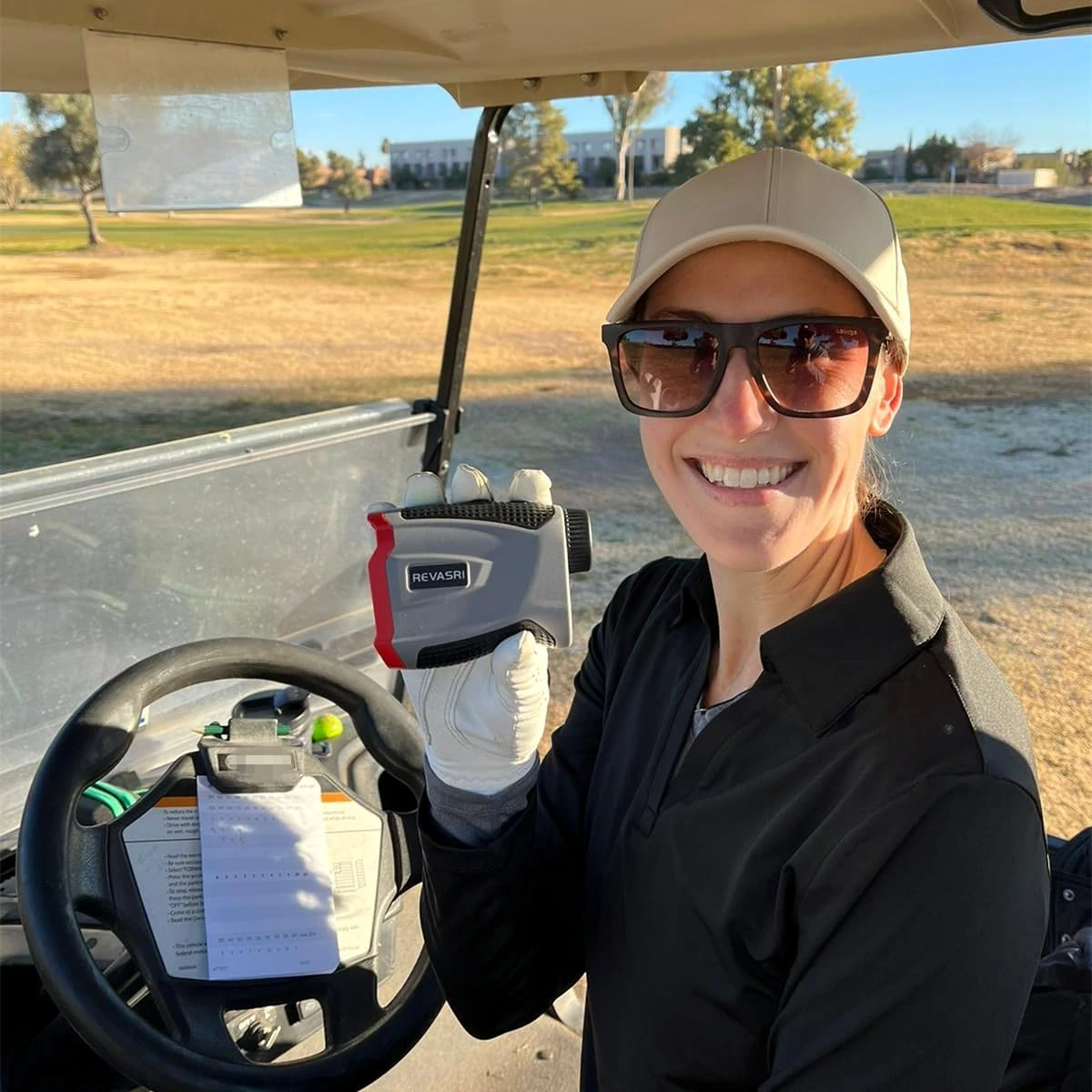
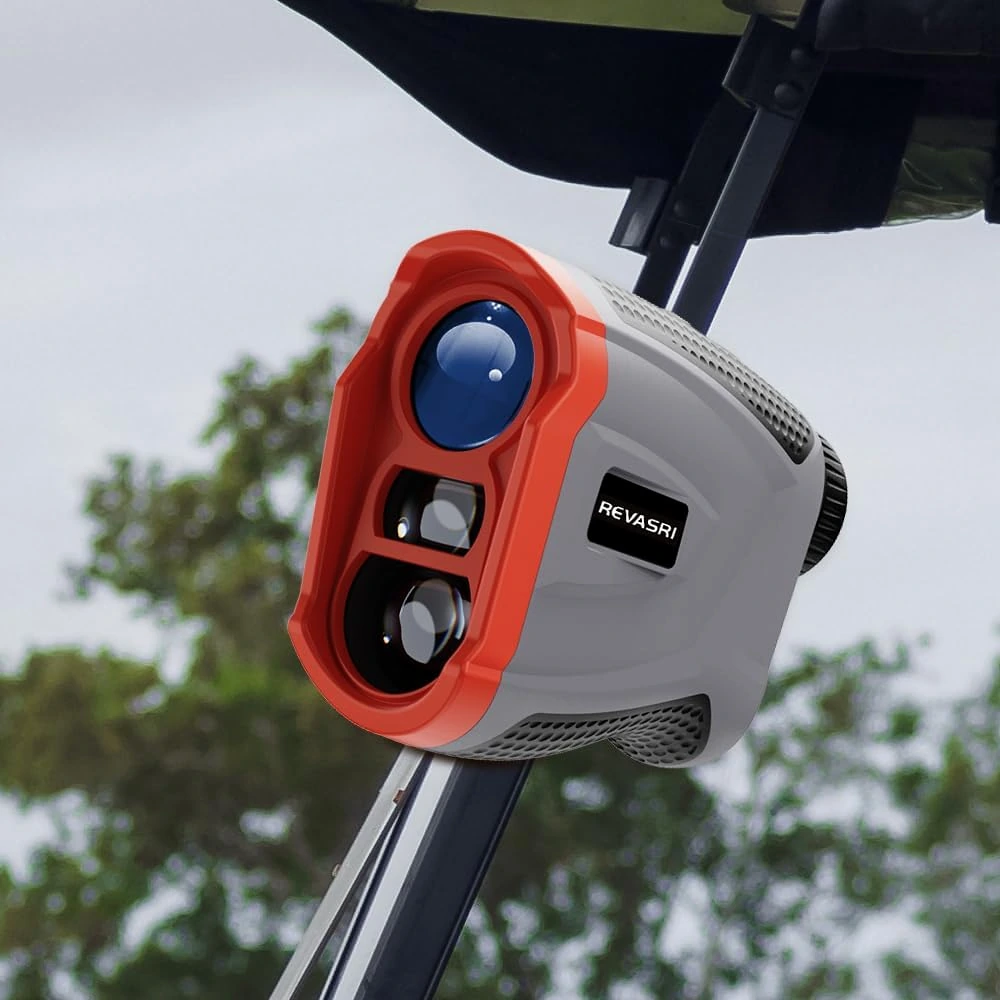
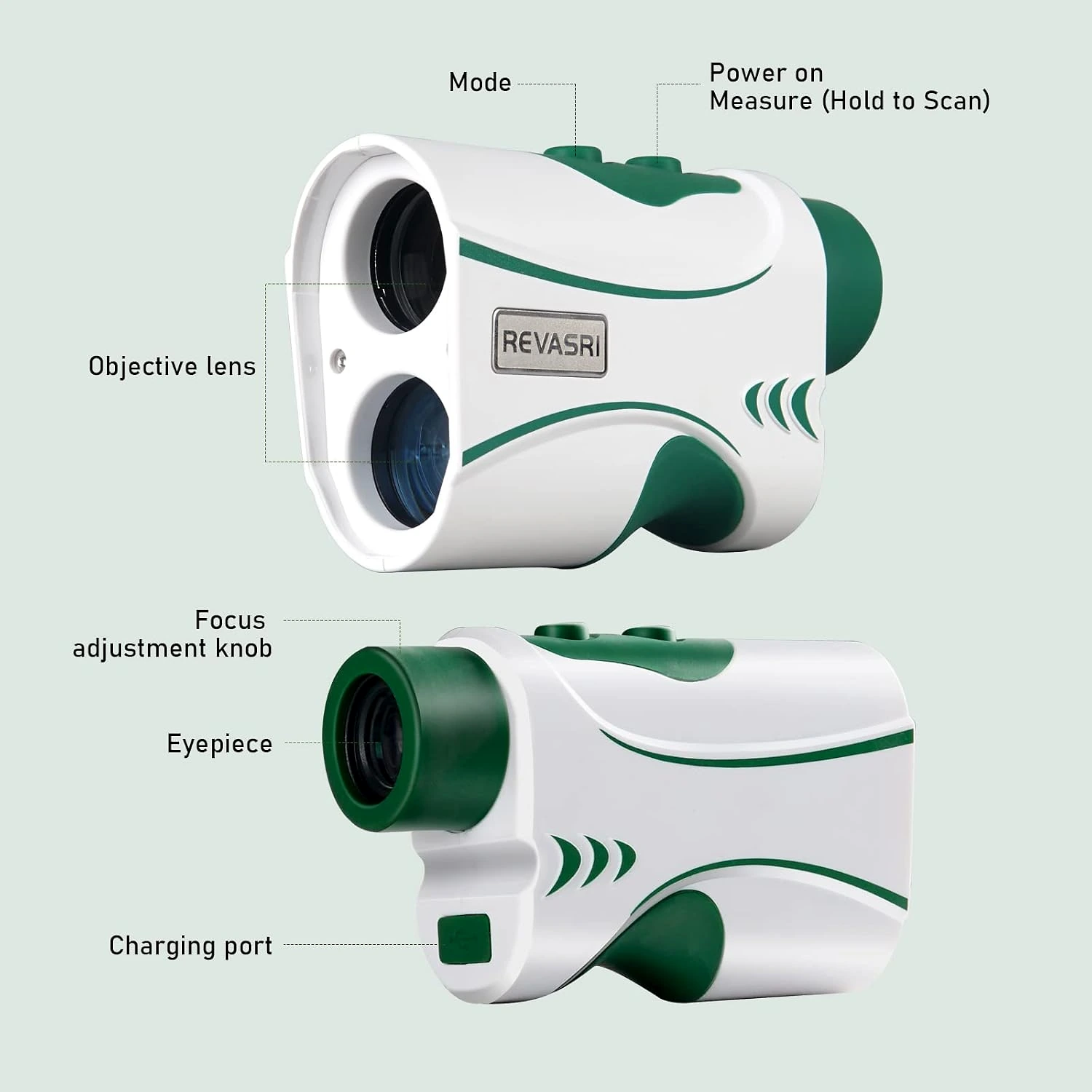
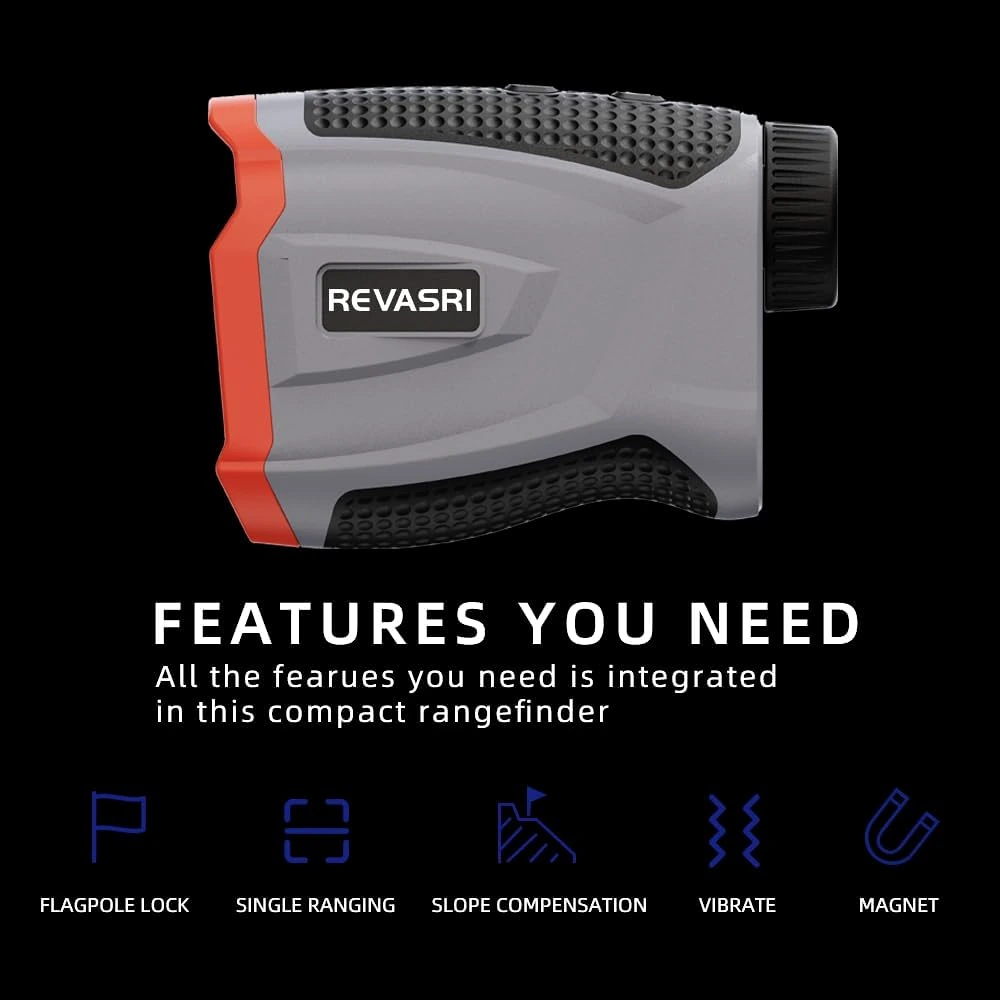
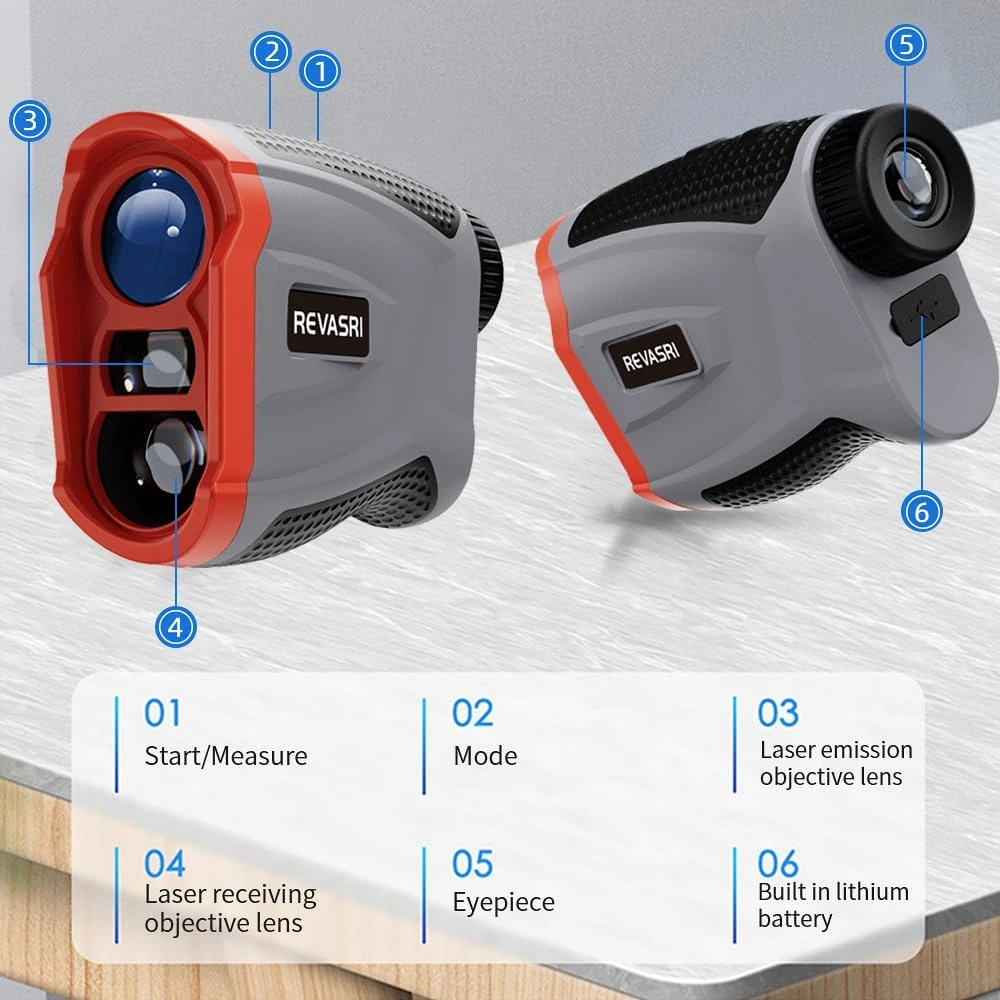
A gray-and-red body, side magnet and simple top controls make the 3M02 an easy companion for a cart-based round. Switch between slope and direct-distance modes with the mode button.
5–1,000 yd range
±1 yd stated accuracy
Flag lock + vibration
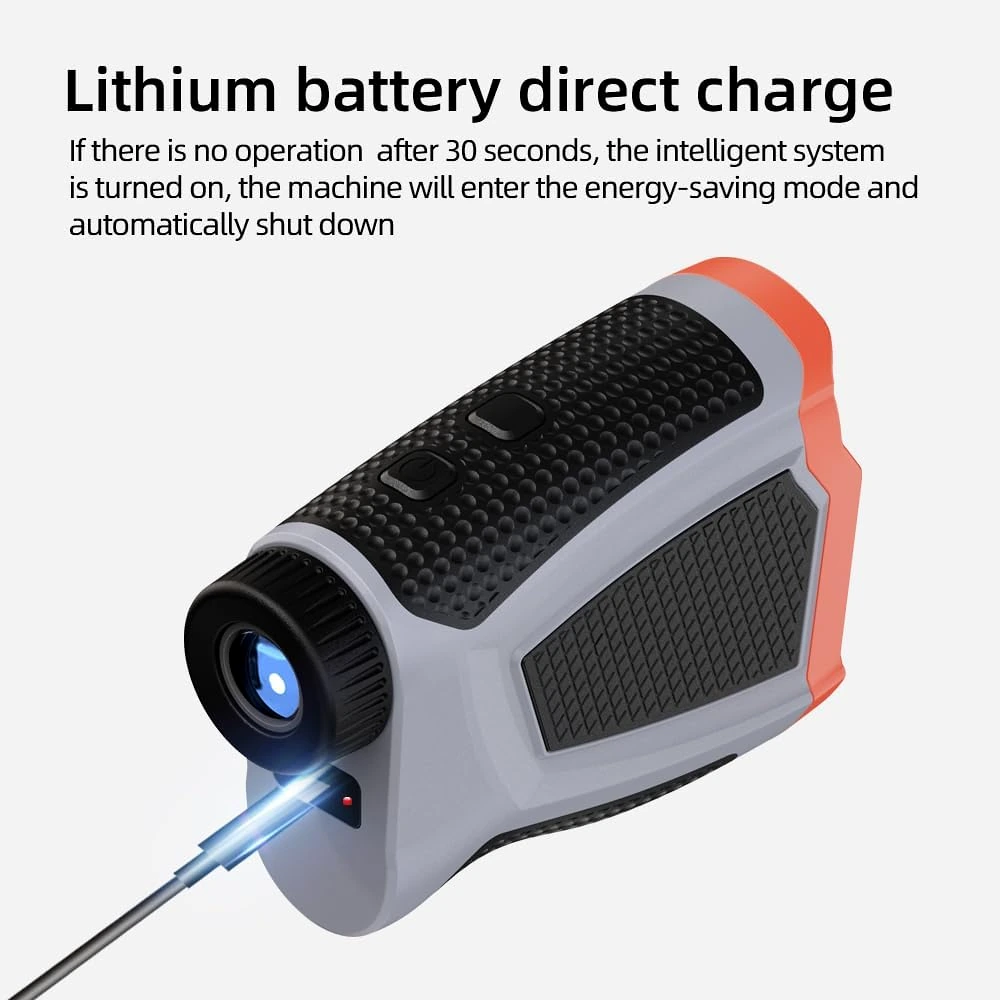
USB-C rechargeable
Details & fit
The 5.43 oz rangefinder has a built-in battery and measures 4.13 × 2.95 × 1.5 inches. Hold the measurement control to scan toward the flag; both supported modes retain flag-lock feedback. Check your competition conditions before using distance aids.
Choose it for: Golfers who prefer magnetic storage and top-button mode selection.
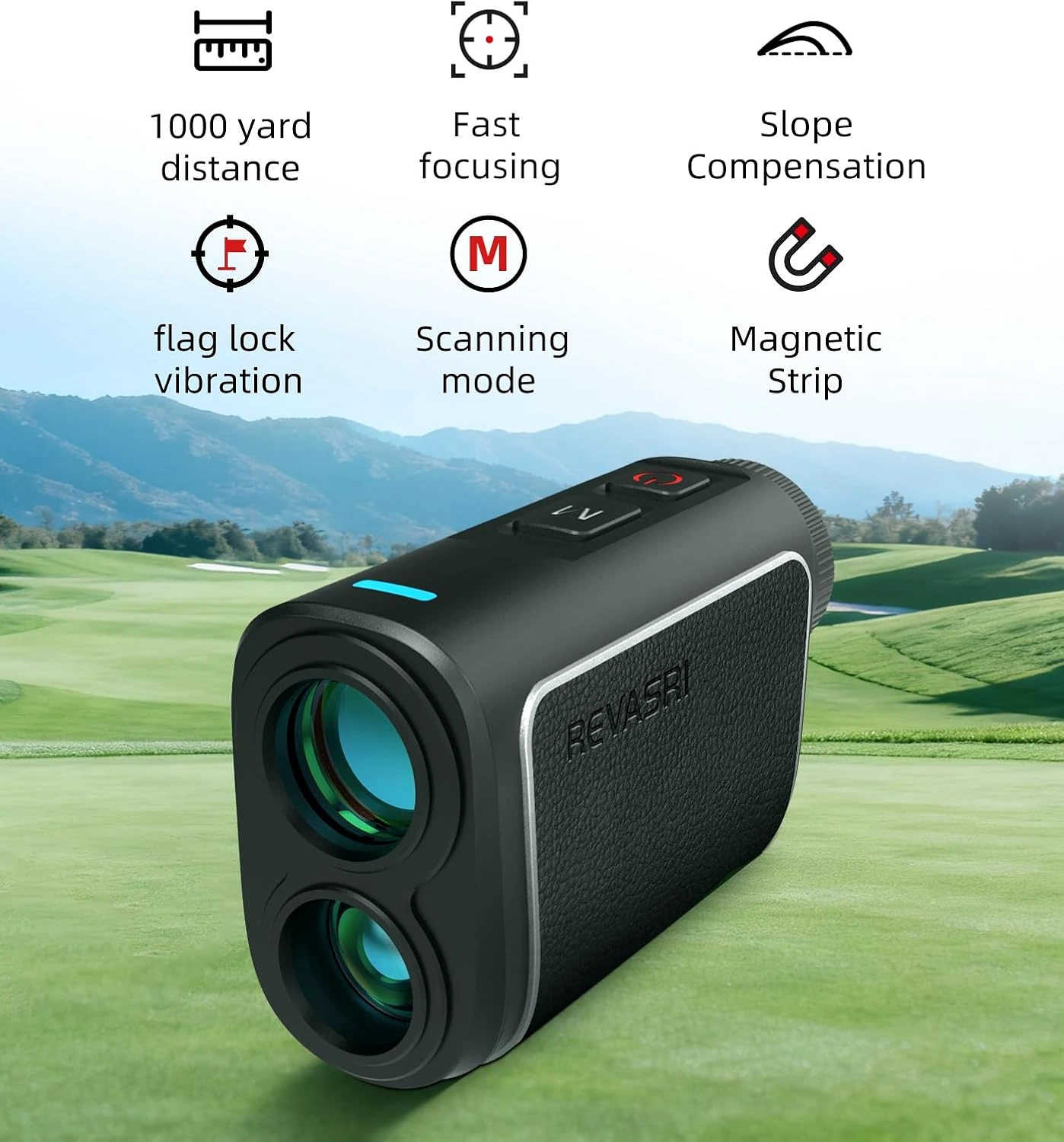
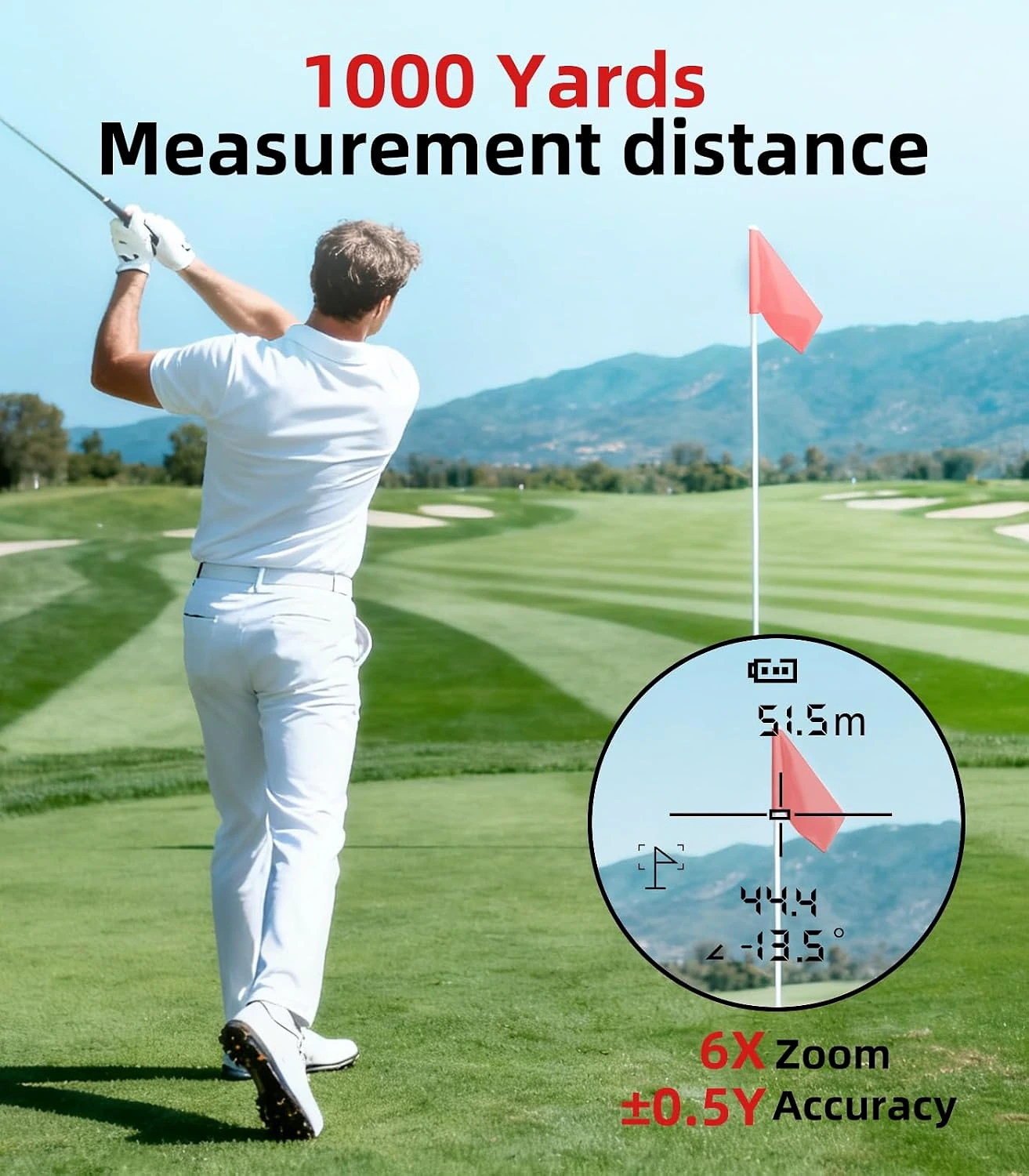
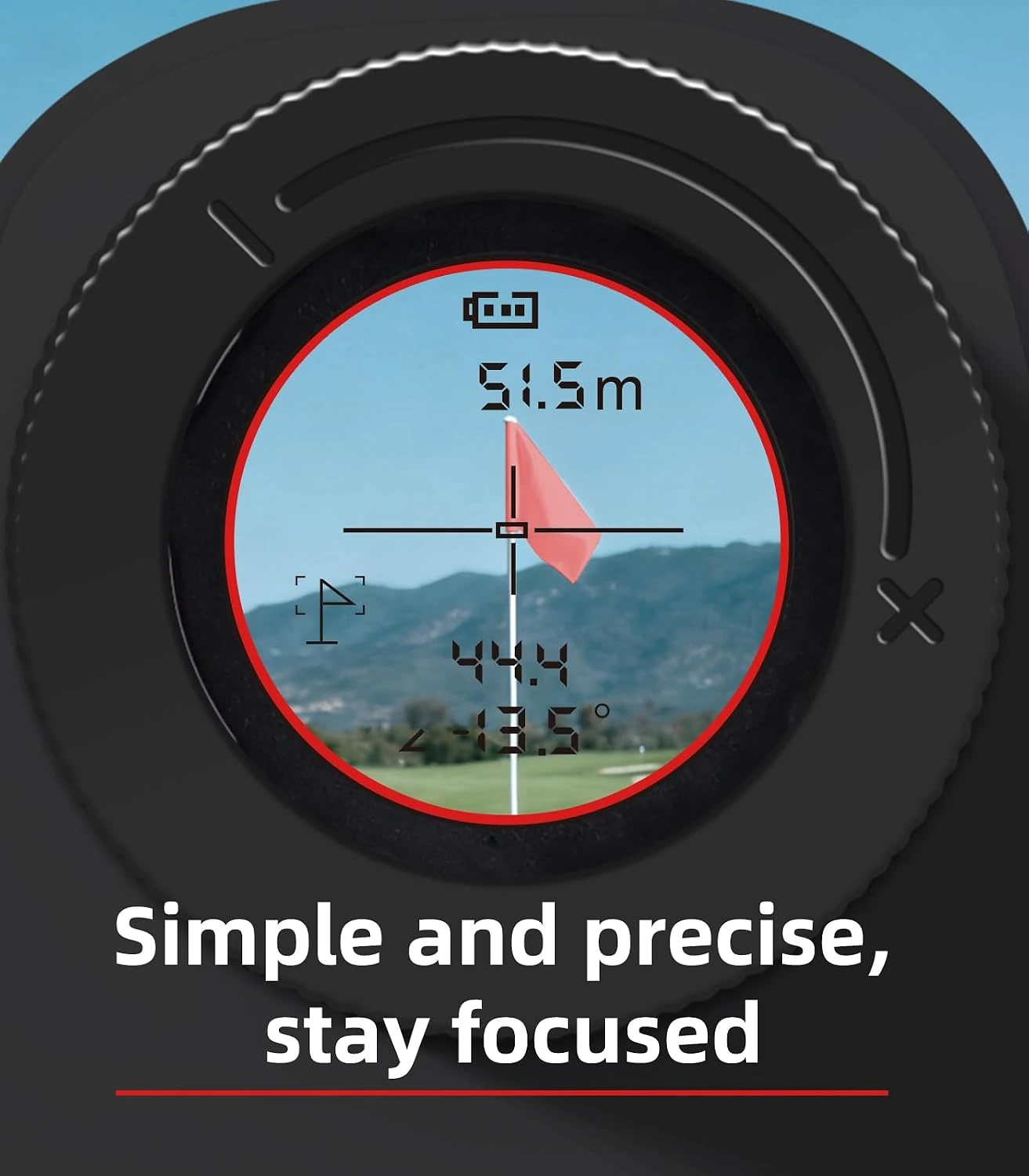
A rechargeable golf rangefinder with a magnetic strip, slope assistance and a 6× view. Continuous scanning and flag-lock vibration help you work through a target check.
5–1,000 yd range
6× magnification
Flag-lock vibration
Magnetic carrying strip
Details & fit
The selected model has an HD LCD and high-strength plastic housing. Its listing states 0.5-yard measurement accuracy; that figure is a manufacturer specification, not a promise in every condition. Confirm the exact slope controls and competition requirements before using it in an event.
Choose it for: Golfers looking for a magnetic, rechargeable 6× option.
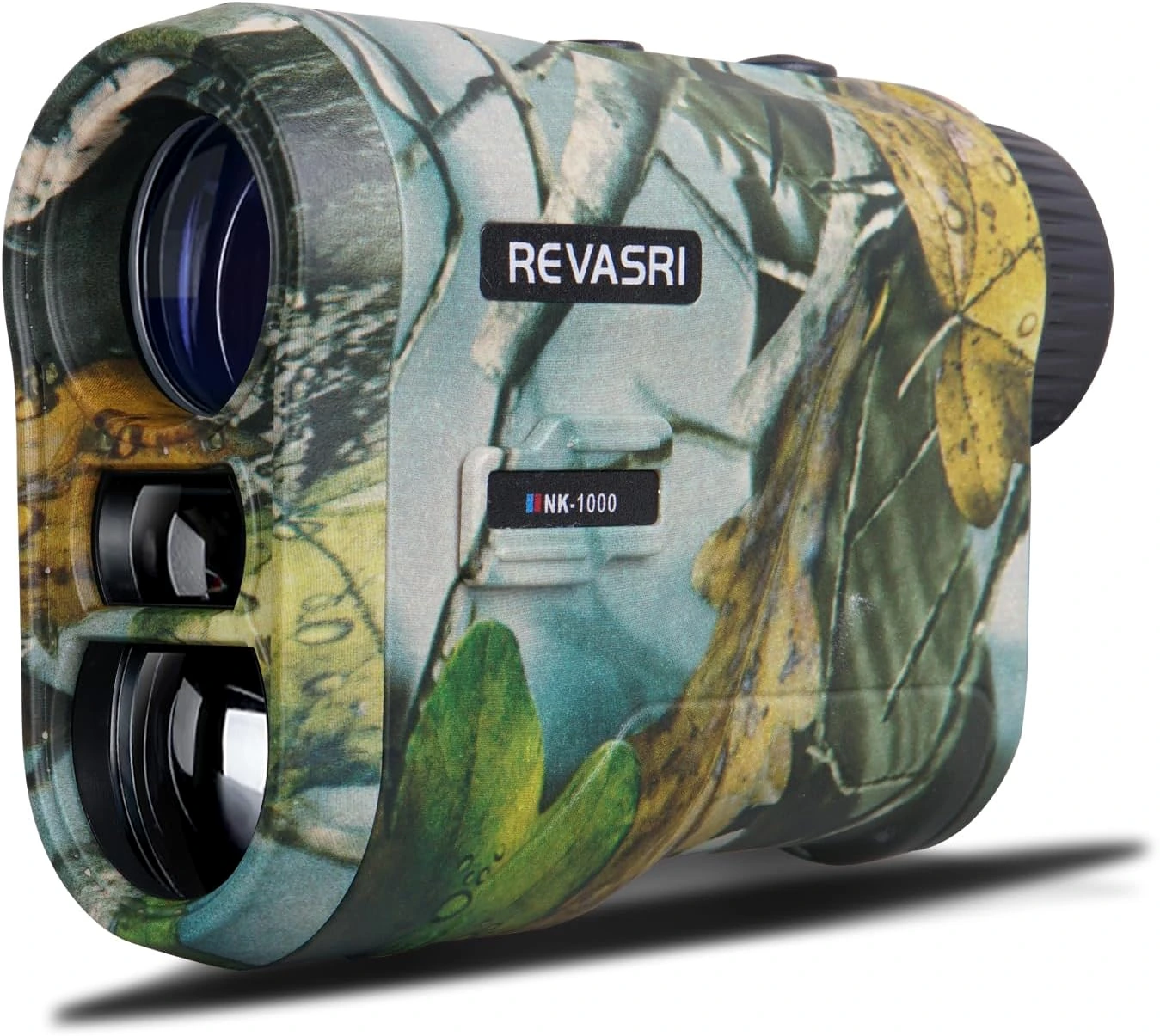
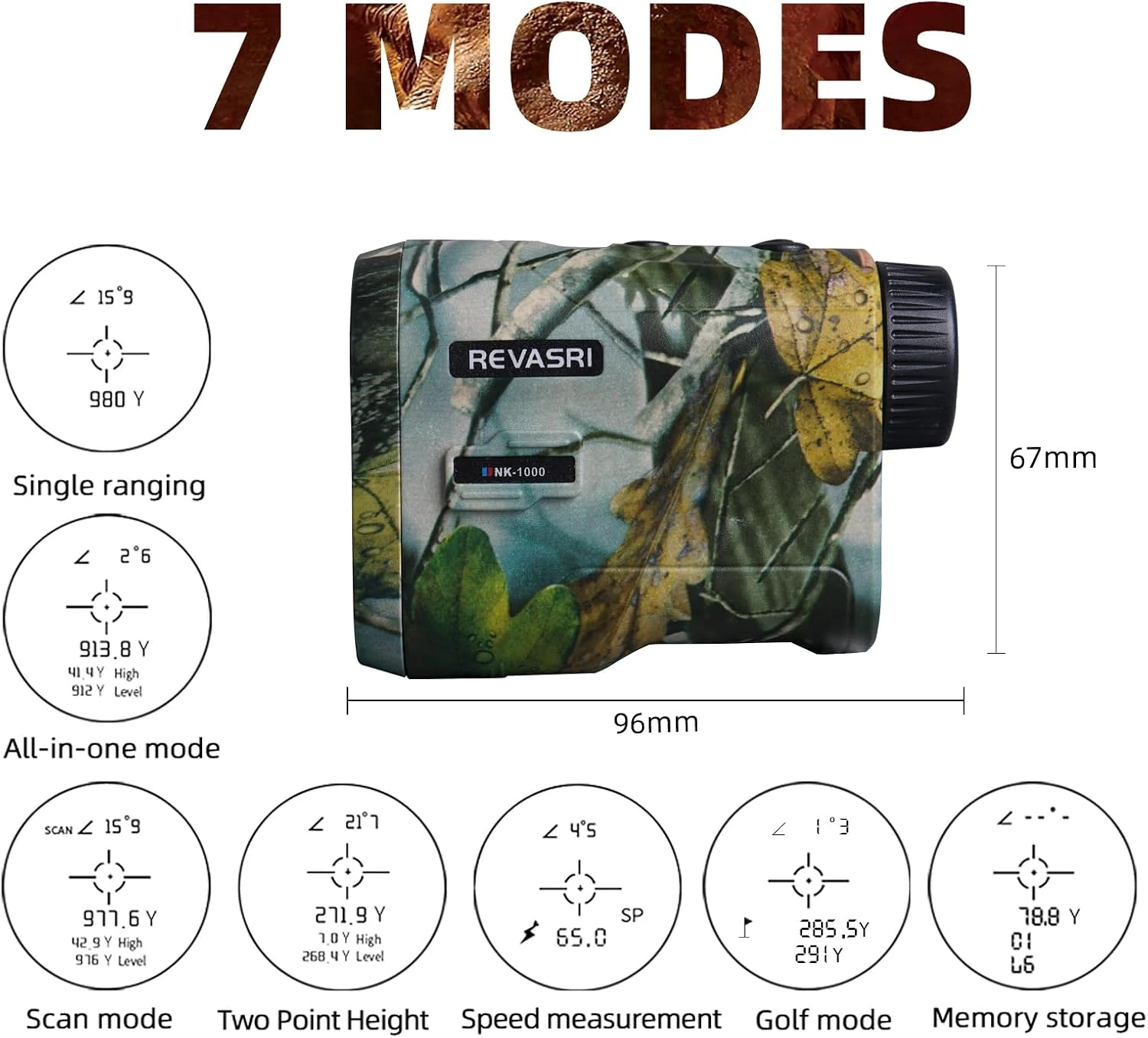
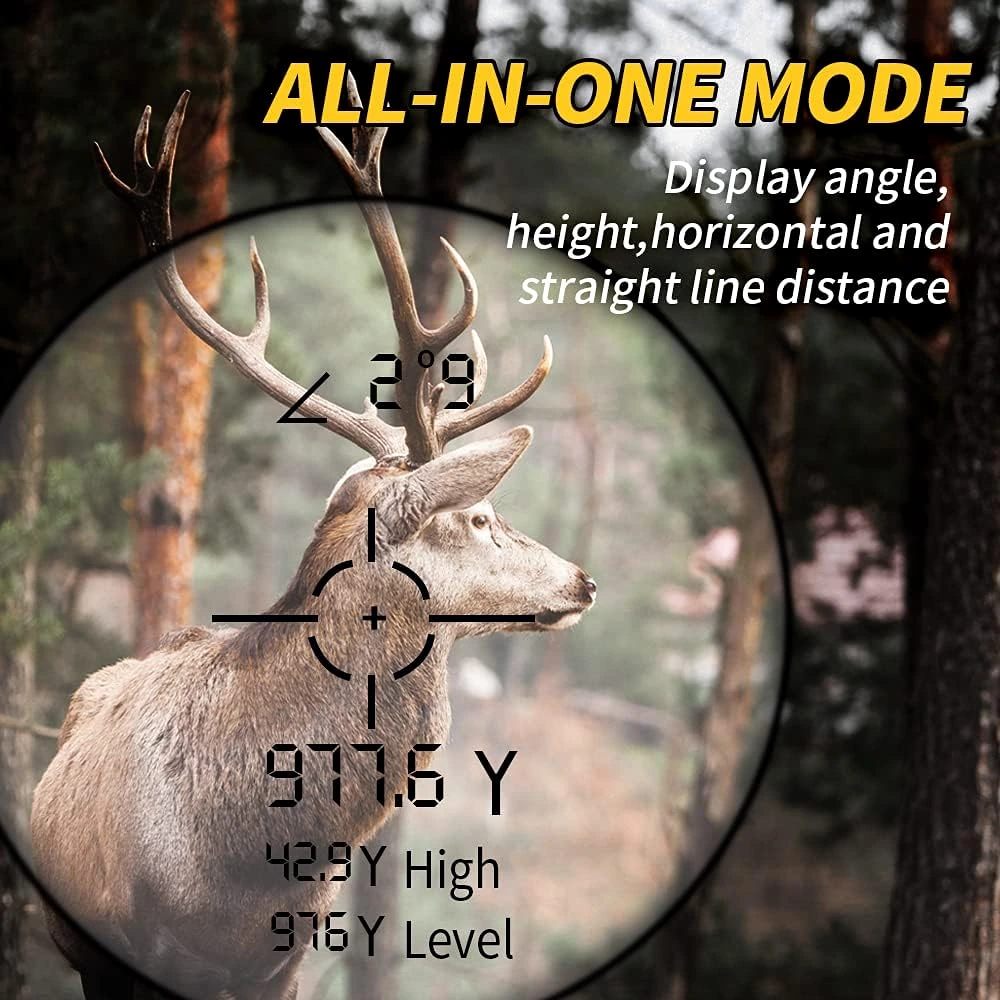
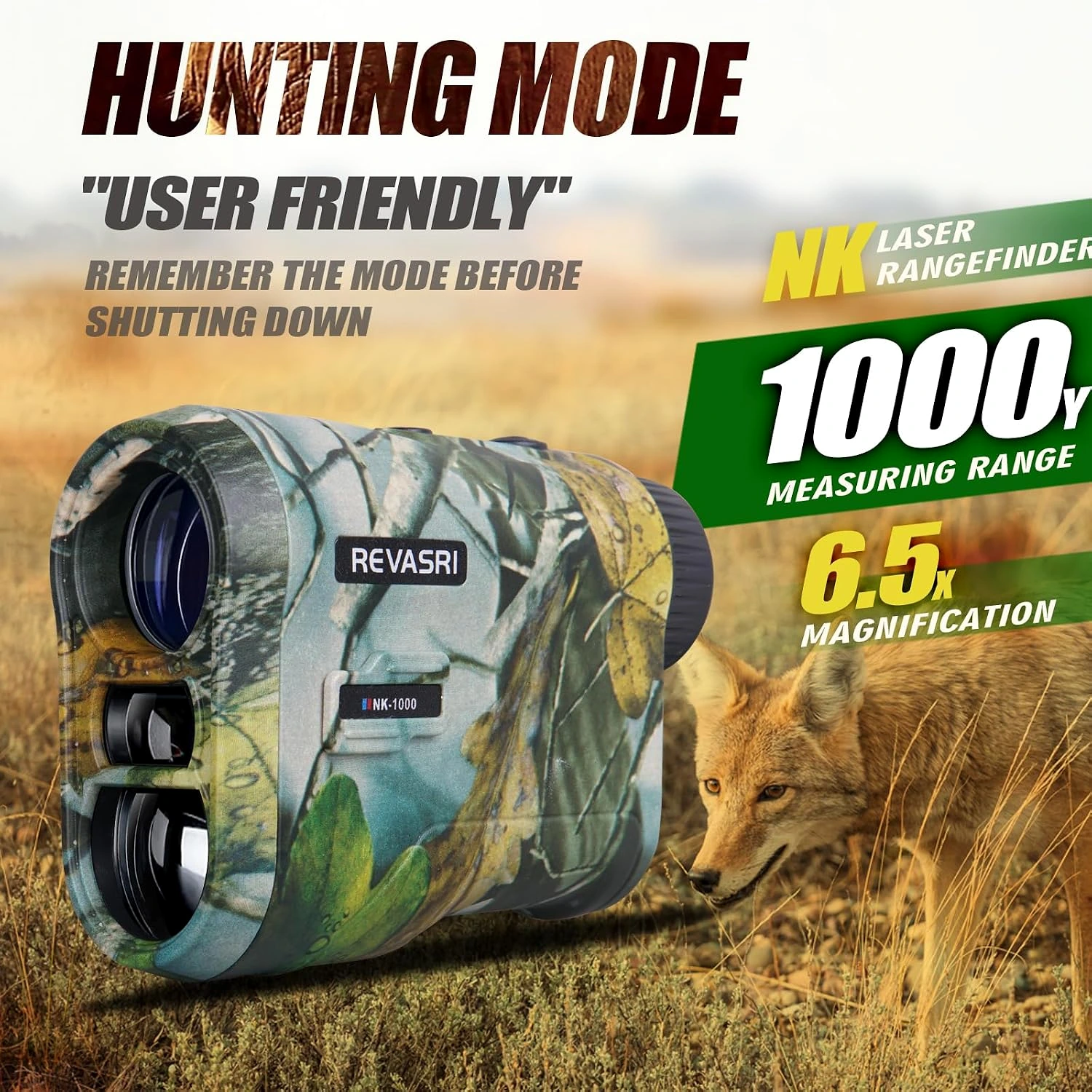
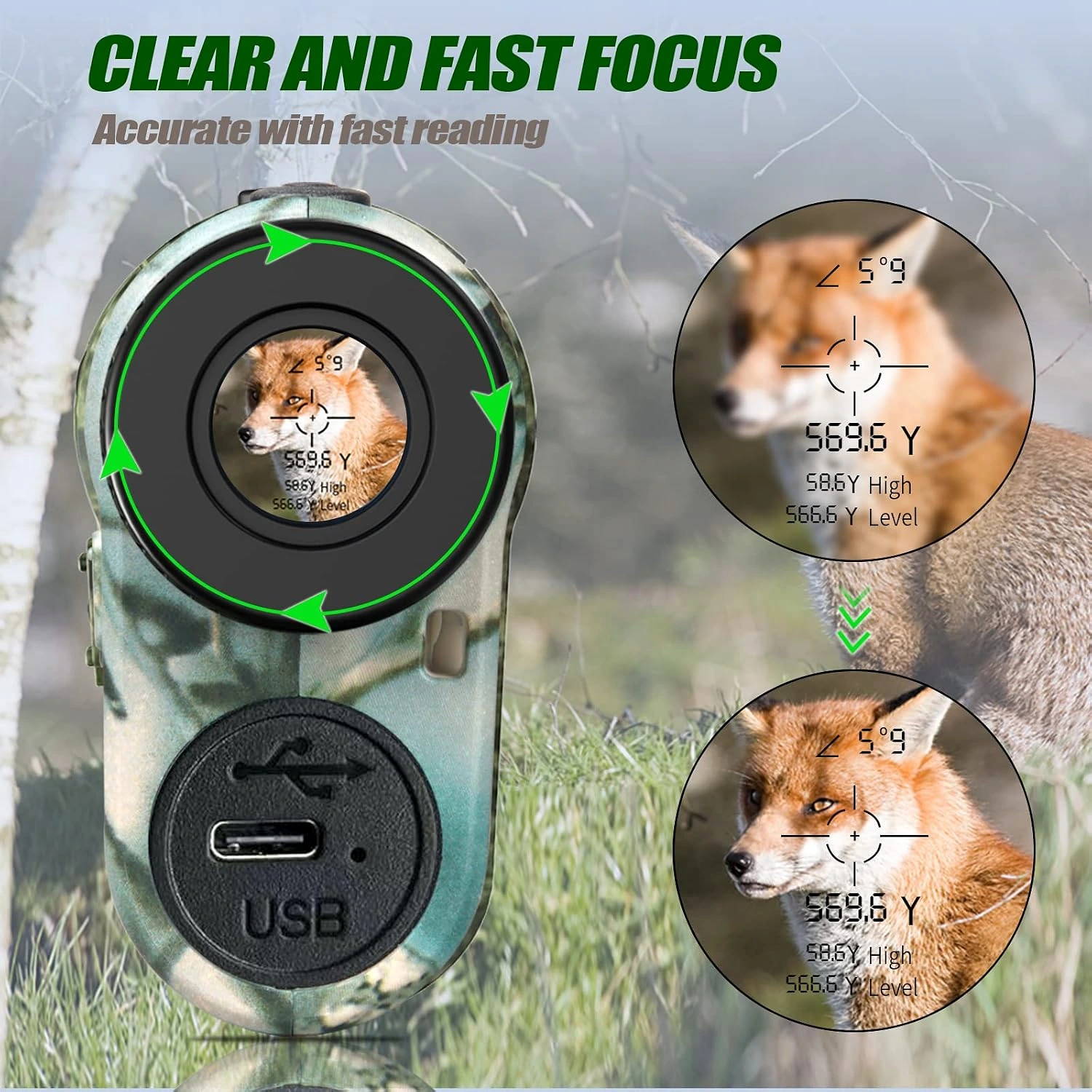
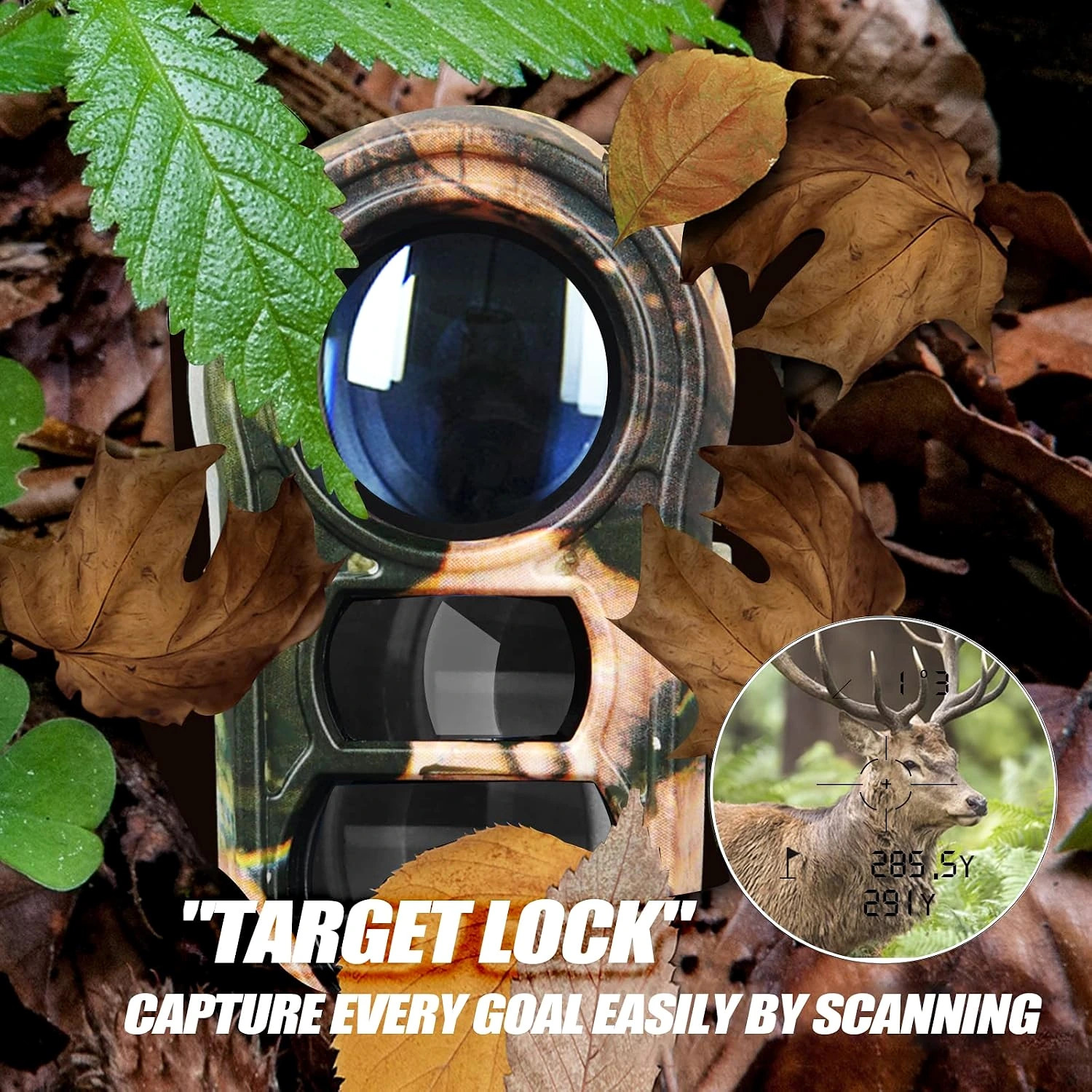
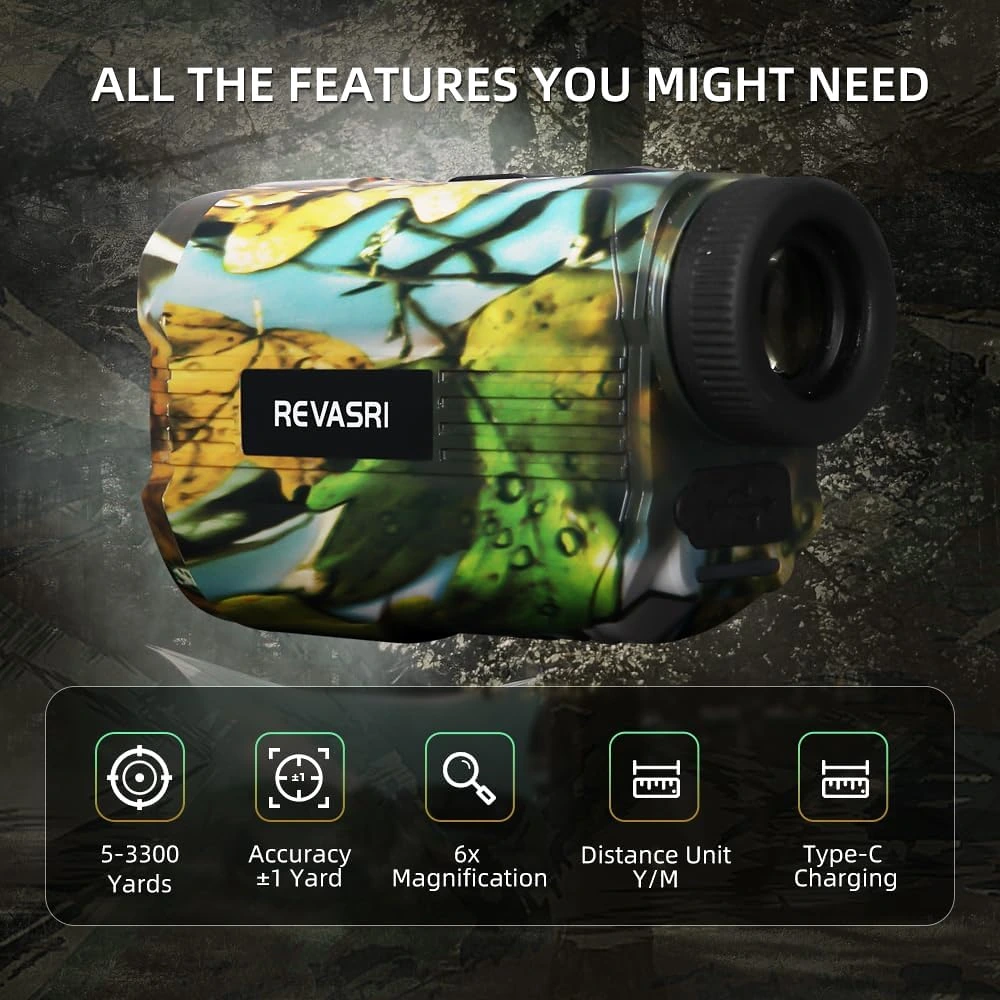
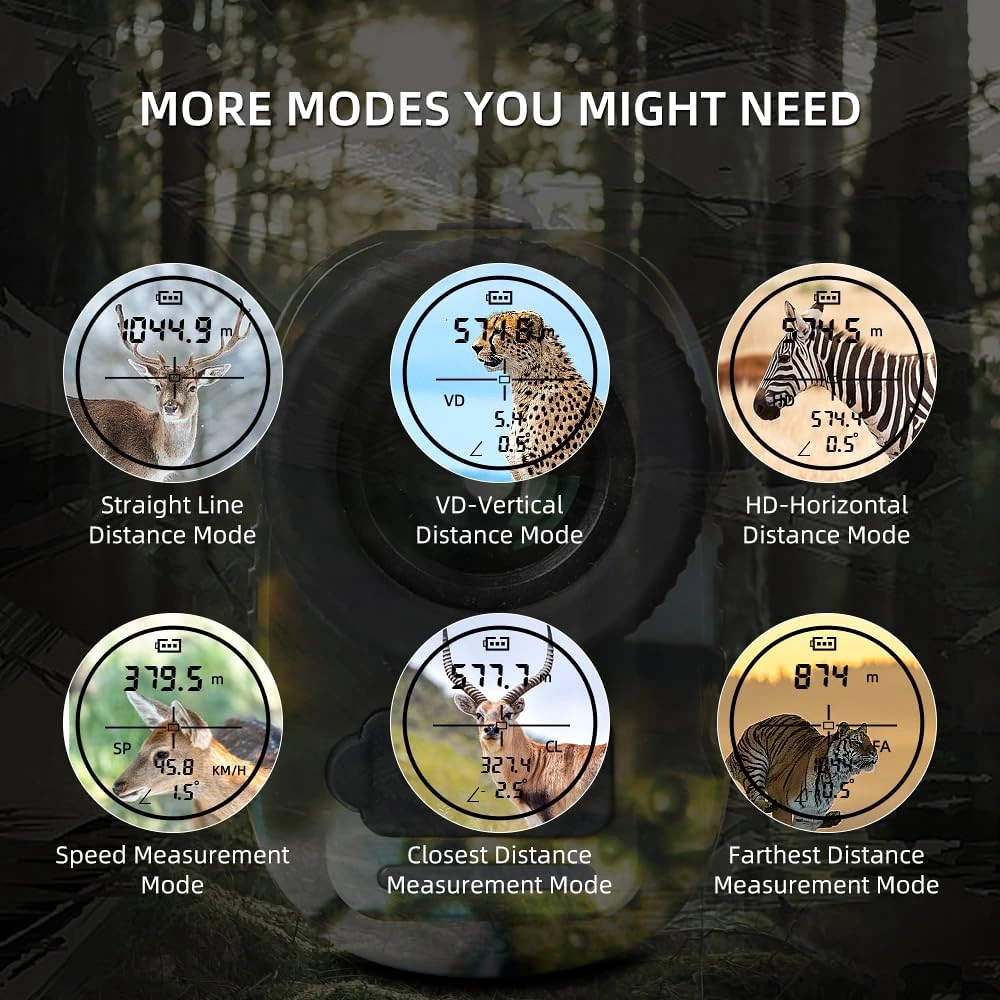
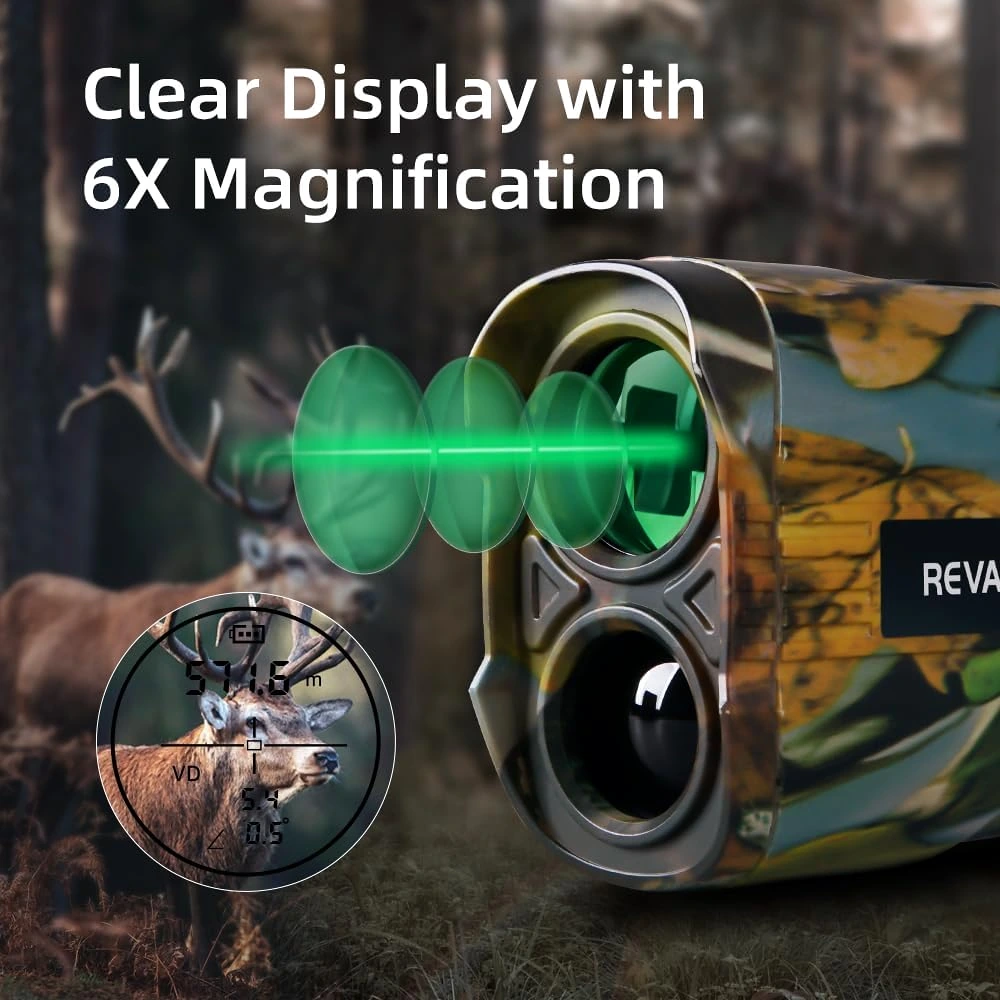
Measure visible landmarks with a camouflage rangefinder that remembers the last mode used. Its all-in-one view brings angle, height, horizontal distance and direct distance together.
1,000 yd maximum range
6.5× magnification
Seven measurement functions
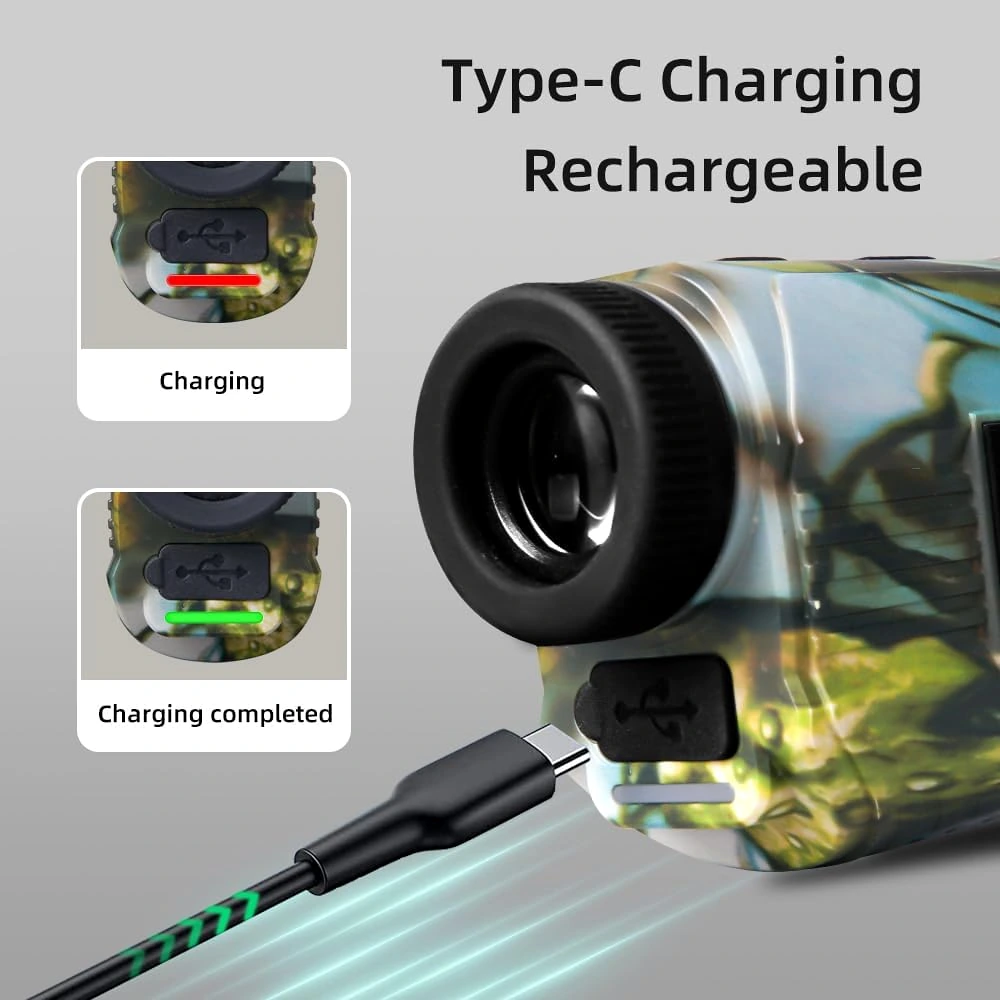
USB-C rechargeable
Details & fit
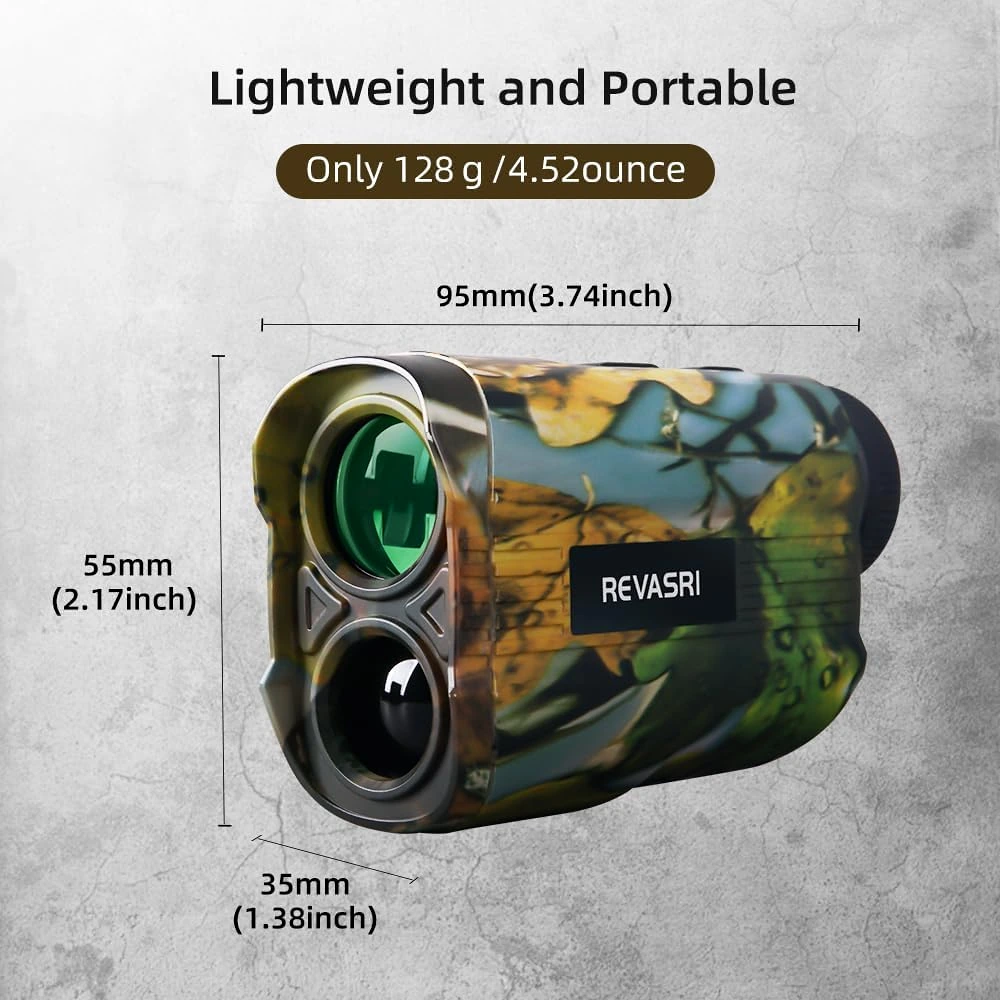
The 120 g body includes continuous scan and storage modes, with stated distance accuracy of ±1 yard and angle accuracy of ±1 degree. Coated glass optics and a supplied carrying pouch support a compact outdoor setup. Maximum range depends on the target and conditions.
Choose it for: Outdoor users who want several measurement views and mode memory.
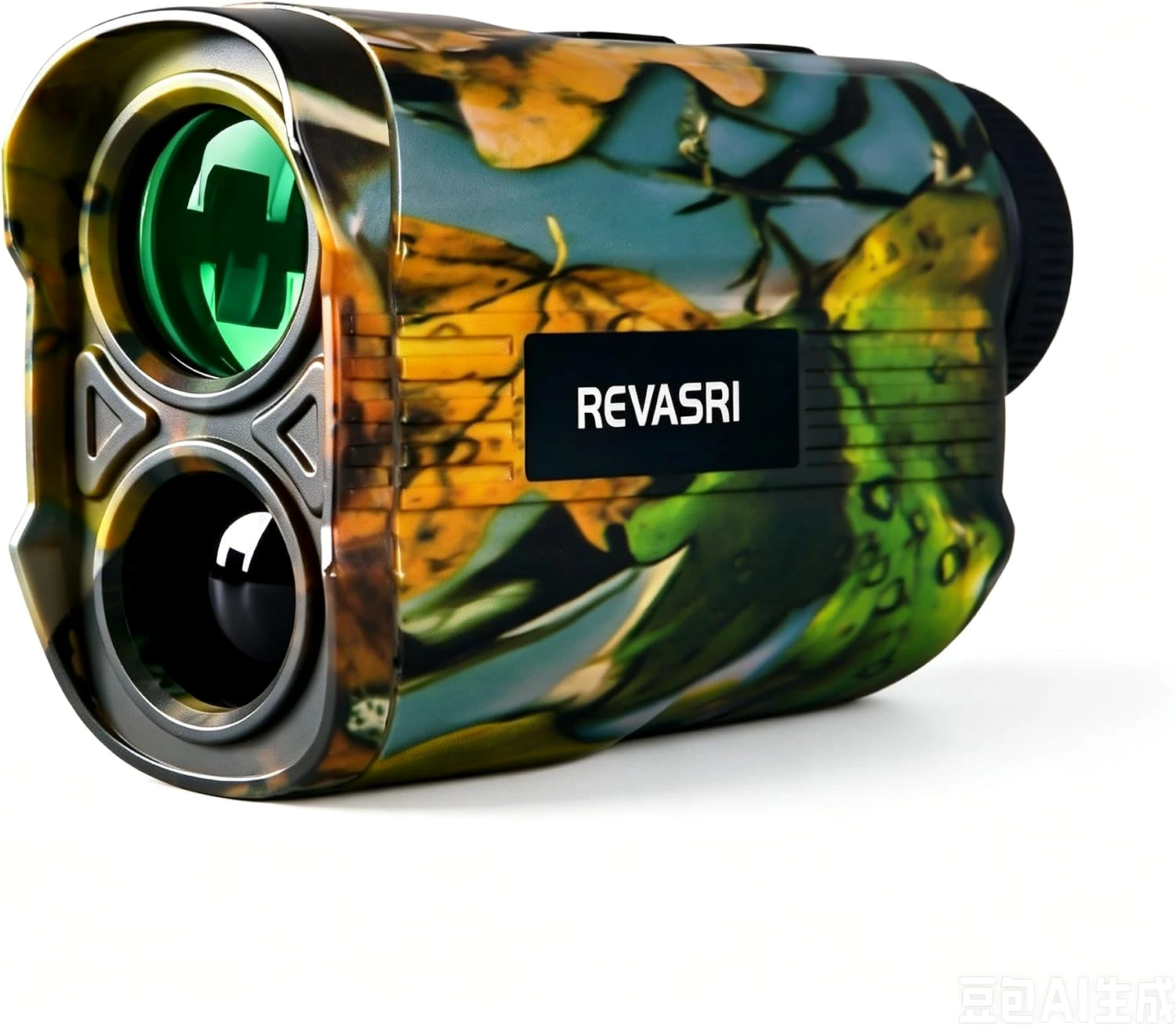
Choose the 2,200-yard configuration for longer-distance observation with a compact 128 g body. Separate measurement modes help you distinguish direct, horizontal and vertical distances.
2,200 yd selected range
6× magnification
Closest / farthest modes
USB-C rechargeable
Details & fit
The selected version is the 2,200-yard model, not the separate 3,300-yard option. Stated accuracy is ±1 yard for distance and ±1 degree for angle. Continuous scan works in the supported distance modes. Reflectivity, weather and the size of the target affect achievable range.
Choose it for: Reading terrain and stationary landmarks with several distance modes.
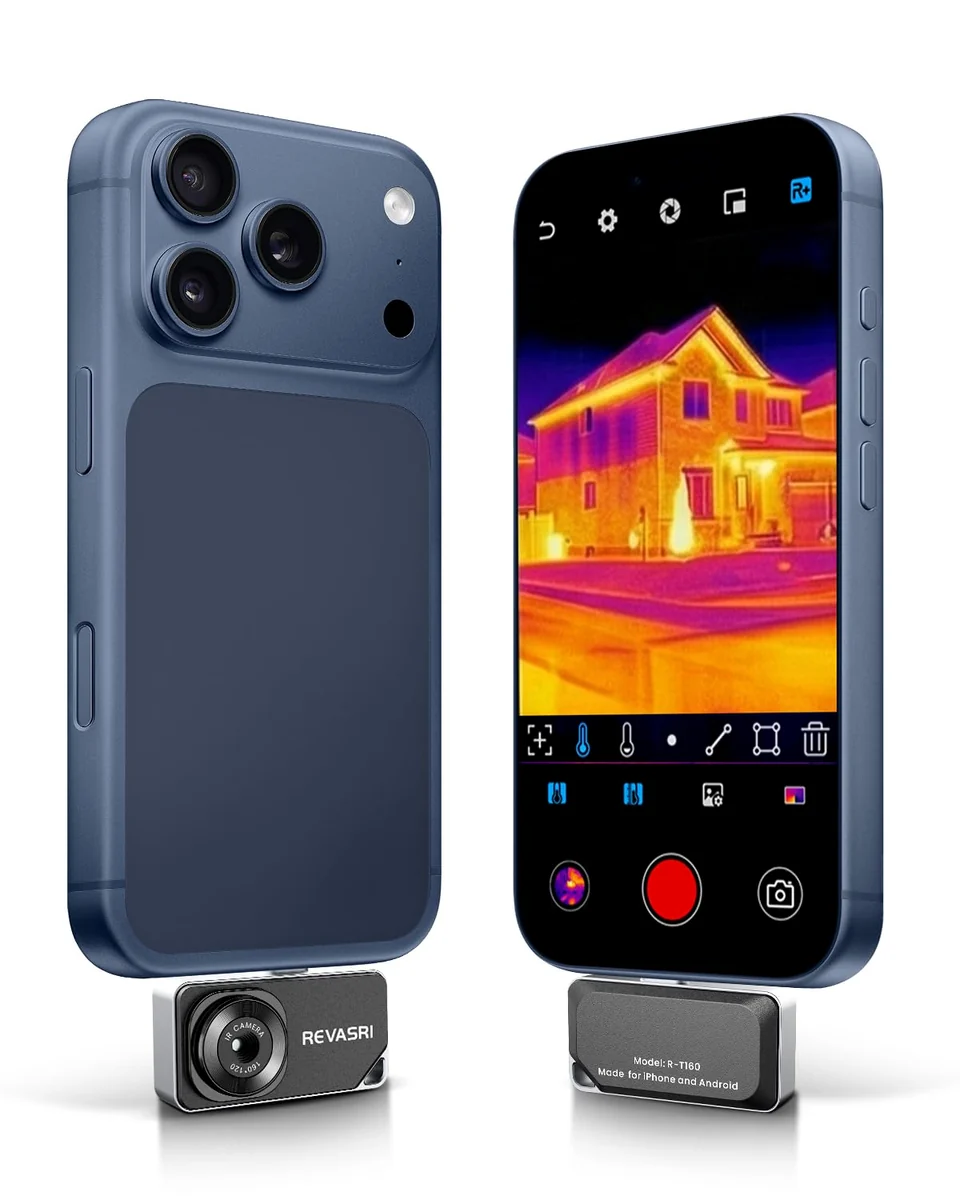
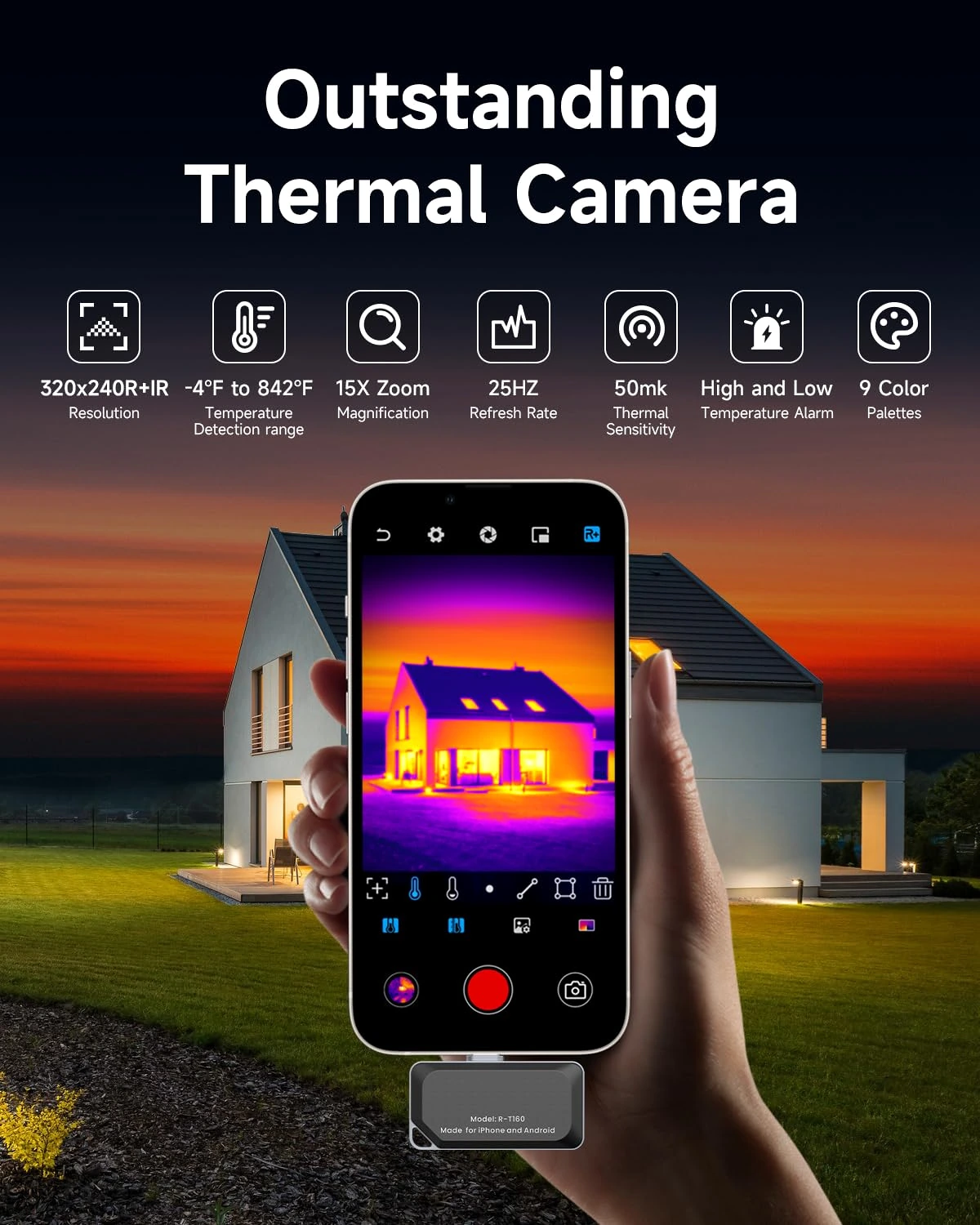
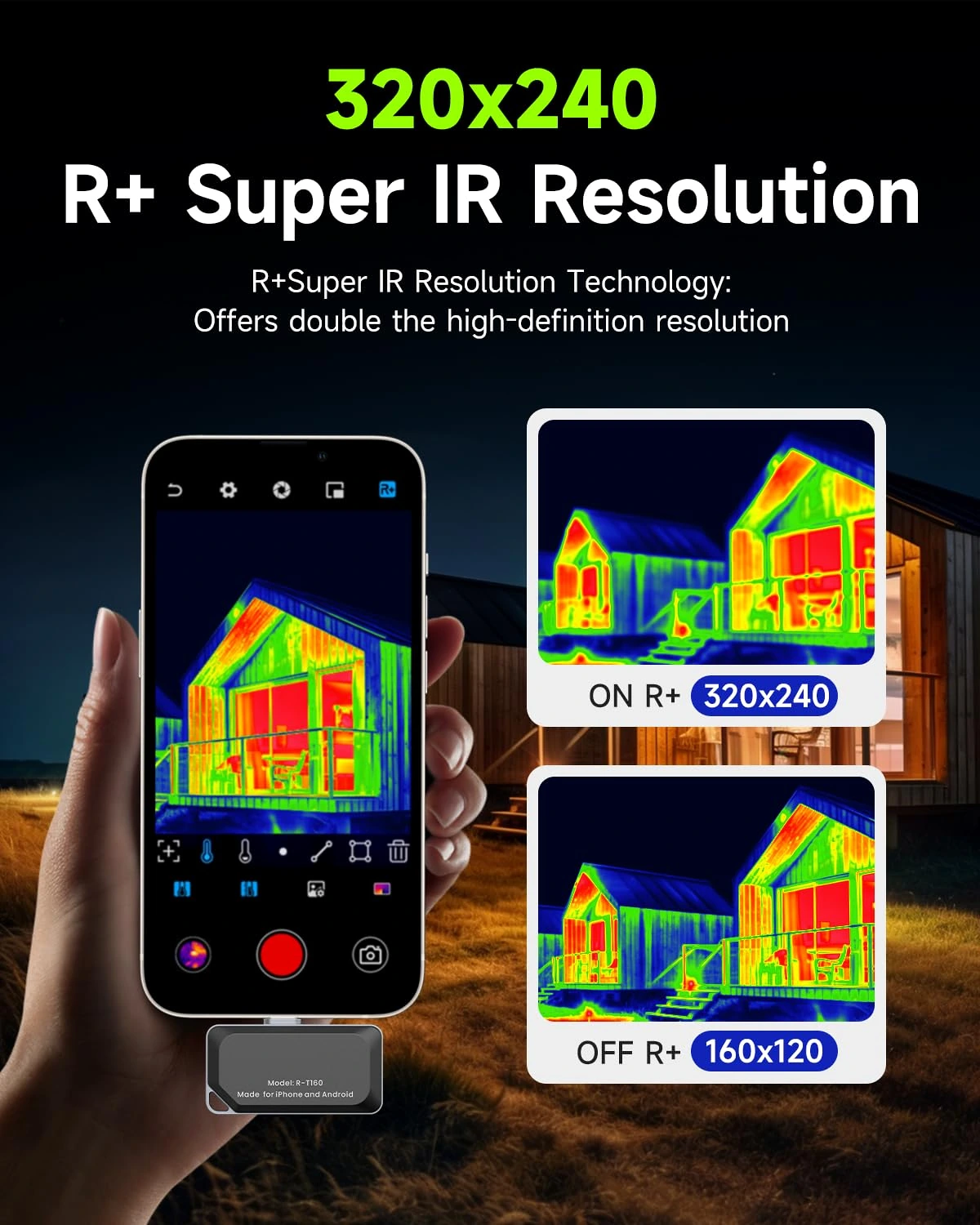
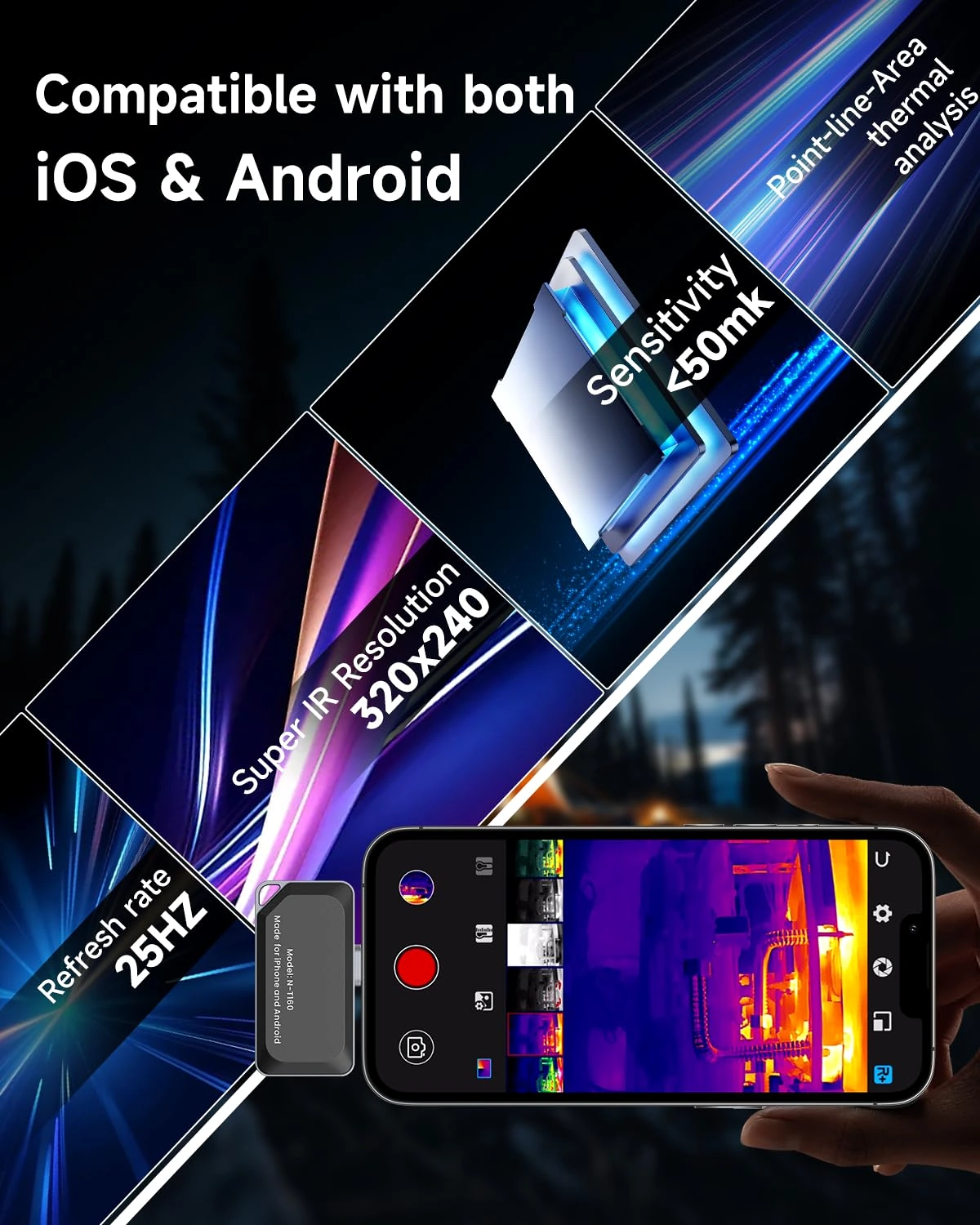
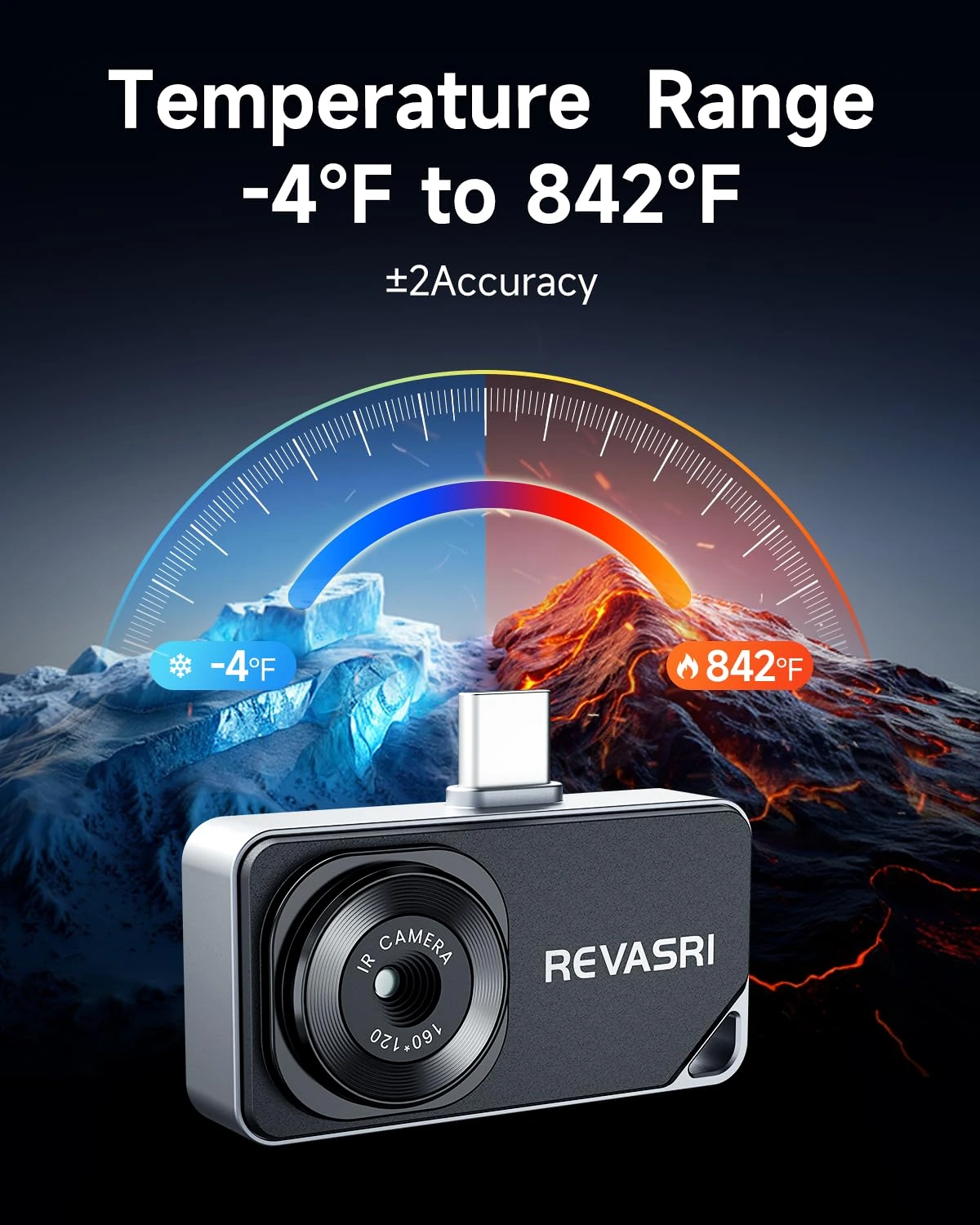
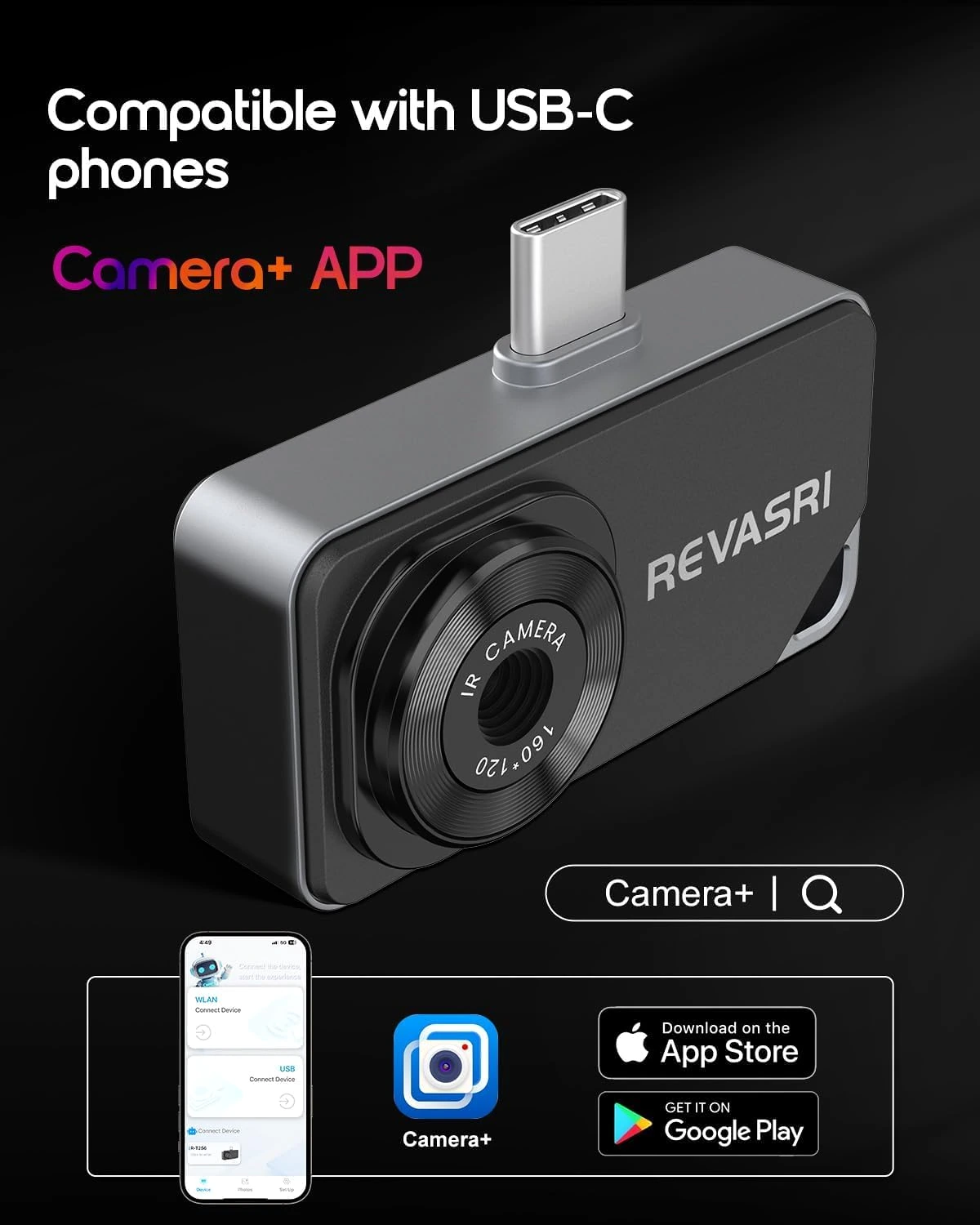
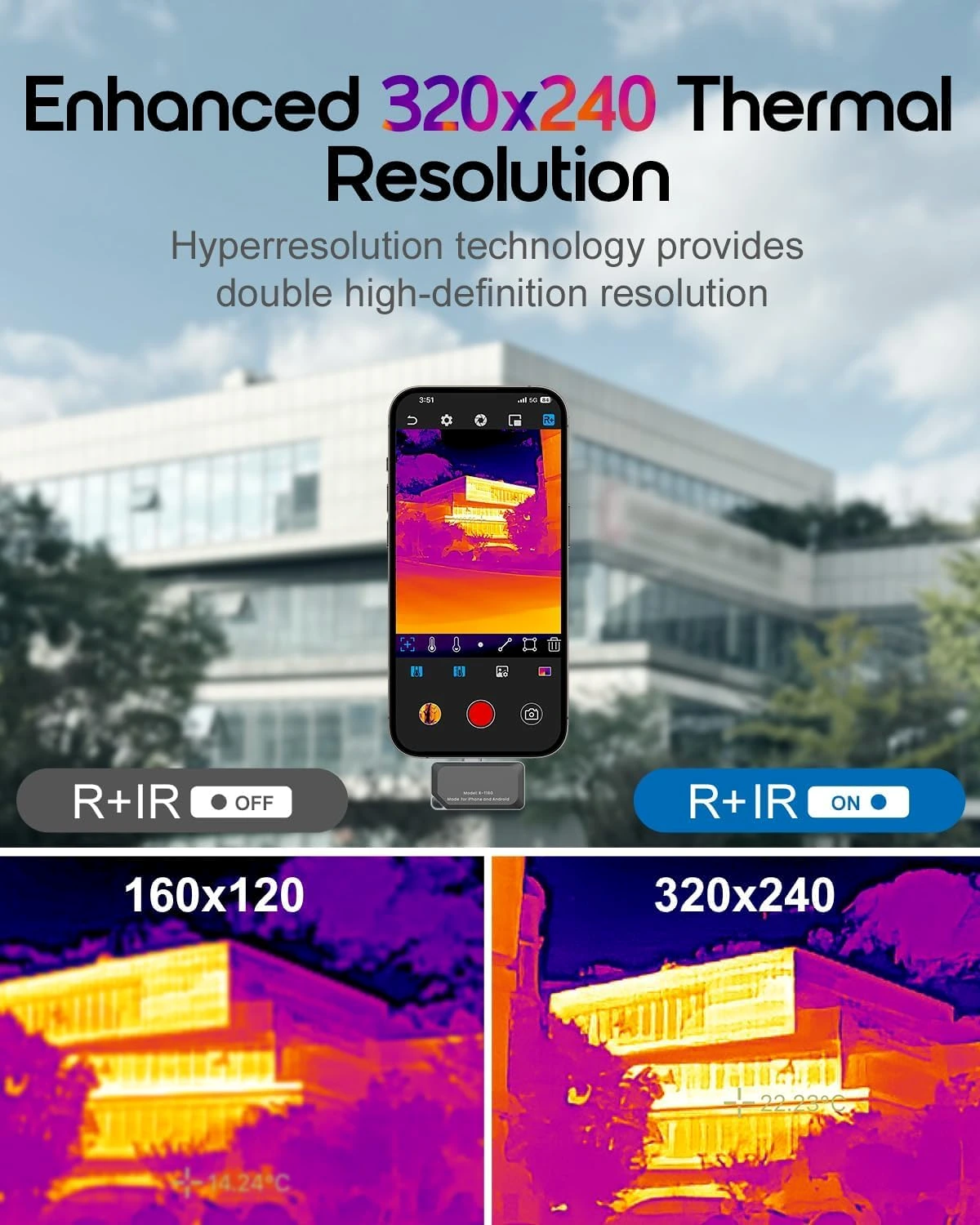
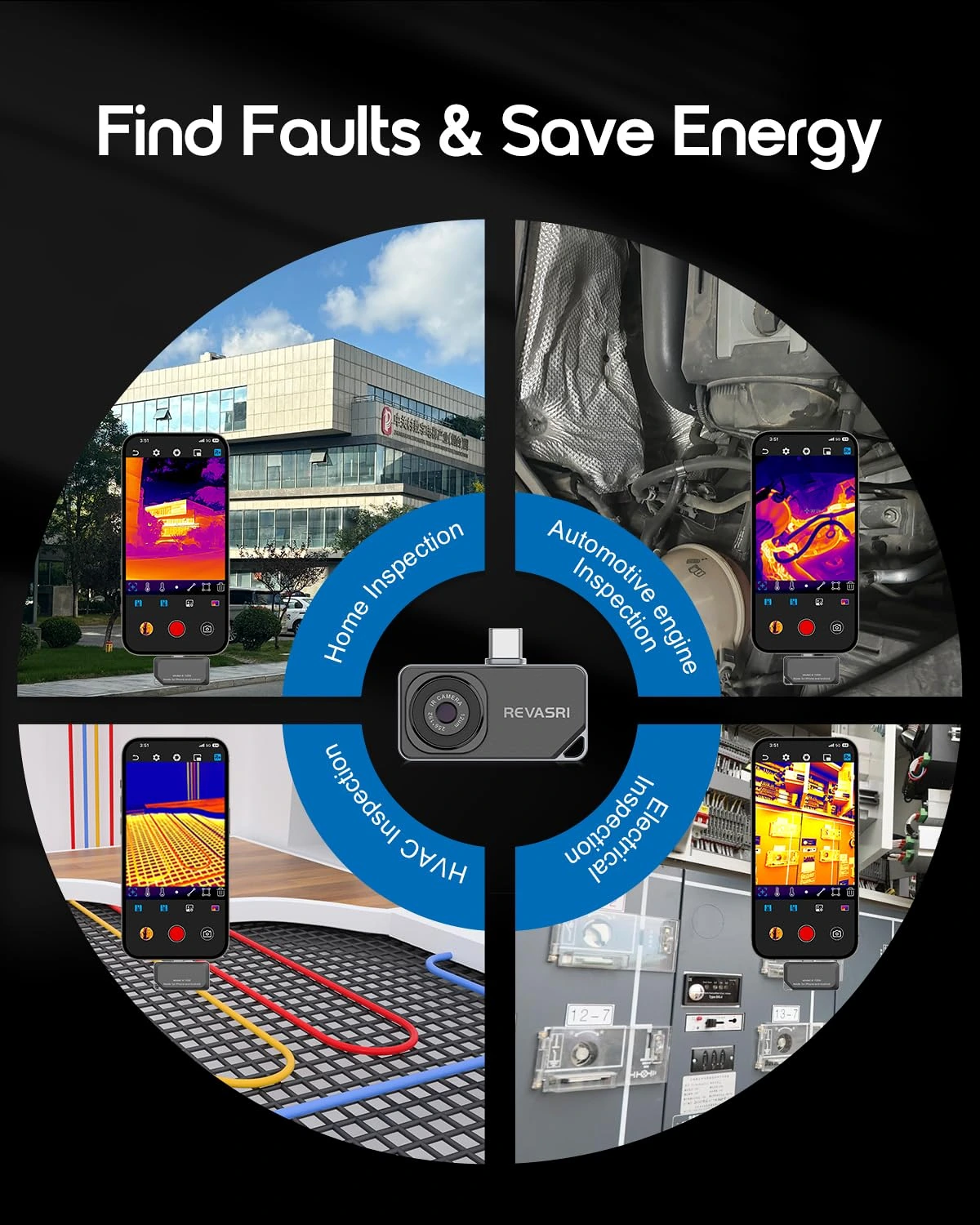
Connect the compact USB-C module to a compatible host device to inspect visible surface-temperature patterns. Enhanced 320 × 240 imaging and a 25 Hz refresh rate support a responsive thermal view.
320 × 240 enhanced image
25 Hz refresh rate
−4°F to 842°F range
Host-powered USB-C
Details & fit
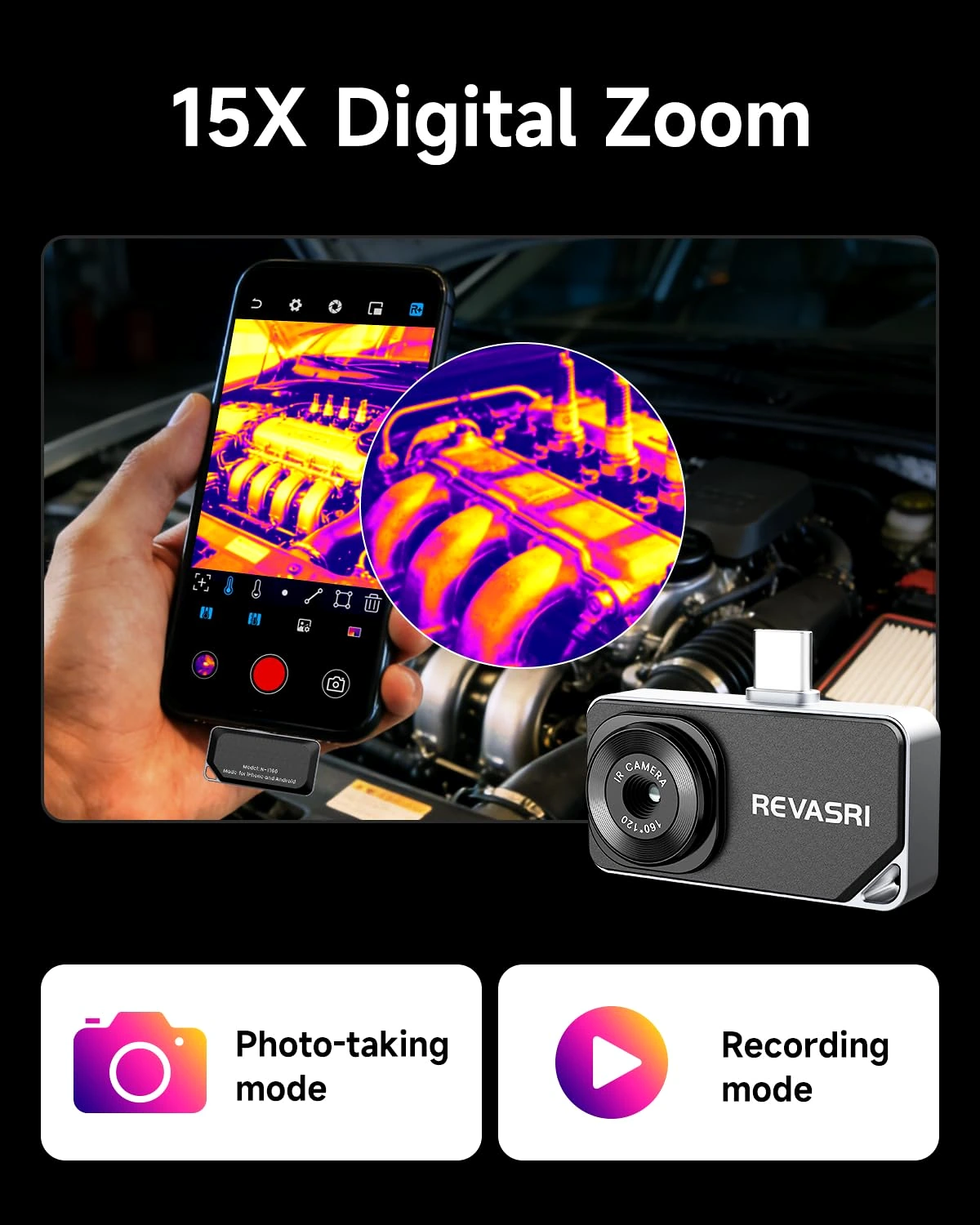
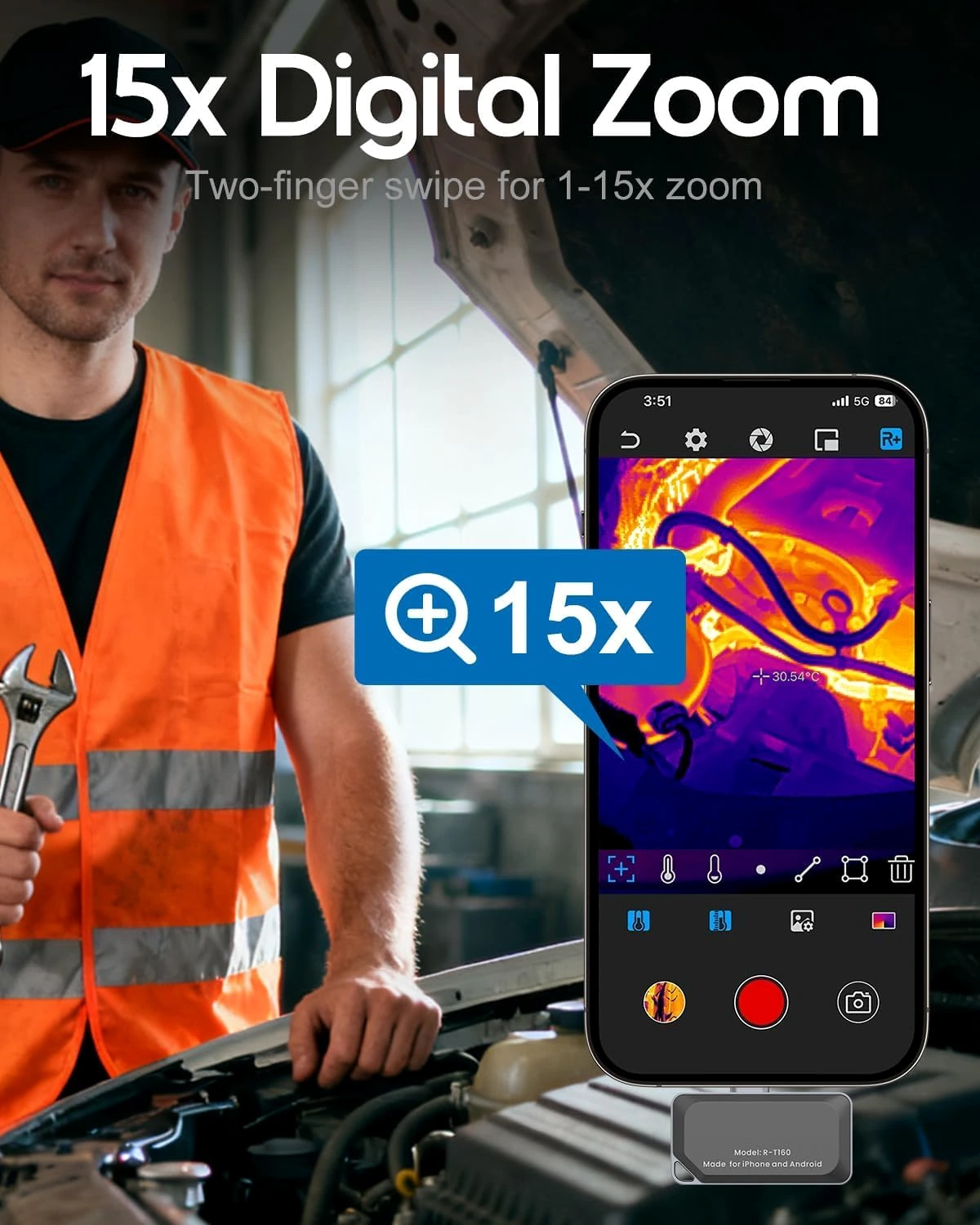
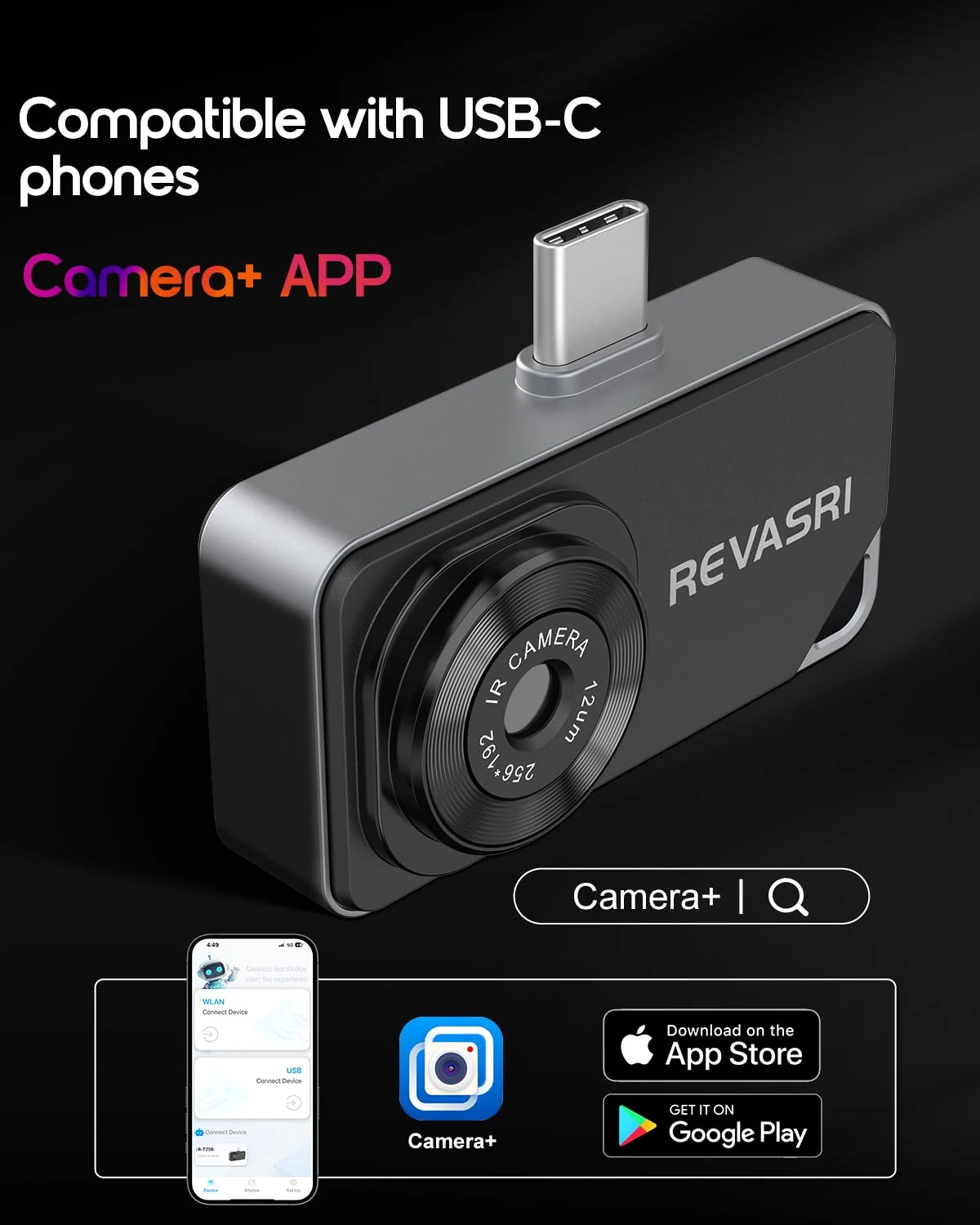
The selected compact configuration offers nine color modes, temperature tracking and digital zoom. Enhanced image resolution is not the native detector count. Check the exact device, operating system and Camera+ application requirements before purchase; a USB-C socket alone does not establish compatibility.
Choose it for: A compact, phone-powered thermal setup for accessible surface checks.
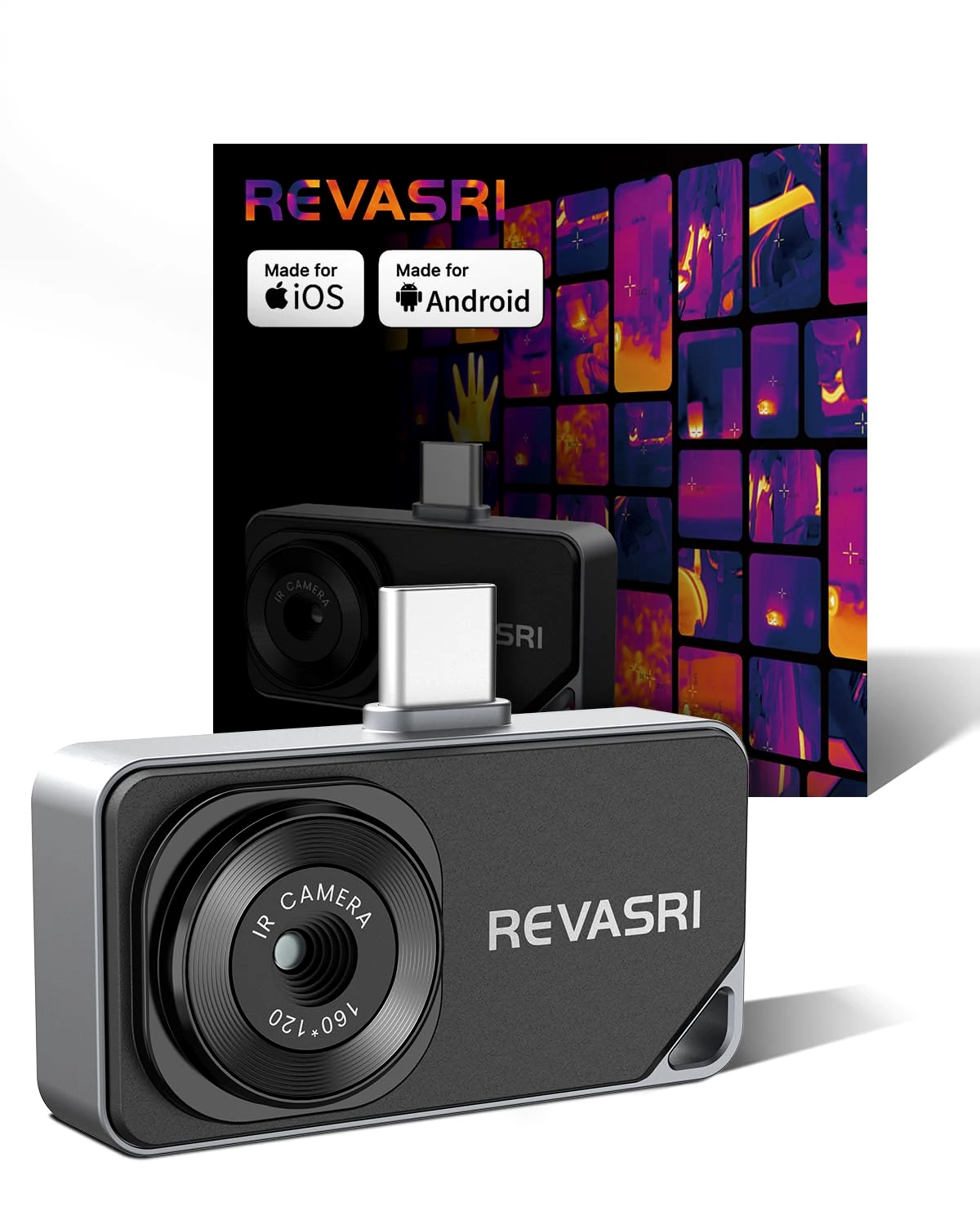
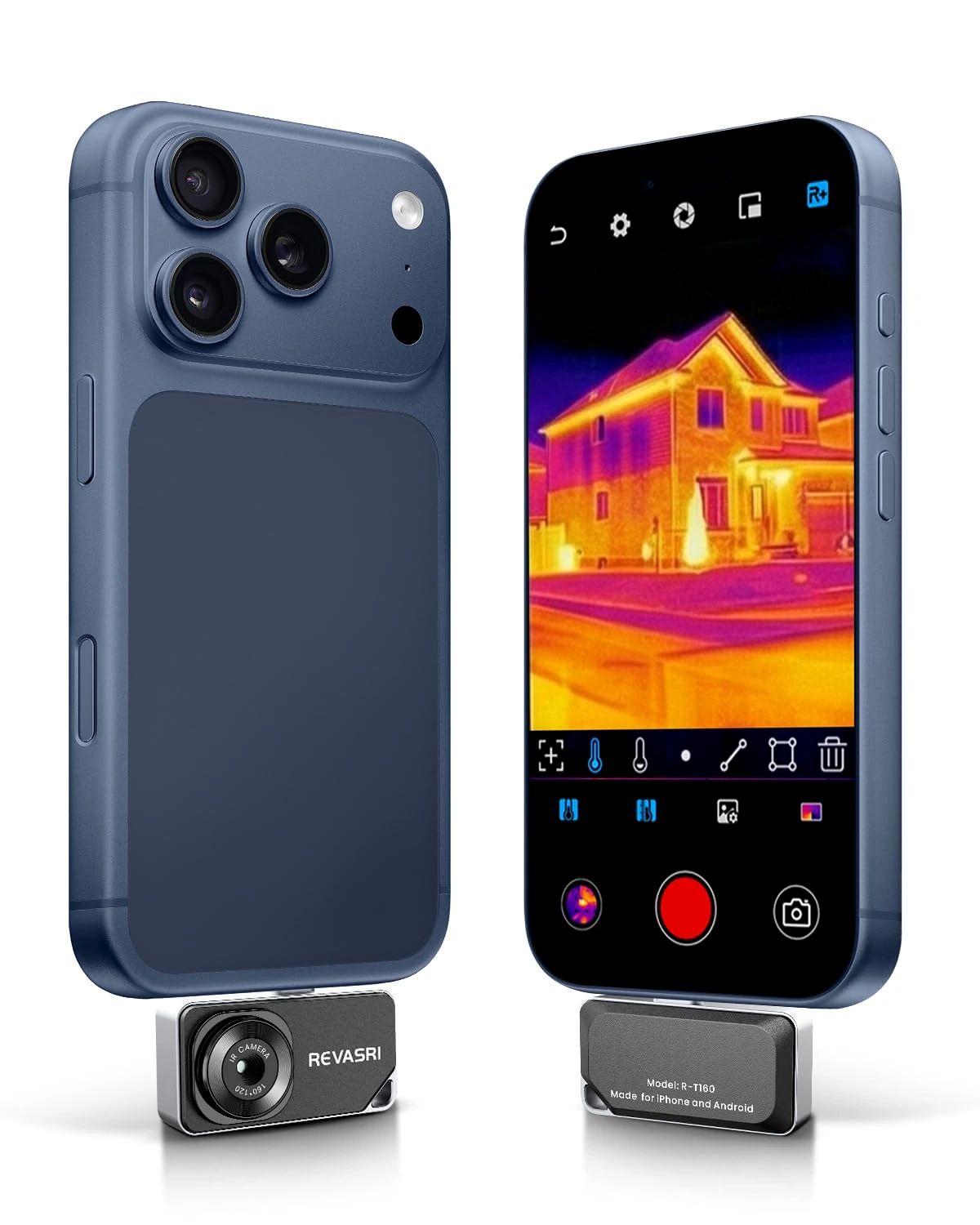
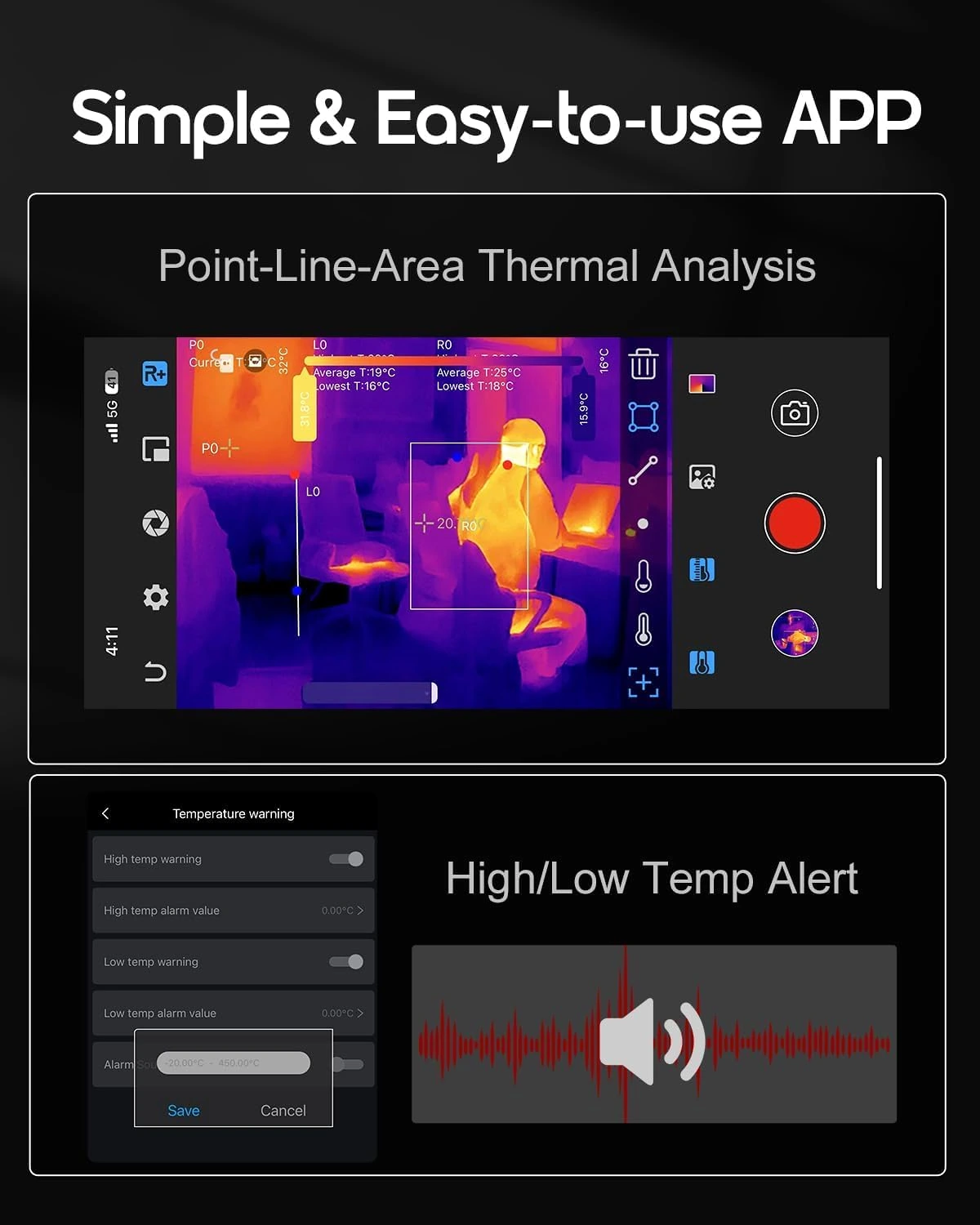
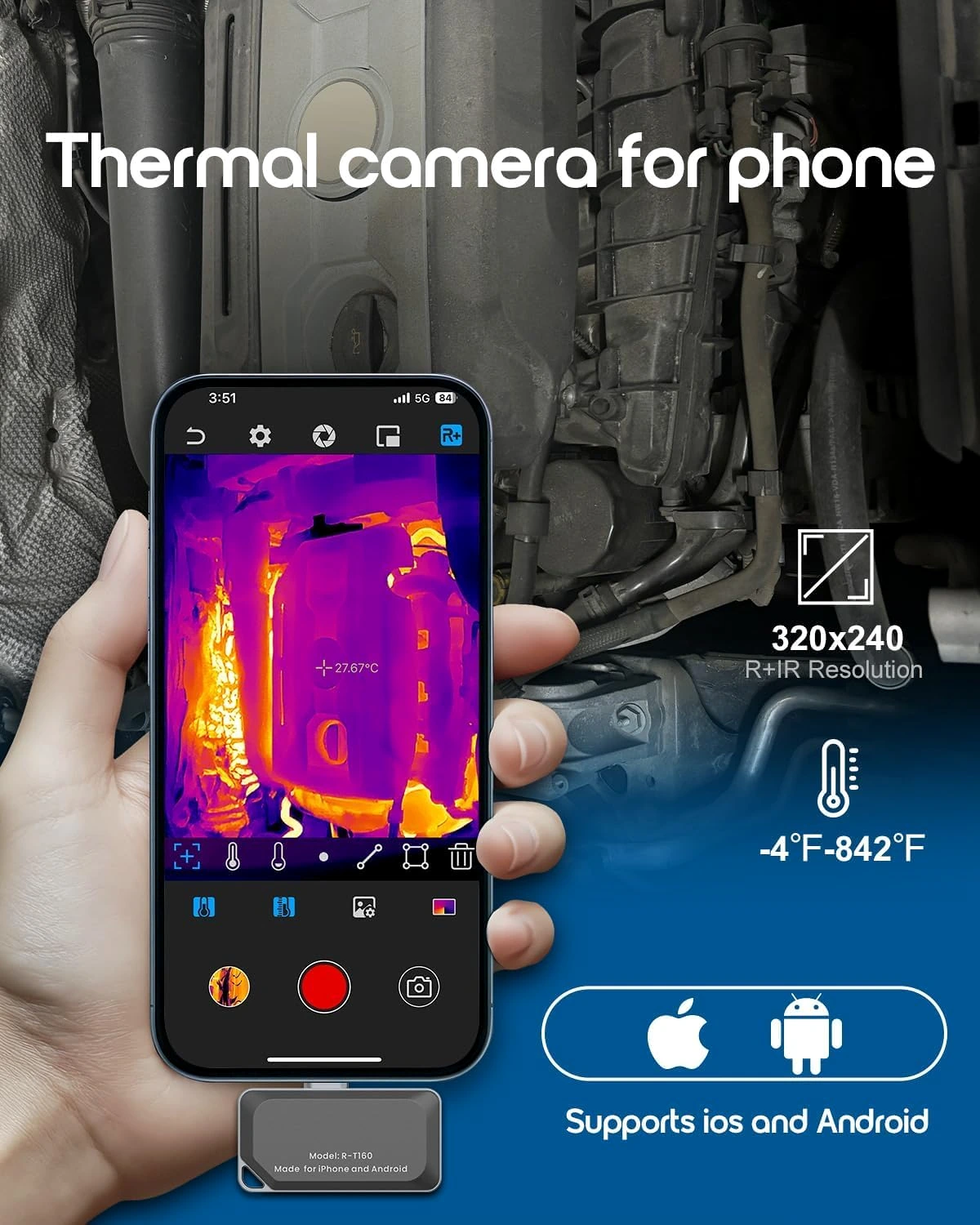
Use a compatible phone as your thermal viewing screen. This T160 configuration combines 320 × 240 enhanced output with app-based analysis and photo or video capture.
320 × 240 enhanced image
25 Hz refresh rate
Nine color modes
USB-C / Camera+ app
Details & fit
The listing specifies a −4°F to 842°F measurement range, 40 mK thermal sensitivity and a stated error of ±2°C or 2%. Readings depend on the surface and conditions. The module does not see through walls or independently diagnose hidden moisture. Verify the selected kit and device compatibility in the purchase tab.
Choose it for: Documenting repeatable home and equipment-surface observations with a phone.
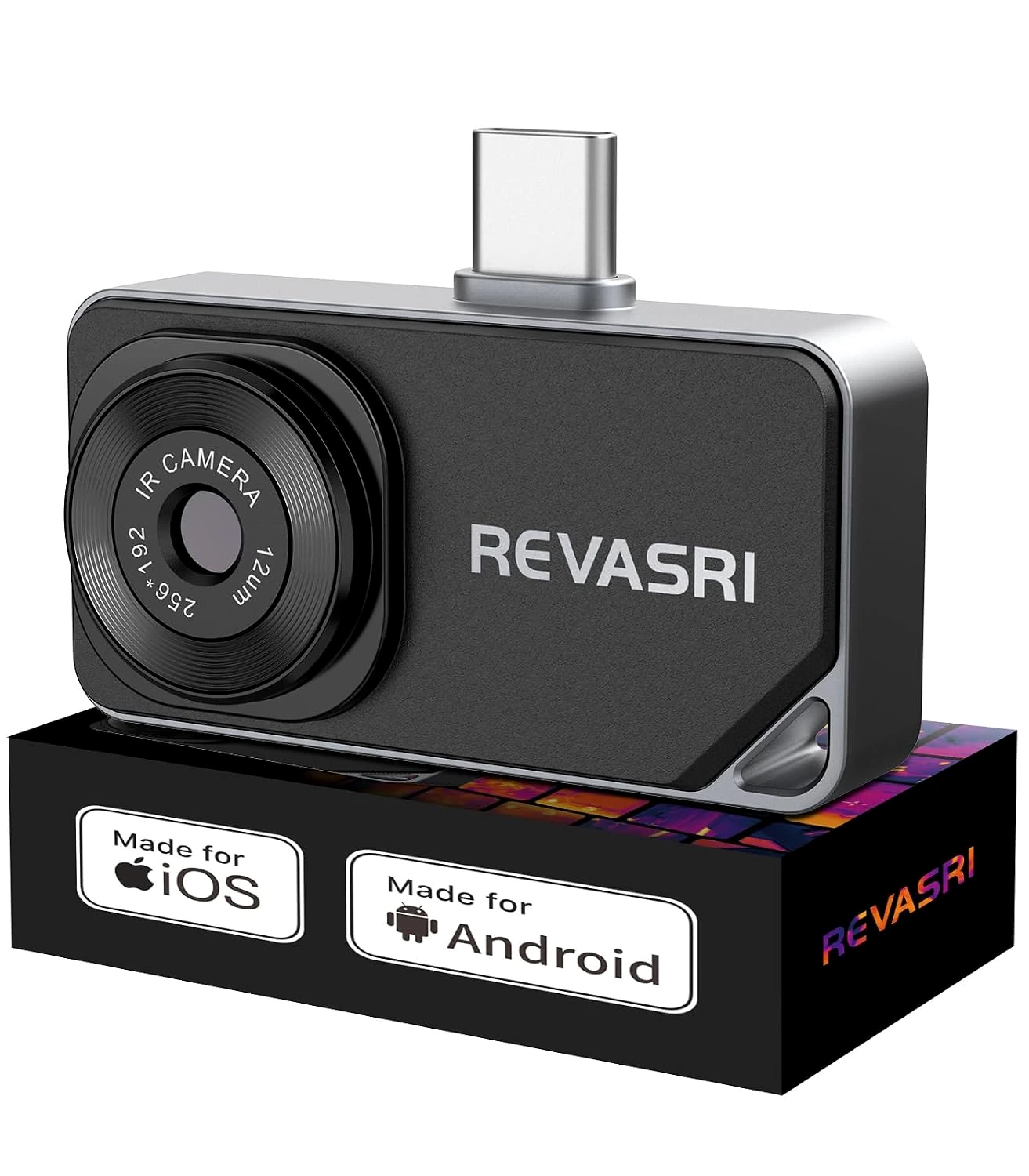
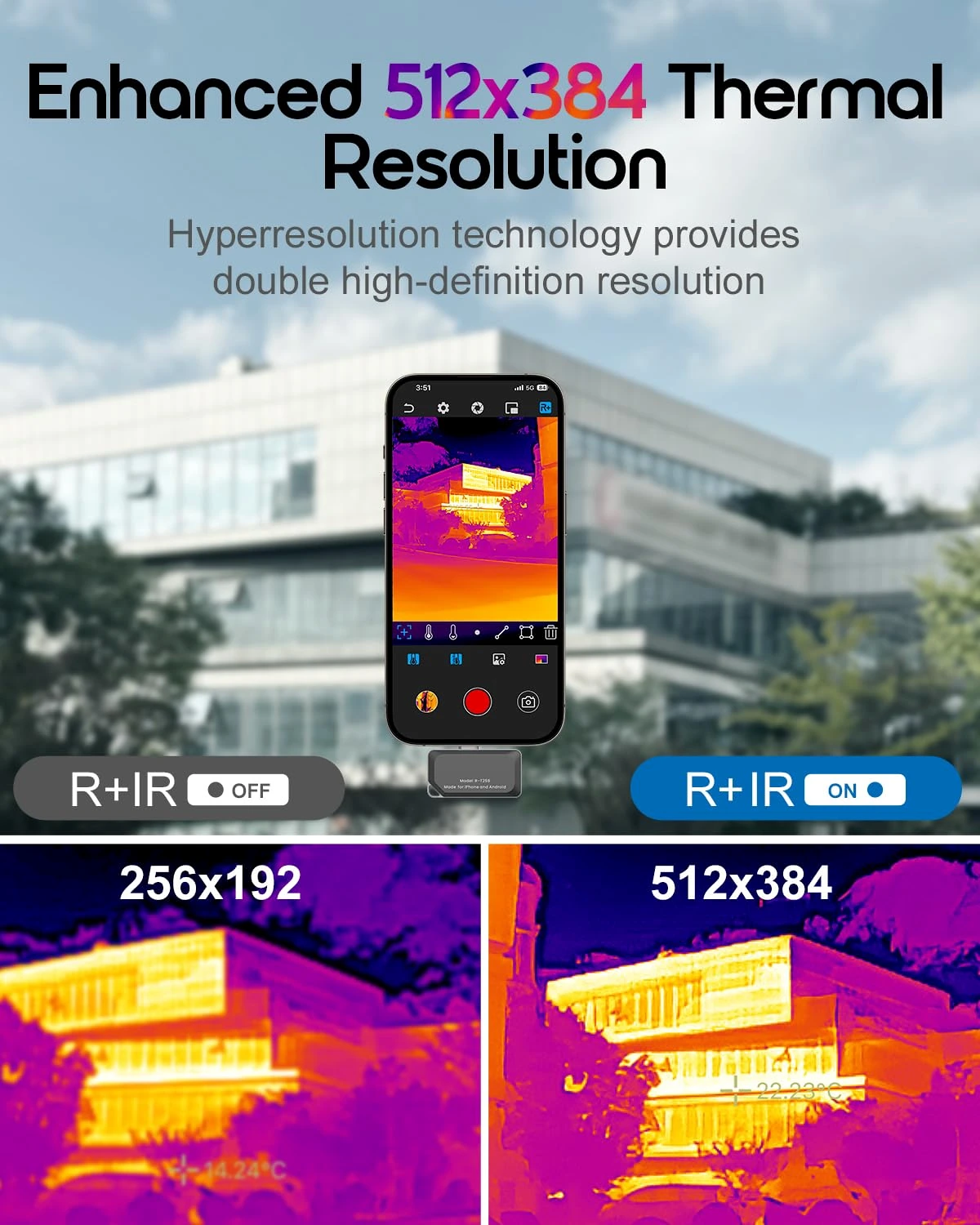
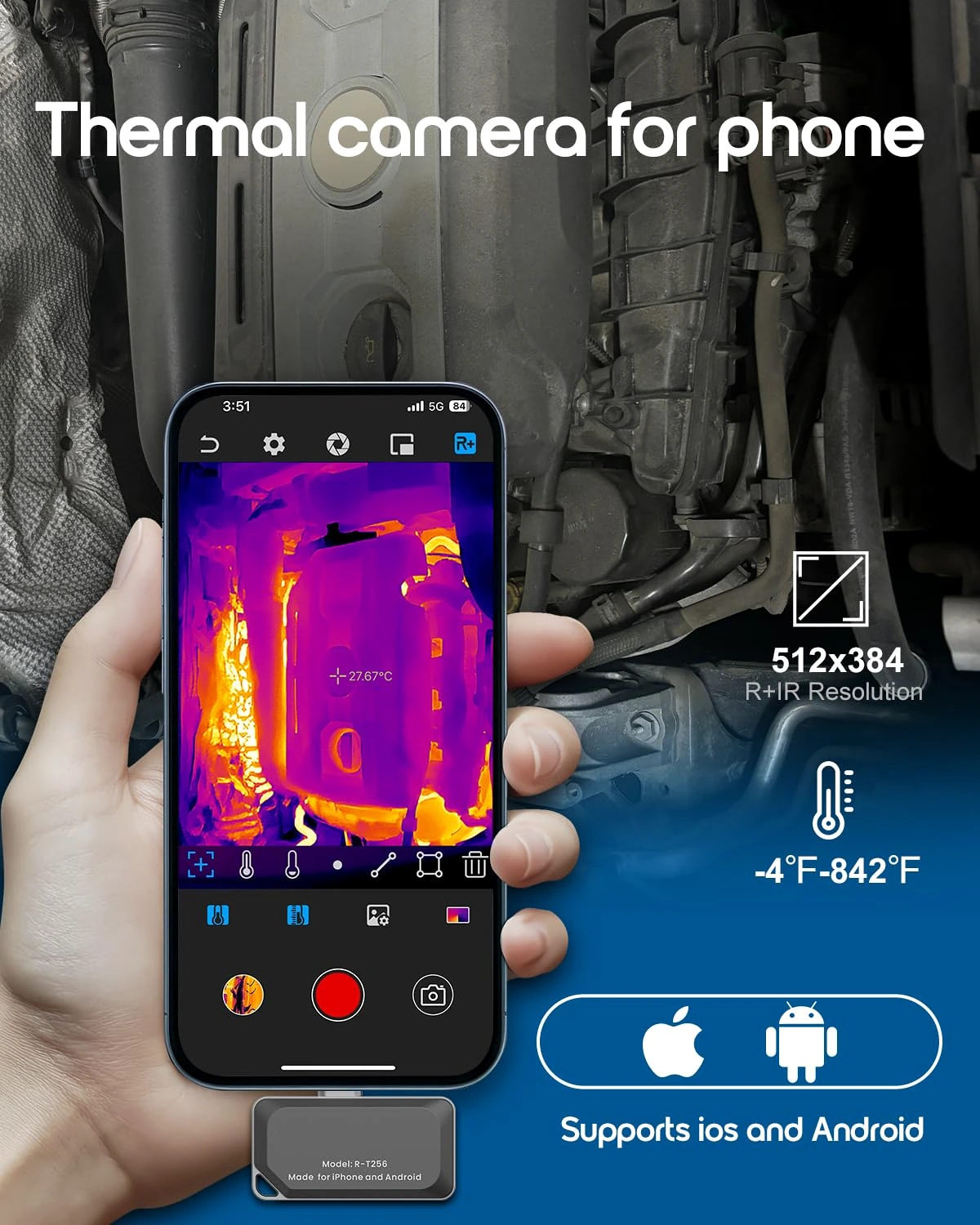
The T256 configuration provides 512 × 384 enhanced image output for a compatible USB-C device. Explore temperature patterns with 25 Hz viewing, color palettes and app-based image tools.
512 × 384 enhanced image
25 Hz refresh rate
−4°F to 842°F range
USB-C / Camera+ app
Details & fit
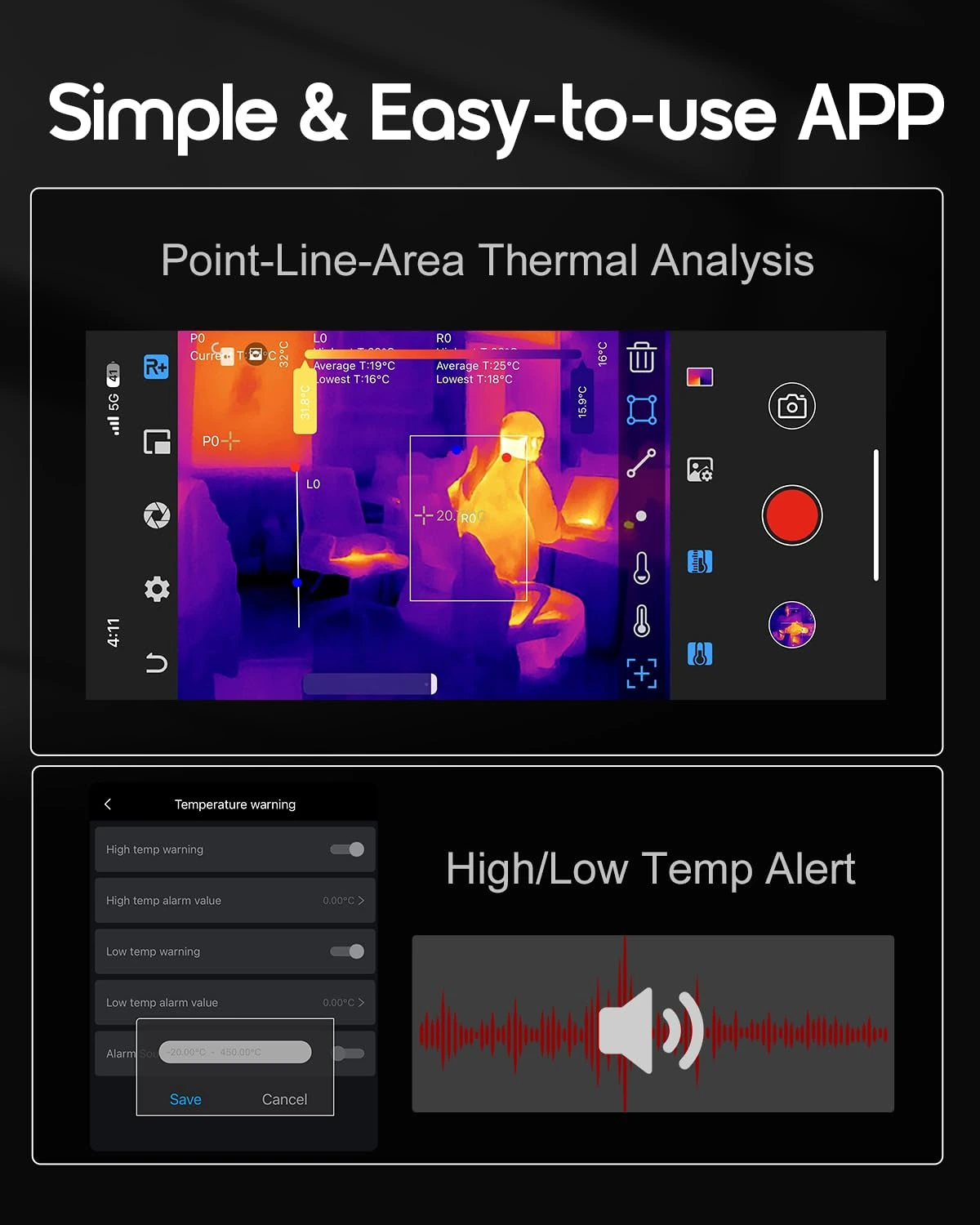
The published feature set includes high/low temperature alarms, temperature tracking and digital zoom. The 512 × 384 figure describes enhanced processing, not the native detector matrix. Select this exact configuration when comparing it with the T160 kits, and check your host device and software before ordering.
Choose it for: Users who prefer the T256 enhanced-image configuration for phone-based viewing.
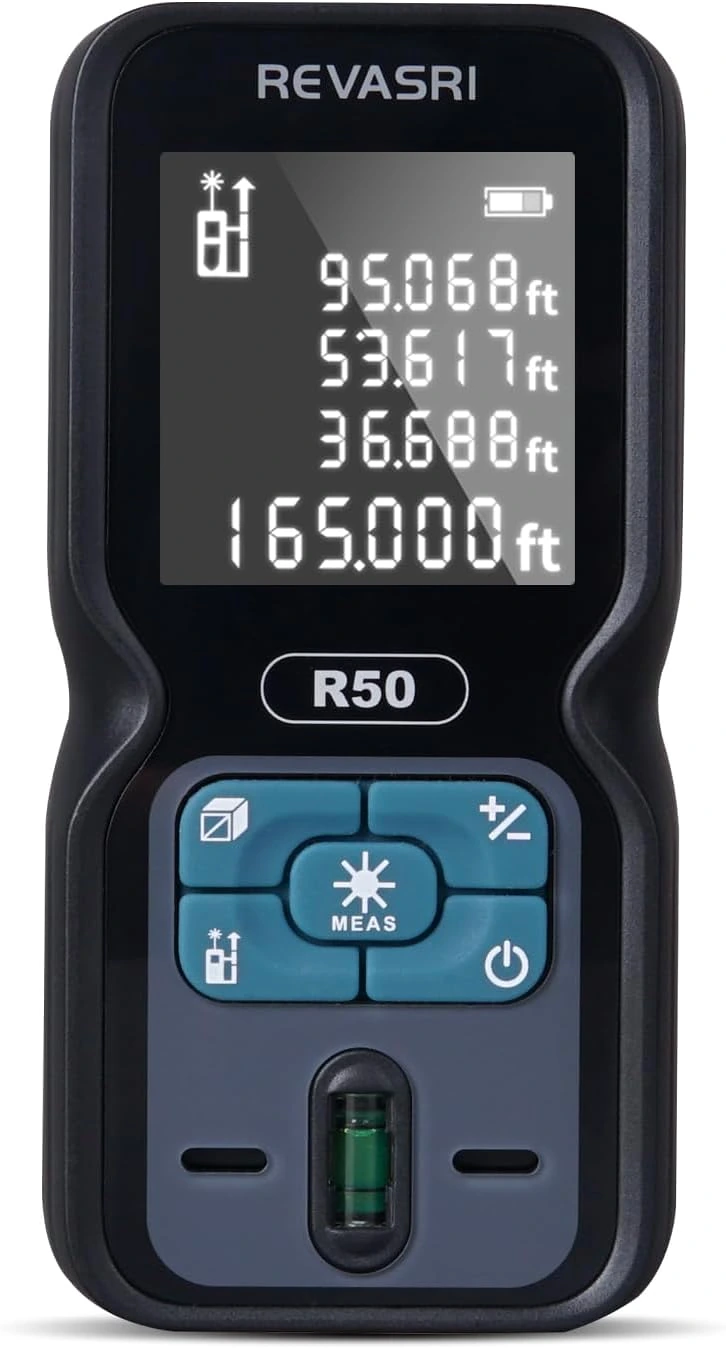
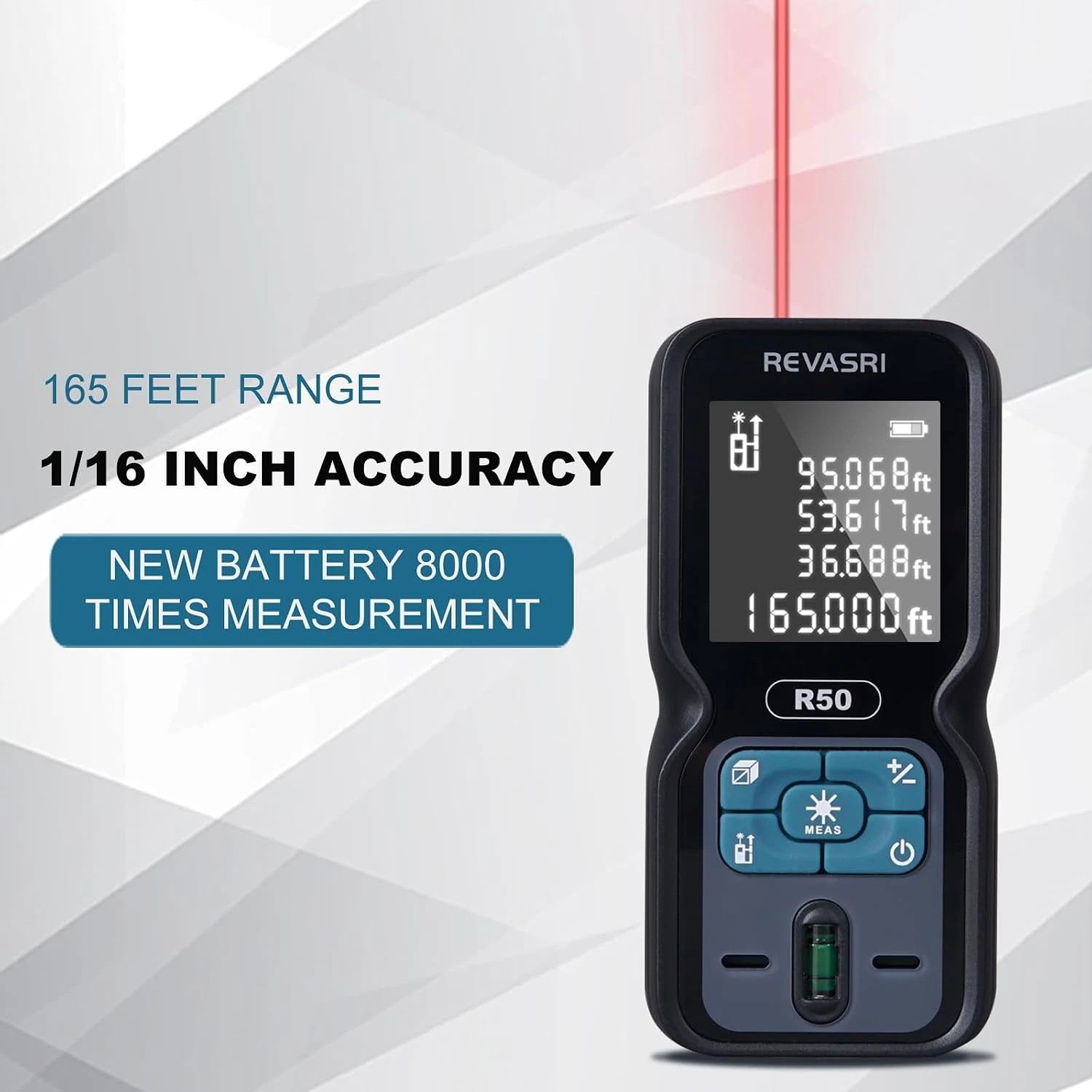
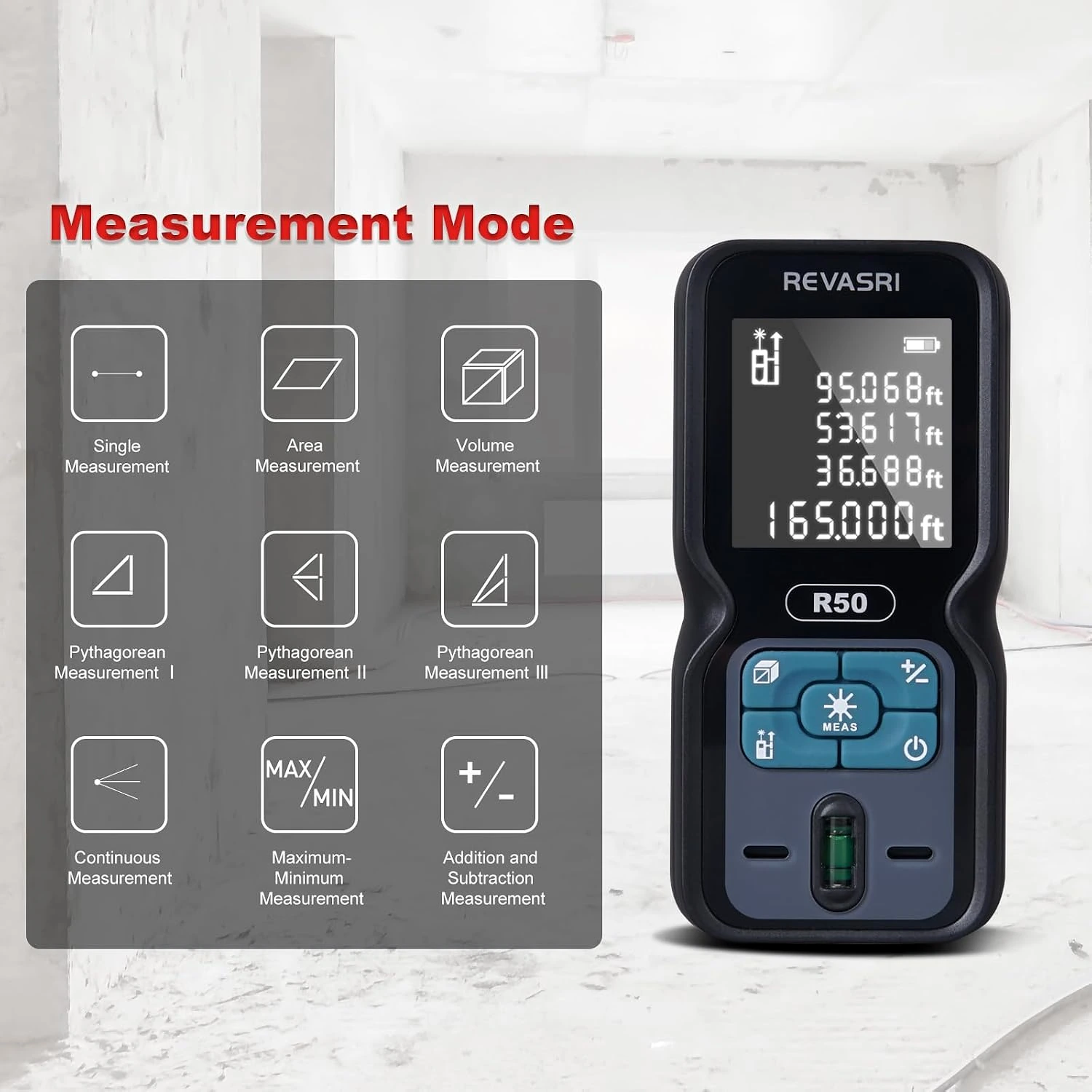
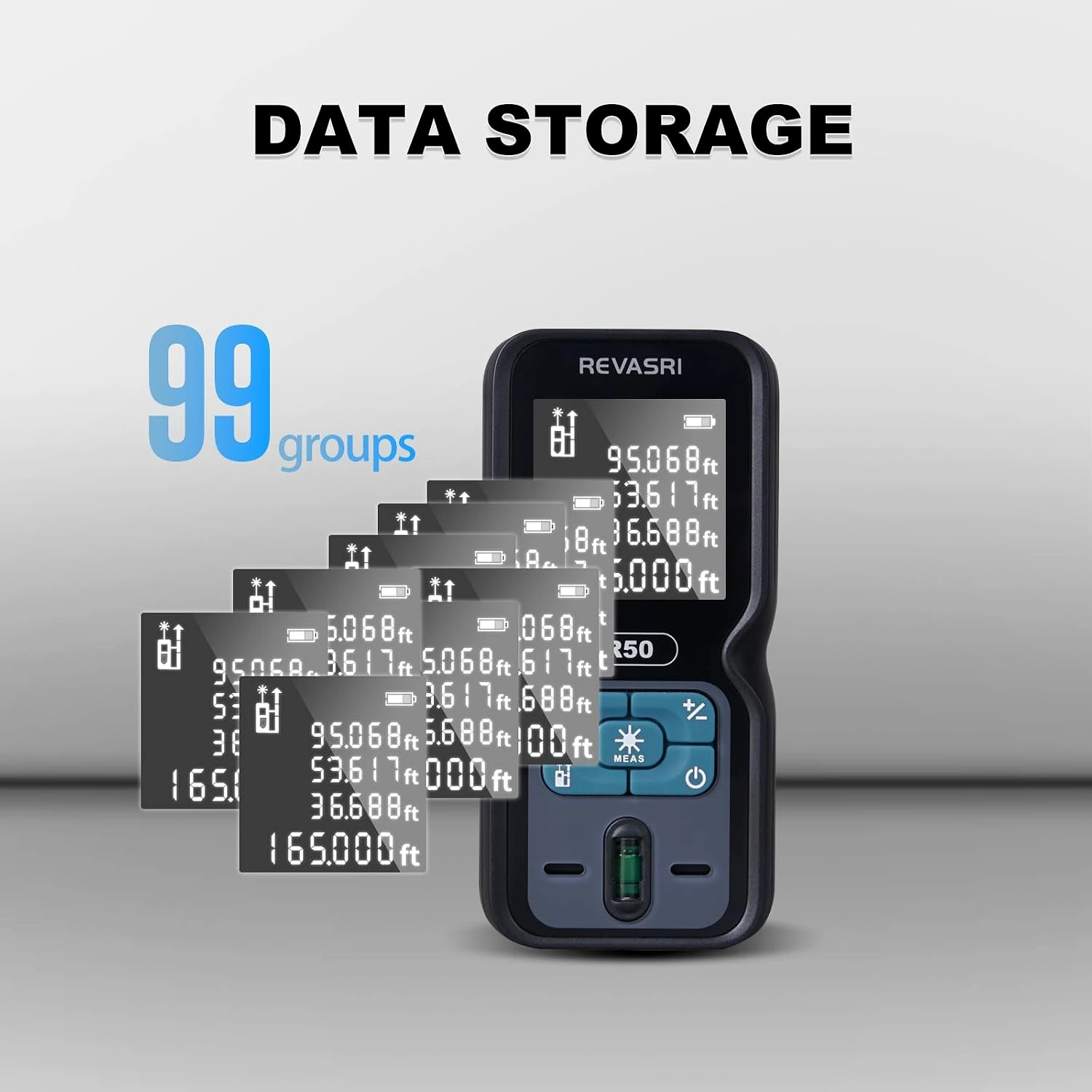
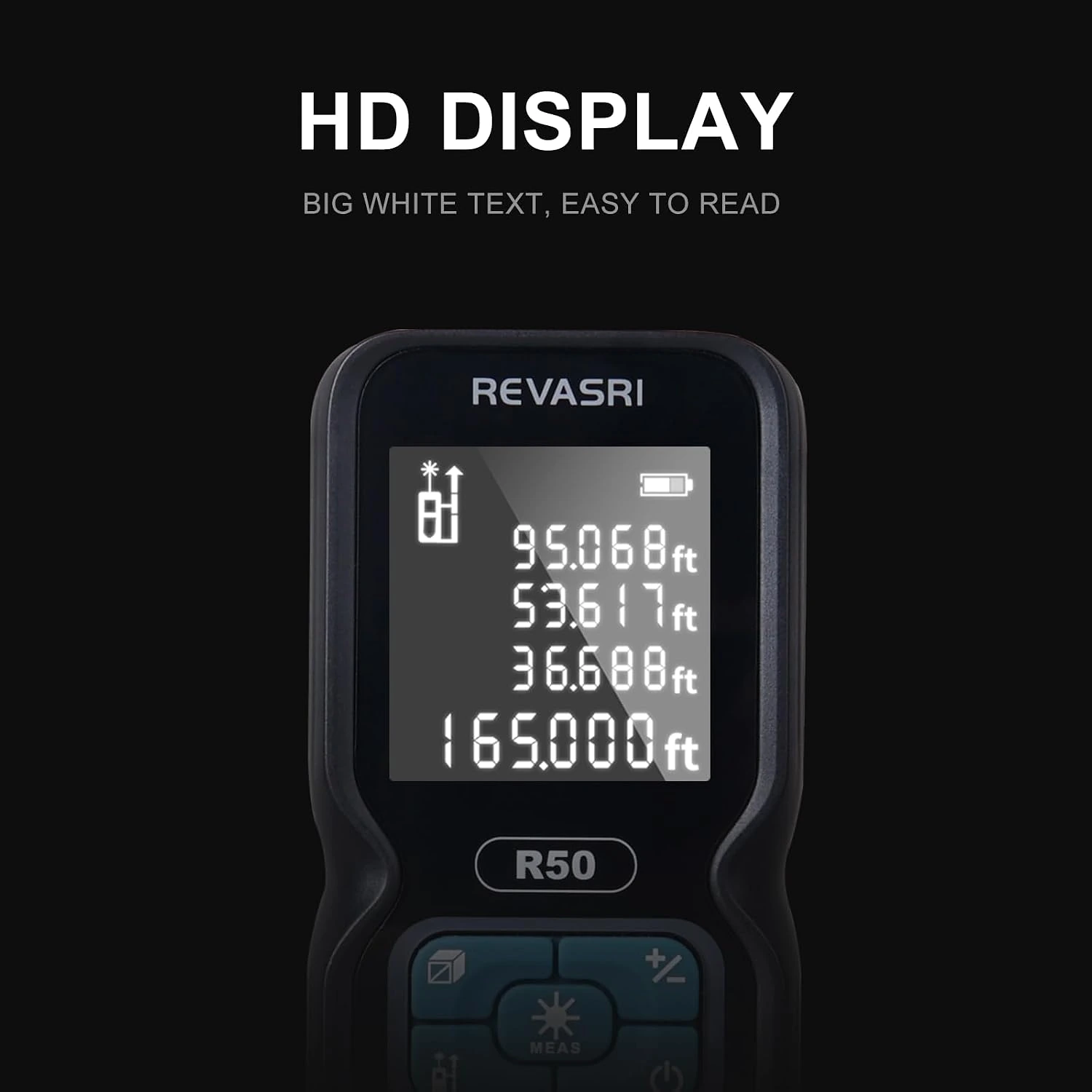
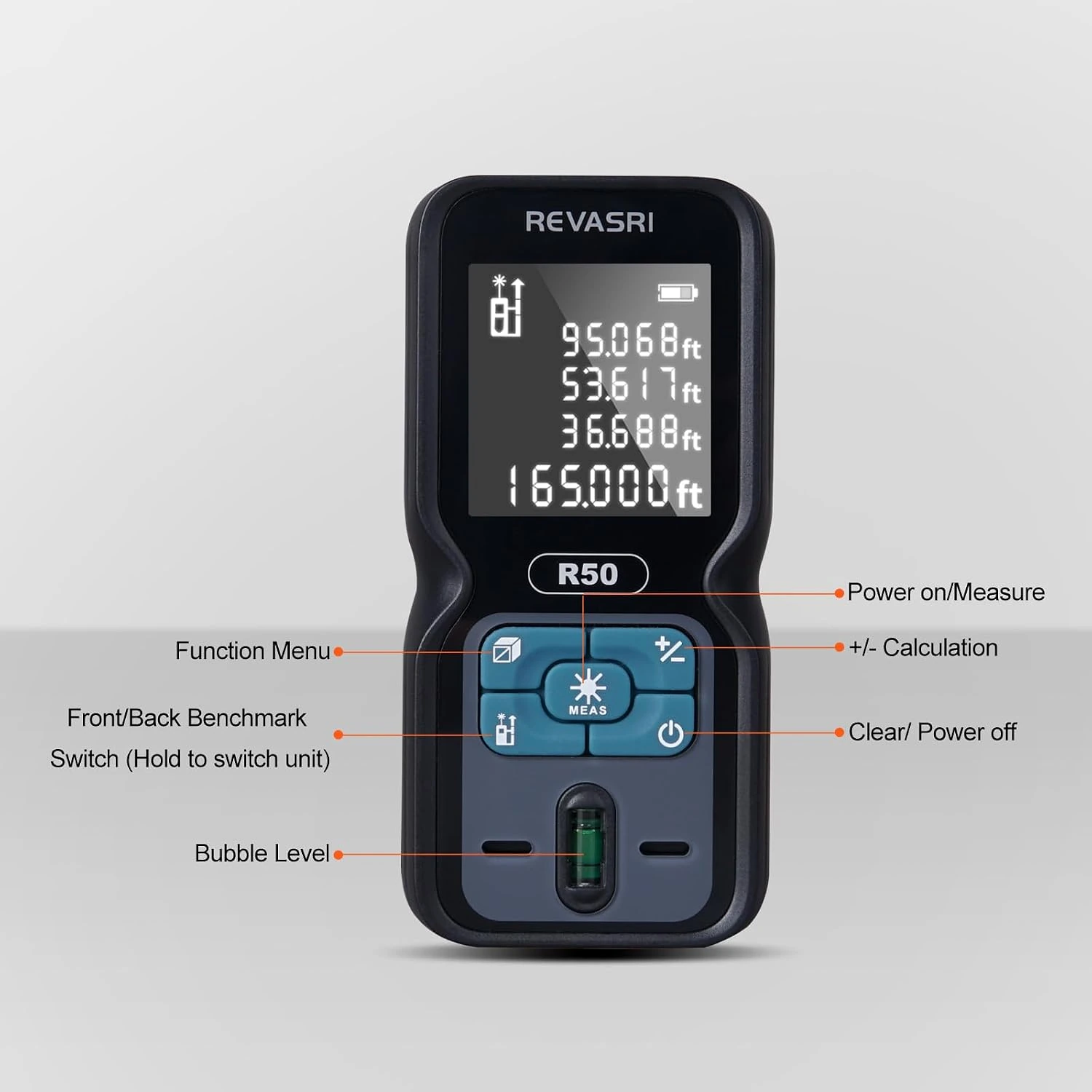
Measure indoor distances, areas and volumes without stretching a tape across the room. A dark display with light digits and selectable units keeps the result easy to read.
165 ft range
±1/16 in stated accuracy
Area / volume / continuous
2 AAA batteries
Details & fit
Designed for indoor renovation and layout work. Units include meters, feet, inches and feet-plus-inches. The 80 g body also supports addition, subtraction and indirect Pythagorean measurement. This is a Class 2 laser tool; never direct its beam toward eyes.
Choose it for: Indoor room measurements, planning and straightforward distance checks.
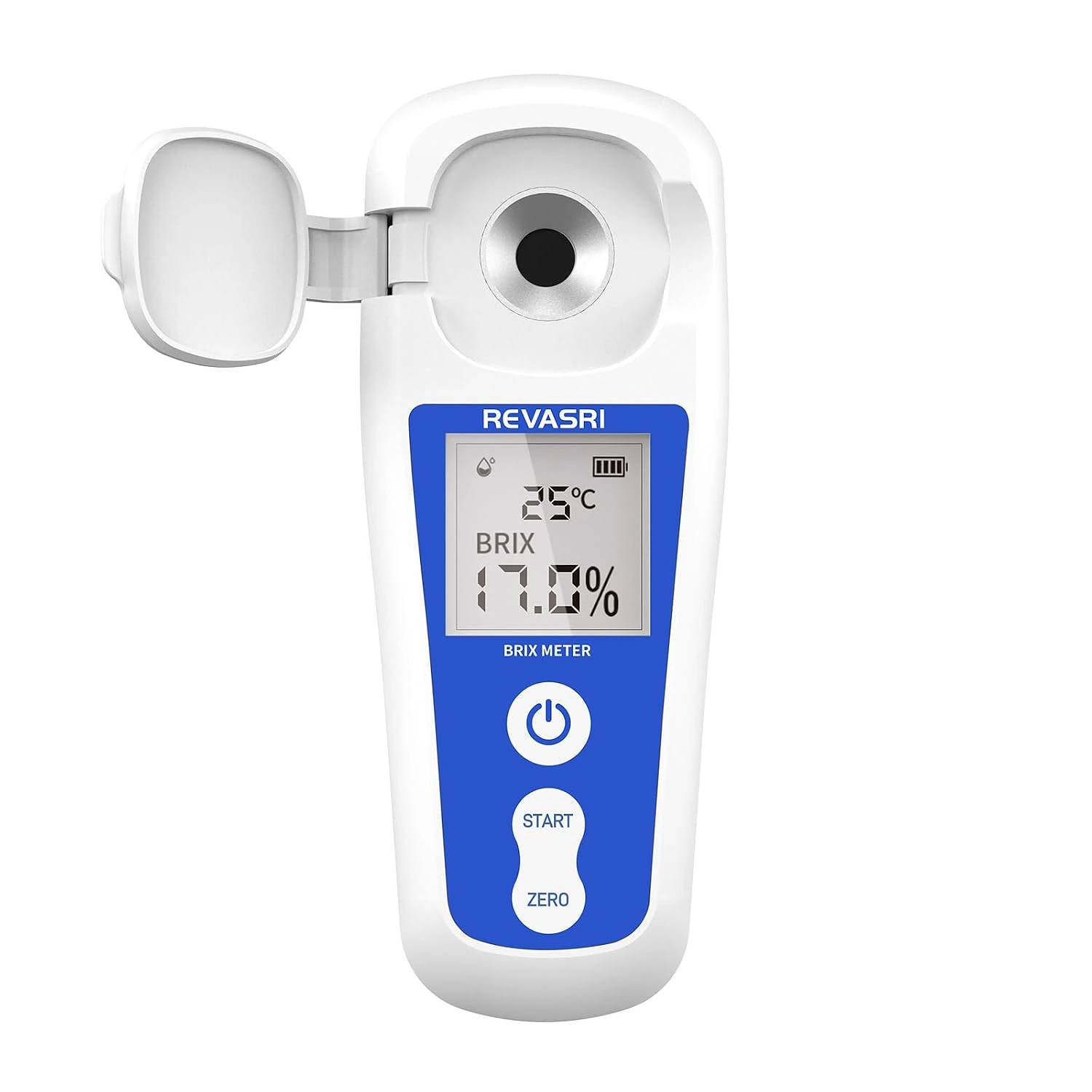
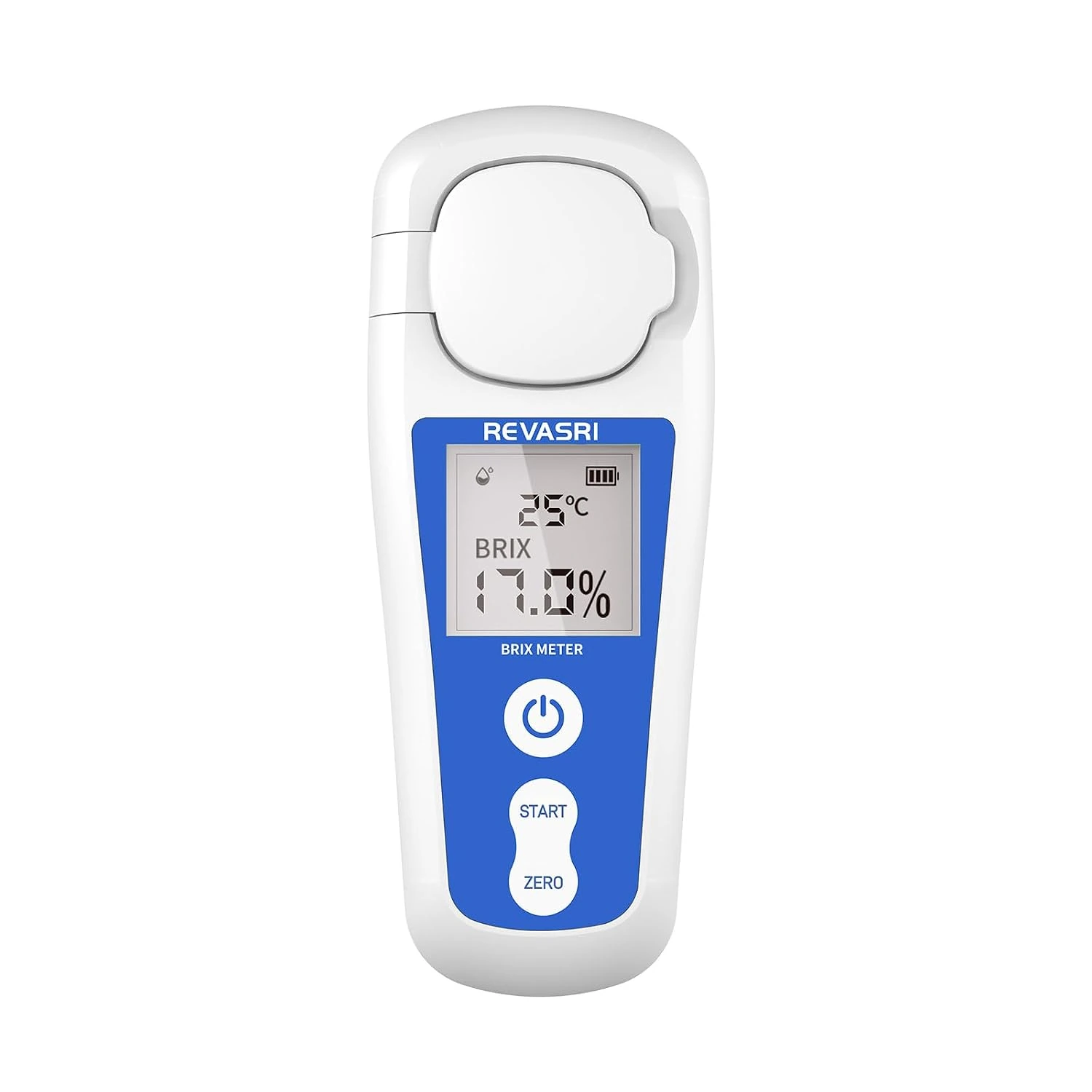
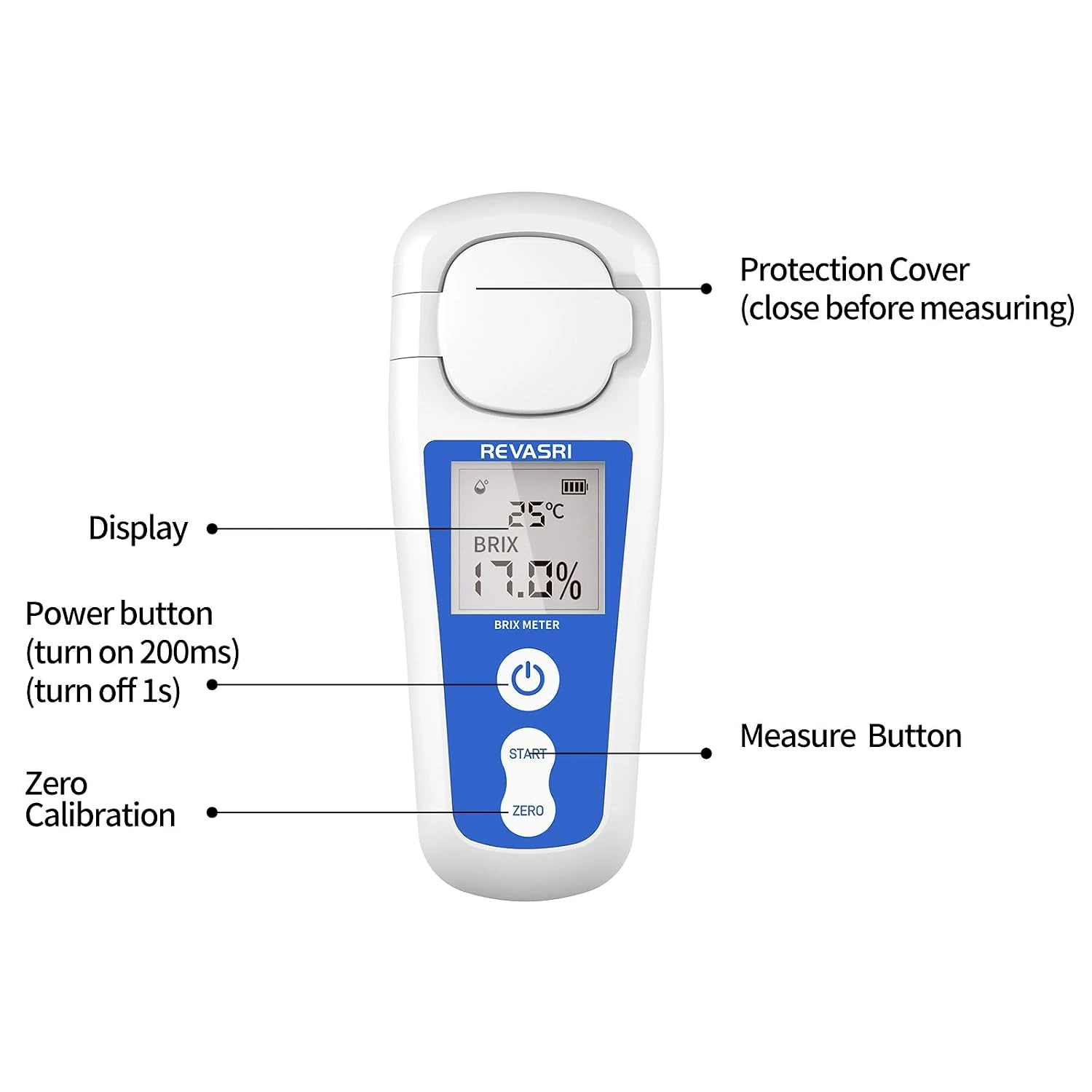
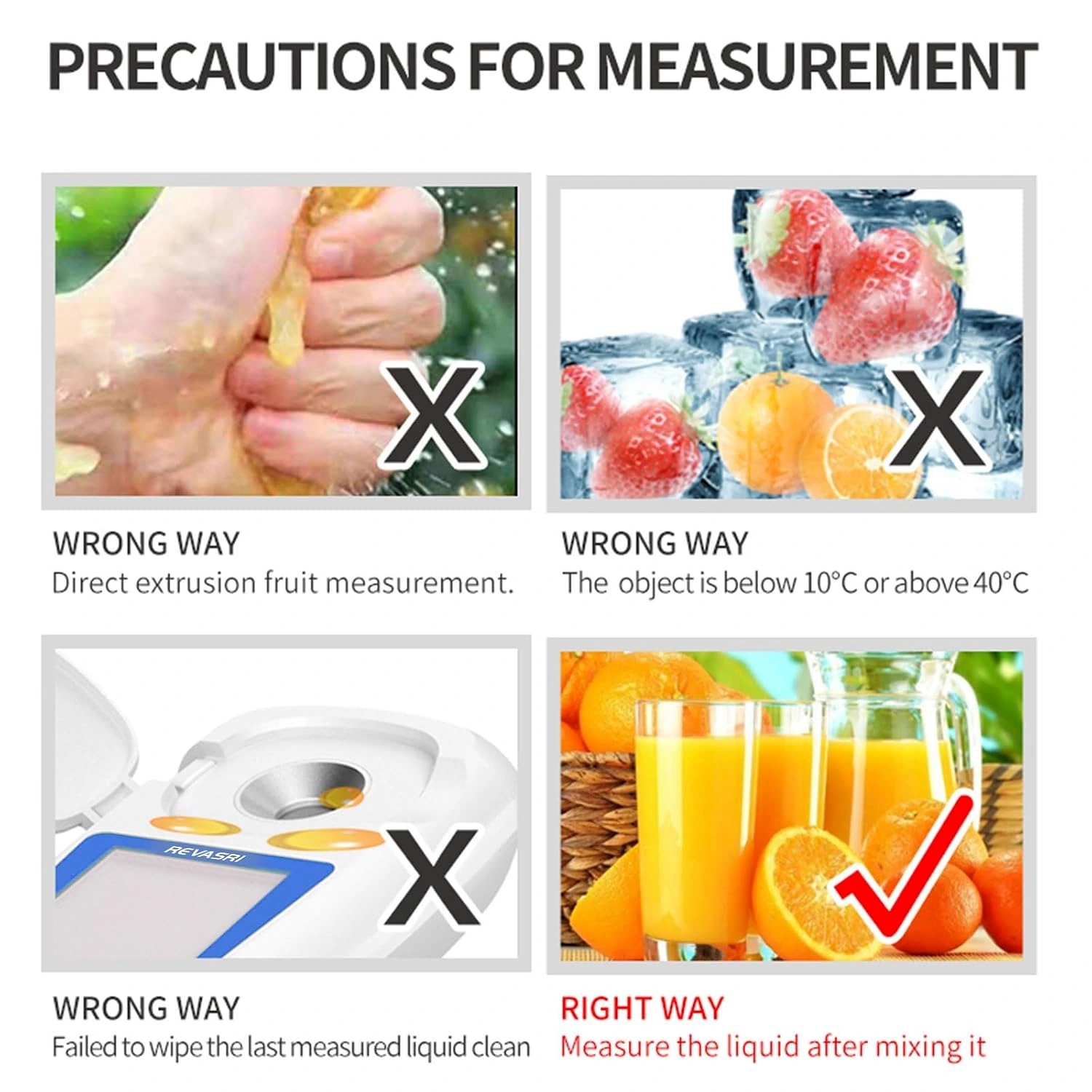
Check the Brix value of suitable liquid samples on a digital display. Zero-calibrate first, add the sample, close the cover and start the reading.
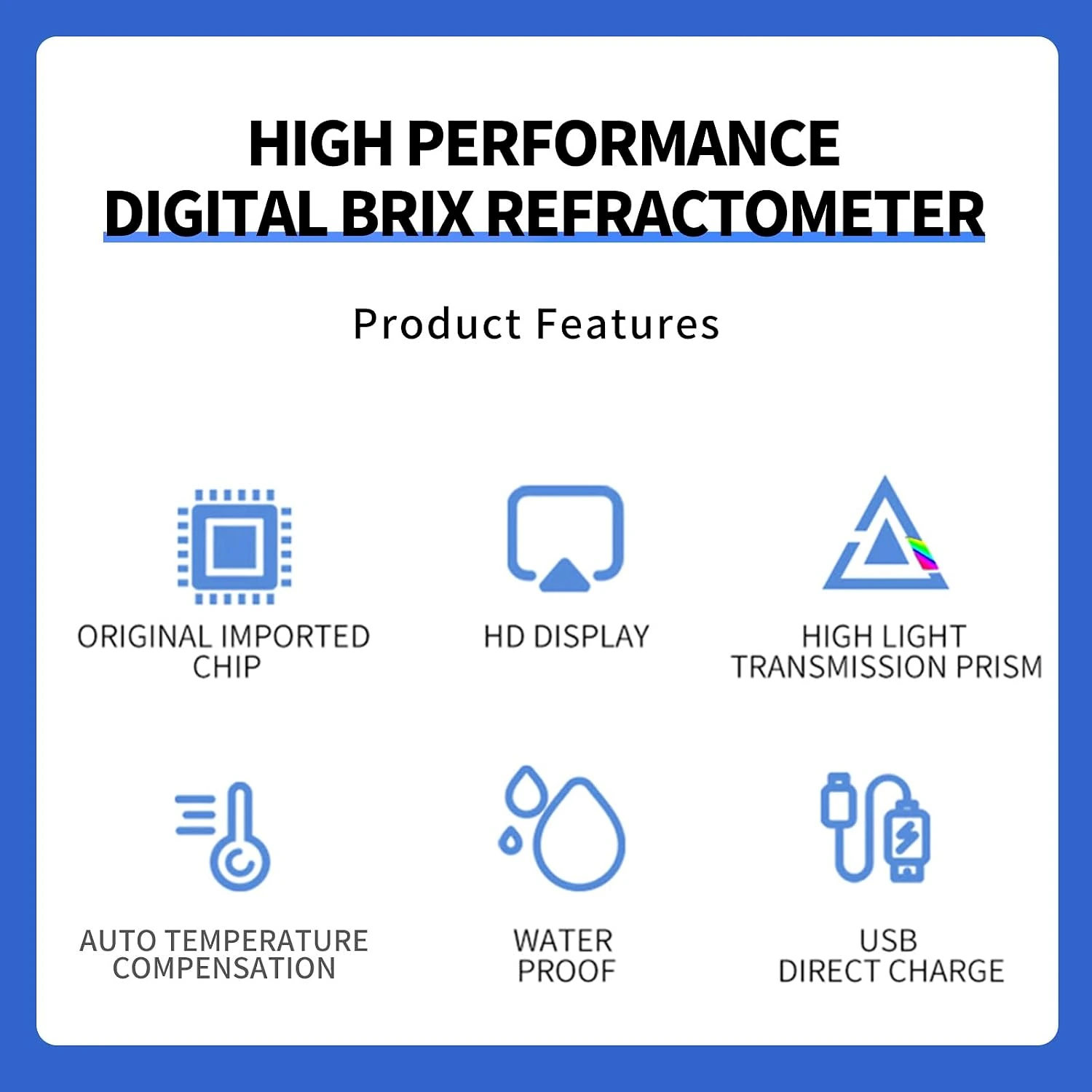
0–55% Brix range
±0.2% stated accuracy
0.1% resolution
USB rechargeable
Details & fit
Automatic temperature compensation covers 10–40°C. The built-in battery has a 750 mAh capacity. Keep the sample area clean between readings and the charging port dry. Brix is a refractive measurement; other dissolved substances can affect how a reading relates to sugar content.
Choose it for: Repeatable liquid-sample checks for food, fruit and beverage work.
$39.99Price checked
Prices can change. The final price, available configuration and delivery options appear in the purchase tab.
UNDERSTAND THE DISPLAY
One view. Different questions.
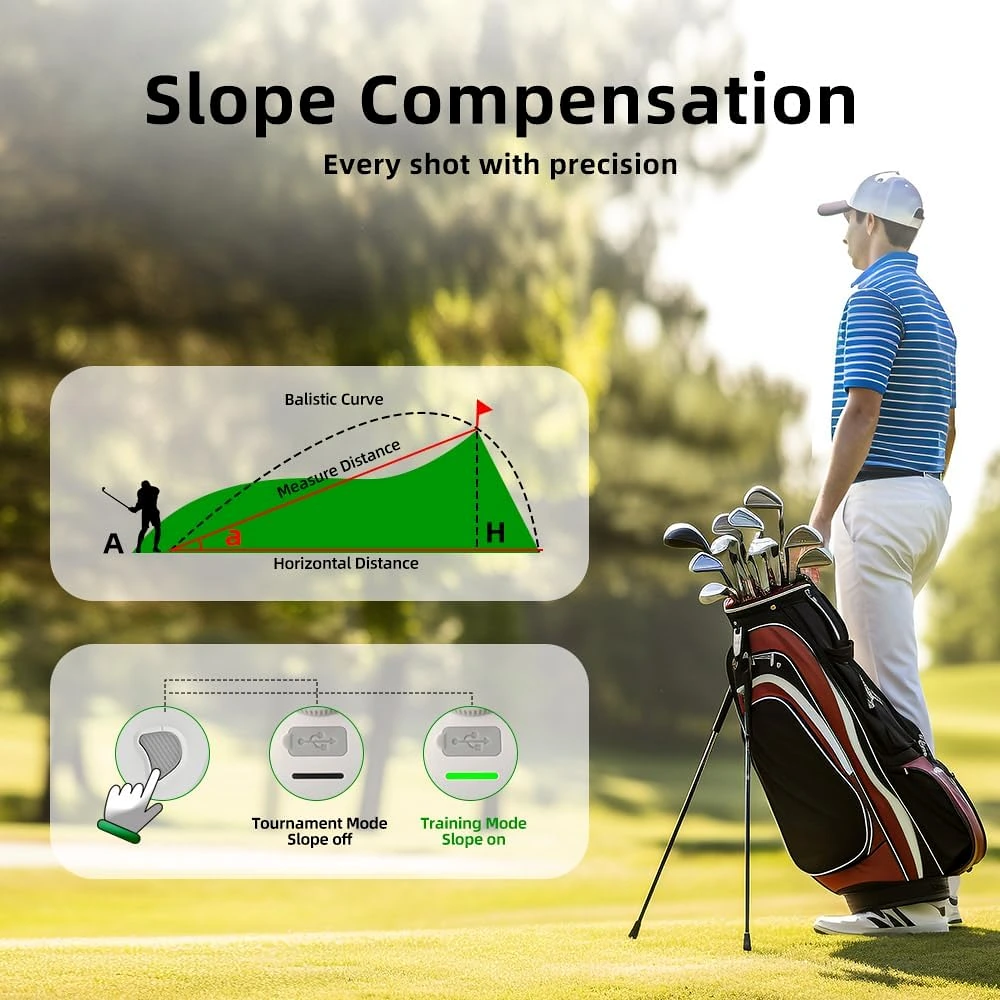
A distance is useful when you know what it describes. Keep these three ideas separate.
YOUTARGETDirect distanceHorizontal distanceIllustration · not a device reading
01
Direct distance
The line from the rangefinder to the visible target. Start here to confirm what you’re measuring.
02
Horizontal distance
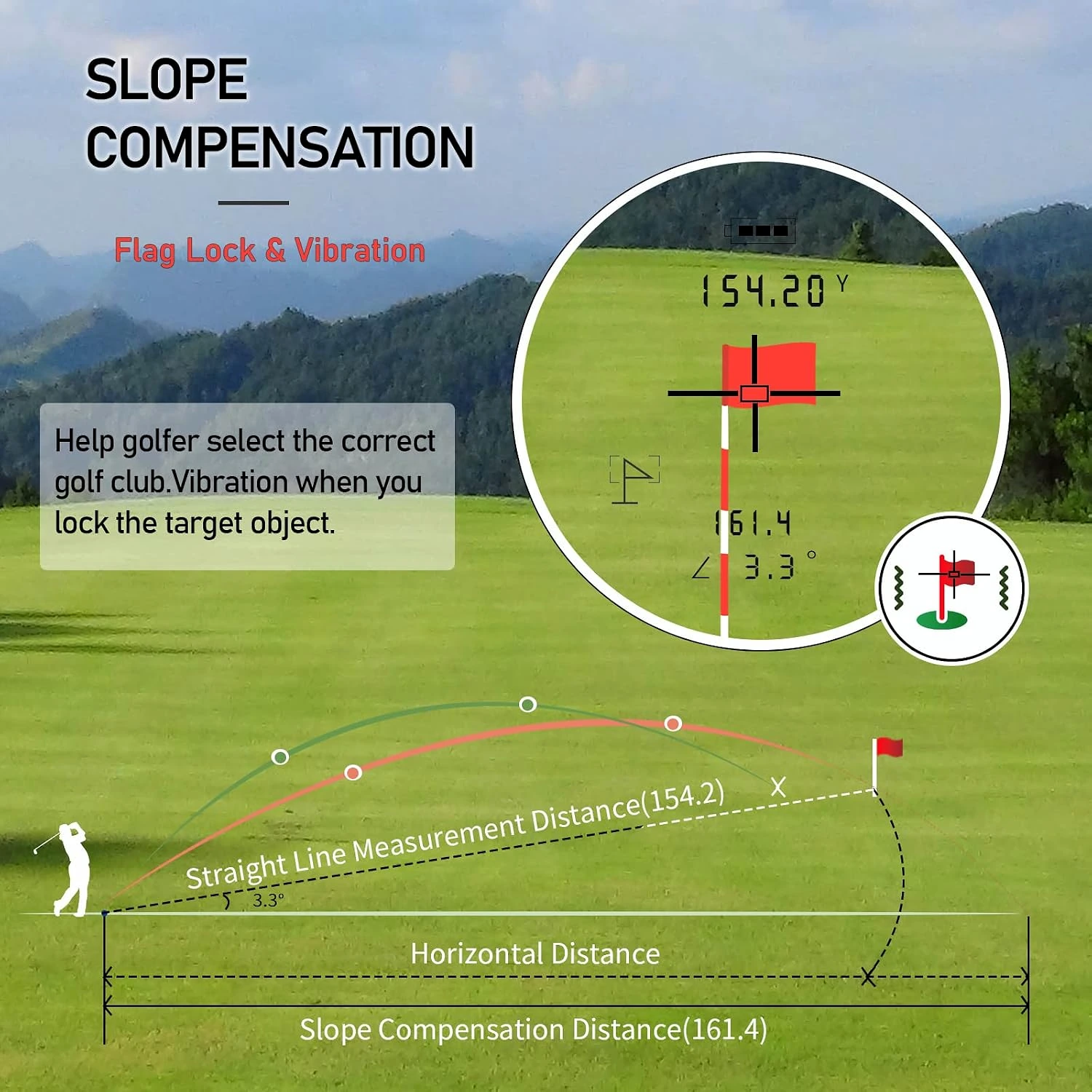
The level component of that distance, available on selected field models. It is different from the uphill or downhill viewing line.
03
Golf slope assistance
A calculated playing-distance aid on selected golf models. Turn it off when required and check the conditions of your event.
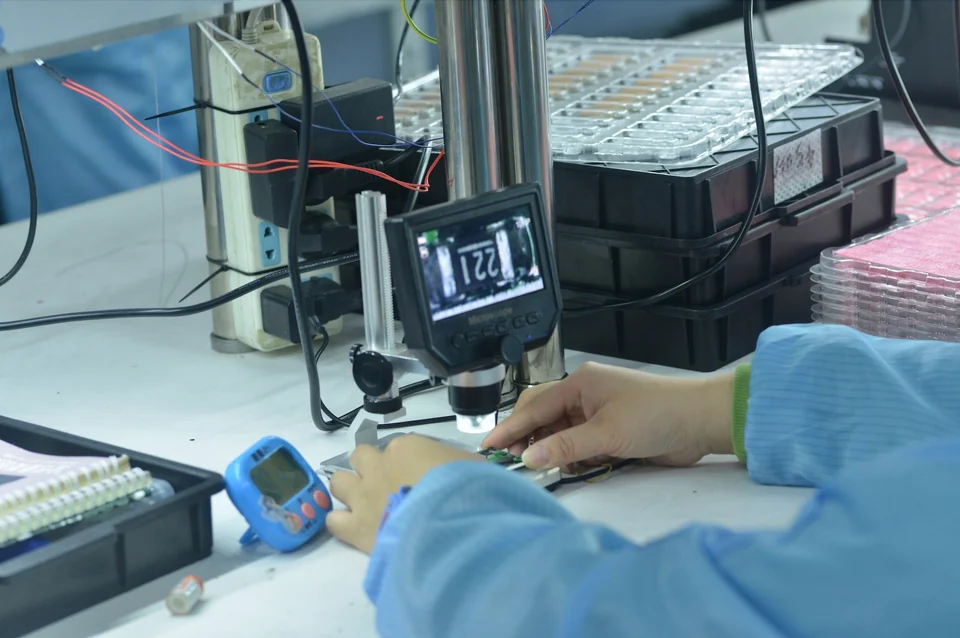
REVASRI’s rangefinder story begins with golf development in 2014. Behind the range is Tianjin Lookout Photoelectric Technology, whose work spans optical design, electronics and the physical structure of measuring devices.
That combination matters in your hand: a useful display, a control you can find and a body you can carry are part of the same instrument.
Production photograph published by the manufacturer.
QUALITY / DOCUMENTATION
Look beyond a headline number.
Good product decisions start with the exact model, its operating limits and the way you intend to use it.
Optics, controls and construction
Coated lenses, clear controls and compact housings appear across our rangefinders. Compare each model’s specifications, protect the optical surfaces and repeat a reading when the target is uncertain.
↗
CERTIFICATION & SAFE USE
Match the document to the instrument.
A product’s laser class, environmental protection and conformity documentation have specific scopes. A mark on one model does not describe every tool in the collection.
Our manufacturer publishes a compliance overview and model instructions. Use the model designation to find the right manual; check the label and supplied documentation for your unit.
A small routine makes the display easier to trust. Use this checklist before a round or a practice session.
0 of 4 checks complete
THE BRAND / A CLOSER LOOK
REVASRI. Measurement with a purpose.
The number is the beginning. What you do with it matters more.
01
Start with a real question
How far is the flag? Which unit matches your disc-golf notes? Is that wall showing a different surface-temperature pattern? At REVASRI, those practical questions give our collection its shape. We bring together handheld rangefinders, phone-connected thermal cameras and focused measurement tools so you can choose an instrument around the information you need.
A long feature list is only useful when its meaning is clear. That is why we explain the difference between direct distance and golf slope assistance, show the controls up close and identify the selected configuration. The right choice should feel understandable before the first button press.
Tianjin Lookout, the manufacturer behind the REVASRI rangefinder story.02
A story rooted in optical measurement
REVASRI’s published brand story traces its golf rangefinder development to 2014. The range has since expanded into hunting and thermal imaging. Tianjin Lookout Photoelectric Technology brings together optical, structural and electronic design: disciplines that meet inside a device small enough to carry through a round or into the field.
Our approach connects those technical details to everyday use. A physical slope switch makes a mode change visible. A magnetic attachment keeps a suitable model close to the cart. Feet on a display can make disc-golf practice notes easier to compare. Each feature has a job; no single specification defines the whole instrument.
03
Different tools, different kinds of clarity
Our golf collection focuses on course distances and target feedback. Outdoor rangefinders add ways to describe terrain, including horizontal and vertical measurements on selected models. The R2 and N1 bridge golf and disc golf with feet, yards and meters, while keeping the choice of mode in your hands.
Thermal cameras offer another kind of view. They display surface-temperature patterns through a compatible host device. A larger enhanced image can make the display easier to explore, but it is not the same as a larger native detector. A warm or cool patch is a reason to look more carefully, not a diagnosis by itself.
Choose the measurement before the model
Your task
Your starting point
Read a course target
Golf rangefinders with the controls you prefer
Keep practice notes in feet
N1 or R2 feet-capable rangefinders
Explore surface patterns
A compatible T160 or T256 thermal setup
Measure indoors or sample liquids
A dedicated distance meter or Brix instrument
Optical instruments bring mechanical, electronic and lens work together.04
Confidence comes from understanding
Quality is more useful when it is specific. Compare the selected model’s stated accuracy, controls, power source and operating limits. Keep optical surfaces clean, check the display unit and repeat a reading that does not fit the scene. For competition, confirm the event conditions rather than relying on a broad claim about legality.
We make room for that understanding alongside the collection. Product photographs reveal details a short title cannot. Our field notes explain practical routines, and the manual directory connects you with model instructions and care guidance. Together, these resources help you move from a product name to an informed choice.
Explore the REVASRI range with your own task in mind. Find the information you need, compare the details that change your routine and choose the tool that fits the way you measure.
The N1 and R2 options in our disc golf collection support feet, yards and meters. Check the exact model rather than assuming every golf rangefinder offers all three units.
Can I use slope in a competition?
Check the event’s rules. Golf slope assistance normally needs to be disabled during a round played under the Rules of Golf, and a committee may prohibit distance-measuring devices entirely.
Does a thermal camera see through walls?
No. It shows surface-temperature patterns. A pattern can help you decide where to investigate, but it does not by itself identify a leak, moisture or a hidden defect.
Where do I complete a purchase?
Use a product’s purchase button to open its offer in a separate tab. Confirm the selected configuration, final price, delivery and seller terms there.